
This is one example day with your family, from start to finish
Made to help your family explore the saints and the Orthodox faith together. One saint arrives each day.
Here is a full example of everything your family can experience together with a membership.
The Vigil Lamp
Light the Lamp
O Lord Jesus Christ our God, have mercy on us."
Read the Icon
Before we hear her story, let's look at how the Church has always shown her, and learn to read what the icon is telling us.
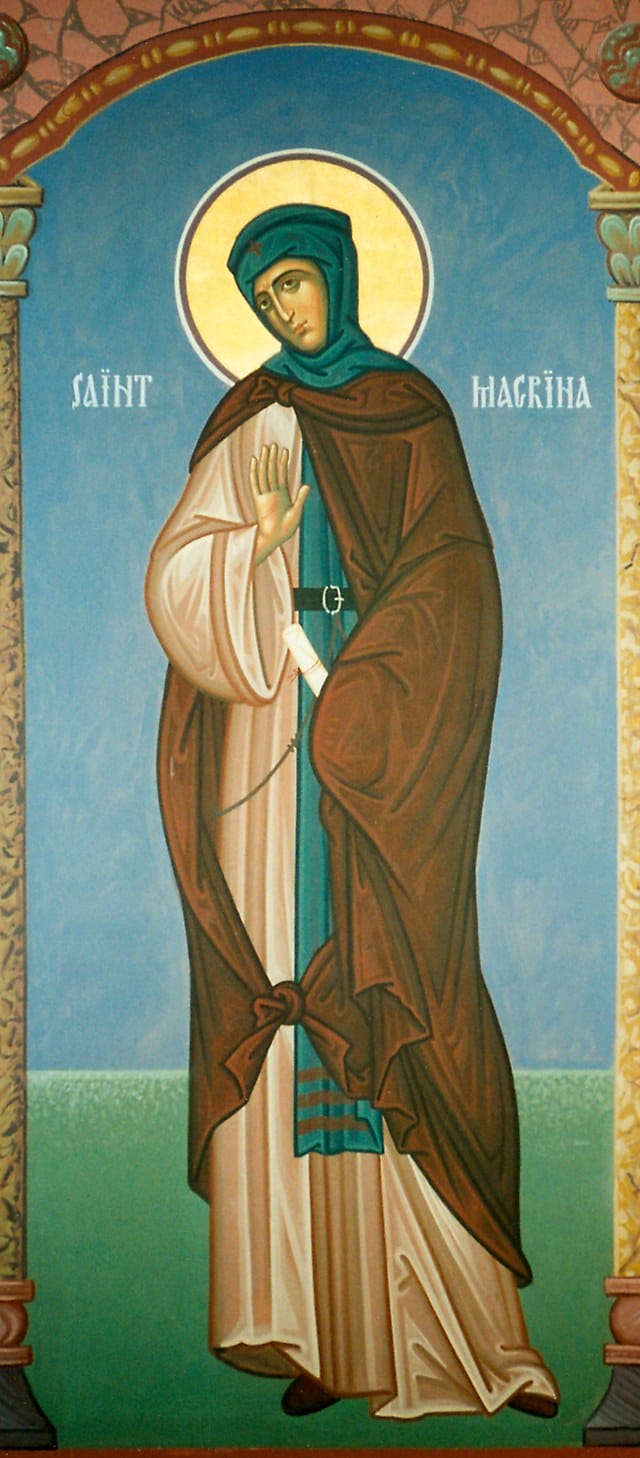
What are we looking at?
An icon isn't a photograph and it isn't a painting to admire — it's a window. Everything in it is there to teach us something true about the saint.
The Readings
The Scripture the Church appoints for this day. Open your Bible at home and read the passages aloud together, then listen for these words echoing through the saint's story and the rest of your day.
These are the readings appointed for this day in the Church's calendar. Each daily edition carries that day's own appointed Epistle and Gospel.
The Story
Long ago, in a green country called Pontus, where a cold bright river came running down out of the hills, there lived a girl named Macrina — and Macrina had a secret hidden inside her own name.
"Mother," she said one evening, leaning against her mother's knee while the soft grey wool ran through both their fingers, "tell me again about the other name. The one from before I was born."
Her mother Emmelia set down the wool and was quiet a moment, the way grown-ups go quiet when they are about to tell you something true.
"Before you were born," she said, "in a dream, someone shining stood beside me — three times — and each time he called you by a name. Not Macrina. He called you Thecla, after the brave girl who loved the Lord more than her own life." She touched her daughter's cheek. "Macrina is the name the neighbors call you, little one. But Thecla is the name heaven whispered first."
Macrina thought about that for a long time.
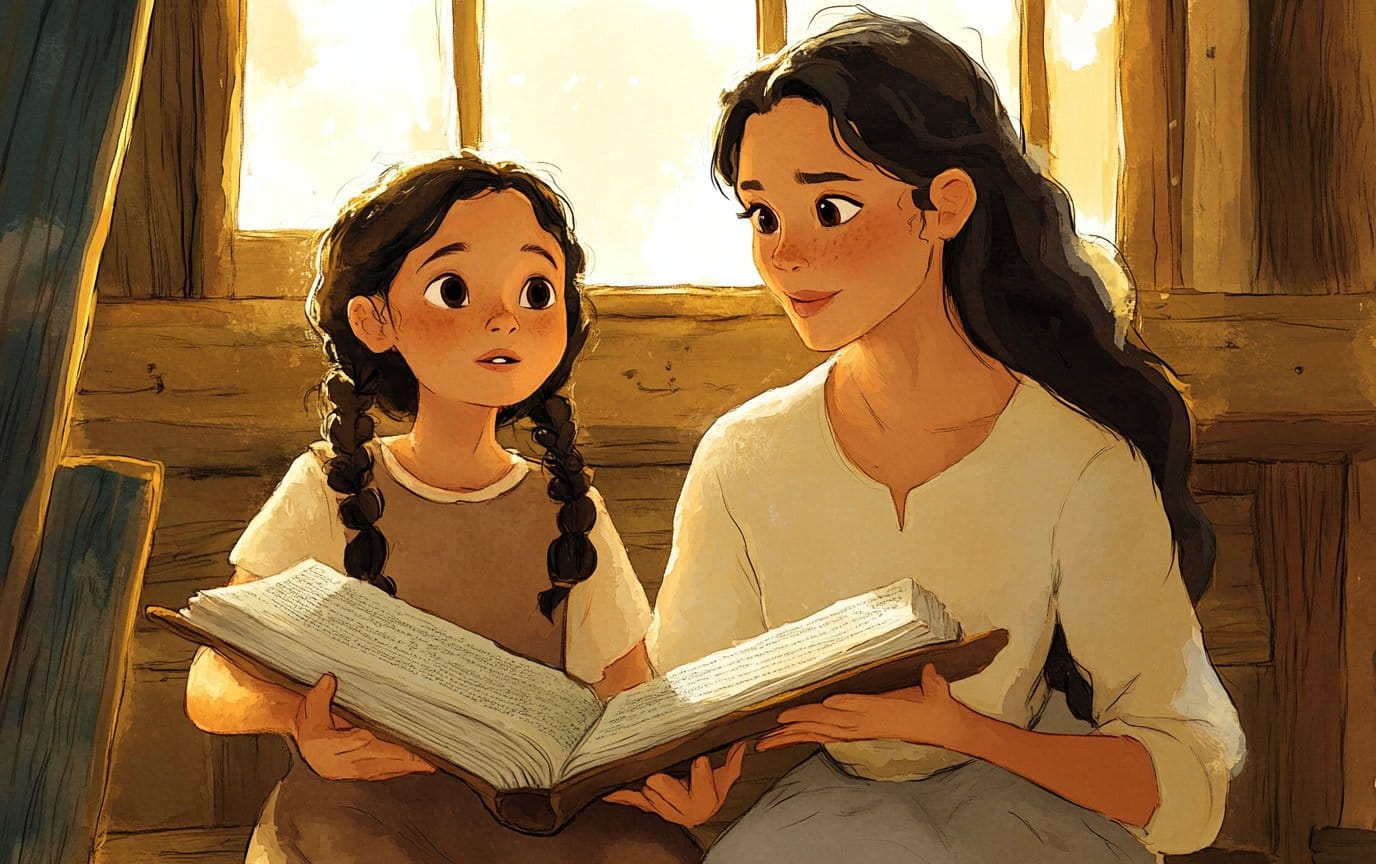
And her mother did not teach her the silly, frightening stories that other children learned. She taught her the songs of King David instead — the Psalms — until the girl knew them by heart and sang them at her work, at her meals, and last thing before sleep, so that the words were always somewhere in her like a candle left burning in a window.
She grew up clever, and kind, and so lovely to look at that people turned in the street. And when she was old enough, her father chose a good and promising young man for her to marry, and Macrina was glad, for he was gentle and he loved God too.
But before the wedding day ever came, the young man fell sick, and died.
Everyone felt sure they knew what would happen next. "She is young," they said. "She is beautiful. She will grieve a while, and then of course she will marry someone else." And suitor after suitor came knocking.
Macrina sent them all gently away.
"But why?" her own mother asked her, worried. "You are not bound to him. You never even married. No one would blame you."
"I was promised once," said Macrina, "and I mean to keep my promise. Listen, Mother — my husband is not dead. He has only gone on ahead of me, to God, the way a traveler goes ahead to make ready. He is alive there, and one day I will see him again. Until that day, why would I go looking for another? I will give my whole heart, all of it, to God alone."
And she did. From that day she belonged to Christ, the way a bride belongs to her bridegroom, and she never once looked back.
Then her father died too. And instead of weeping helplessly, Macrina rolled up her sleeves. She took the whole big household onto her own shoulders — the money, the land, the servants, her little brothers and sisters — so that her mother could rest. For Macrina was the eldest of them all. There were nine children under that roof. And four of them, one day, the whole Church would call saints.
The cleverest of her brothers was named Basil.
Basil was sent away to the greatest schools in the world, and he learned everything they could teach him, and he came home again — oh, and didn't he come home grand. He could stand up and speak so beautifully that crowds went quiet to listen, and he knew it. He held his head very high. He had become, everyone agreed, the finest speaker in the whole land, and the admiration had gone to his head like strong wine.
Everyone praised him. Everyone clapped.
Macrina did not clap. She loved him far too much to clap.
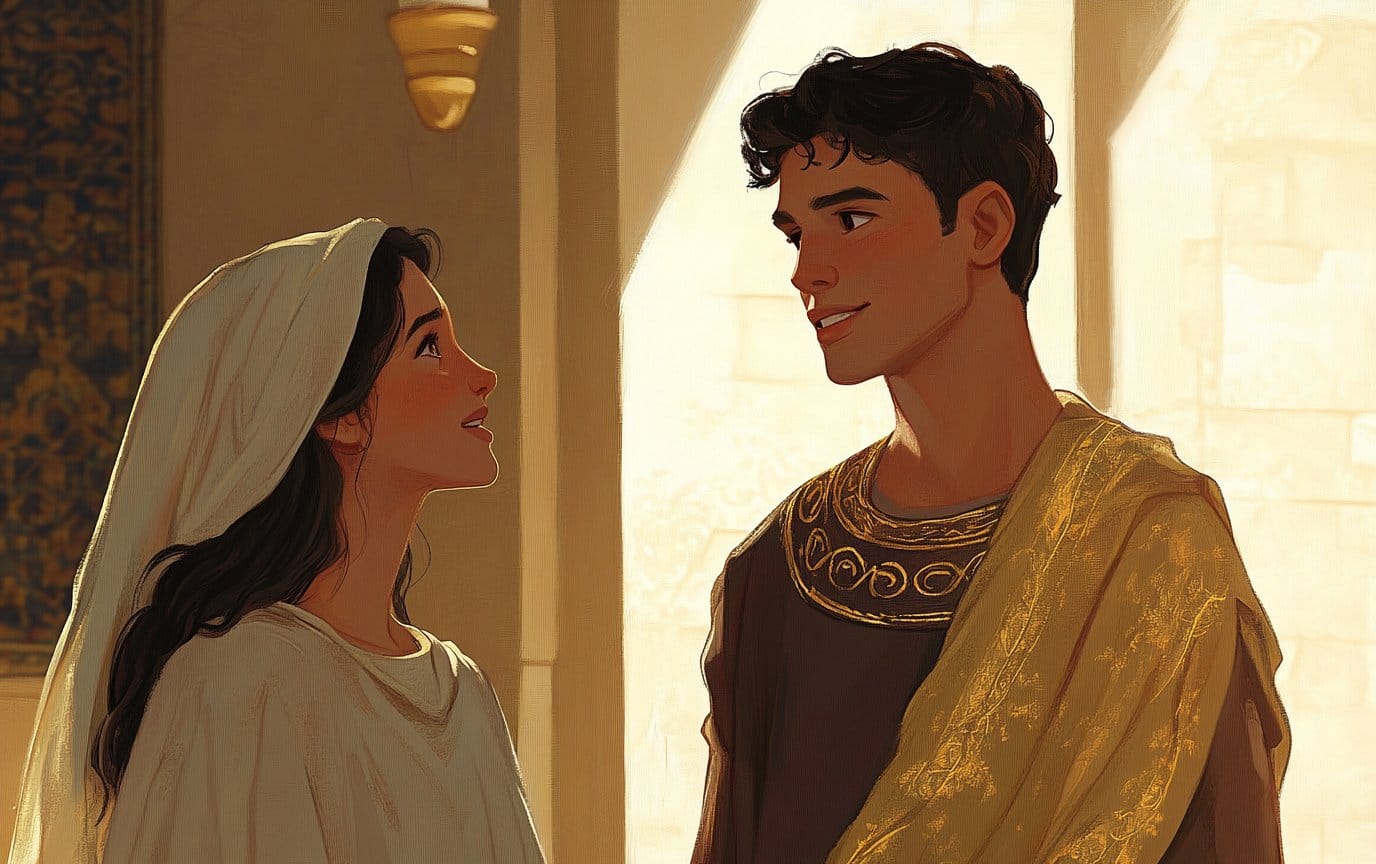
She waited until they were alone, and then she looked at her splendid, puffed-up little brother, and she said, quietly, "All these fine words of yours, Basil. All this cleverness. Tell me — do they make you kind? Do they make you humble? Do they make you love God even a little bit more than you love the sound of your own voice?"
Basil opened his mouth. And then he shut it again.
"There is a wisdom higher than the kind they sell in schools," his sister said, softer now. "It cannot be bought, and it cannot be shown off. It can only be knelt down for. Come and look for that one, brother. I think it is the only thing that will ever be big enough for you."
And Basil — the proud young man who would one day be called Saint Basil the Great — listened to his older sister. Something turned over inside him, like a stone rolling off a doorway. He gave up wanting to be admired. He went off to learn the humble wisdom of the saints instead. And he became great, truly great, at last — because the sister who loved him had told him the truth.
That was Macrina's quiet power. Not armies. Not miracles in the street. She simply loved people so honestly that they became who God had made them to be.
Then she had a bold idea — bolder than anything her brother ever said from a stage.
She went to her mother. "Let us stop this," she said. "Let us stop being fine ladies with servants to wait on us. Let us set them all free — and then let us stay, all of us together, and live as sisters. The same plain clothes. The same plain bread. The same prayers, morning and night. No mistress, no maid. Only sisters, and God in the middle of us."
And her mother — who had once been a great lady of the province — said yes.
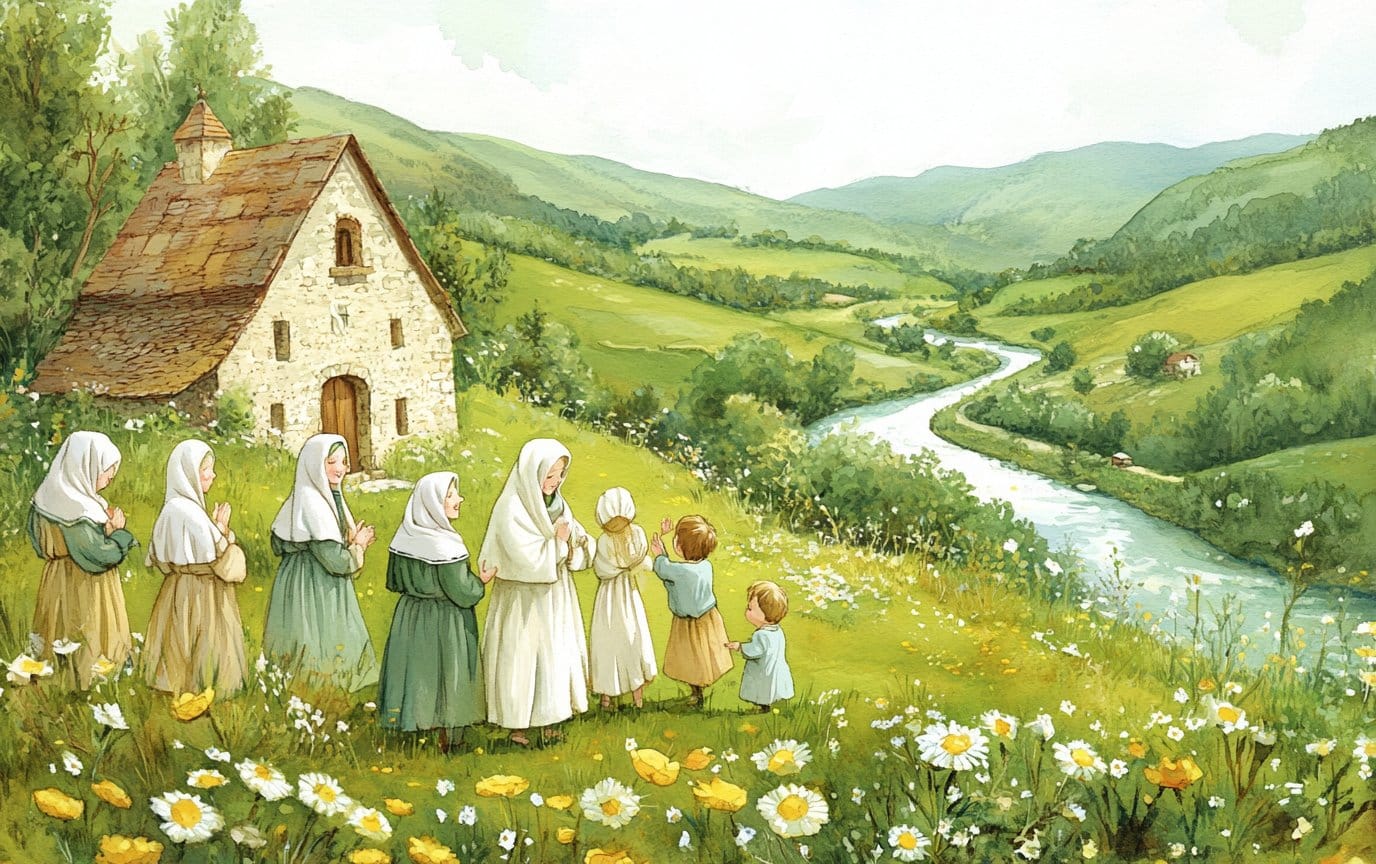
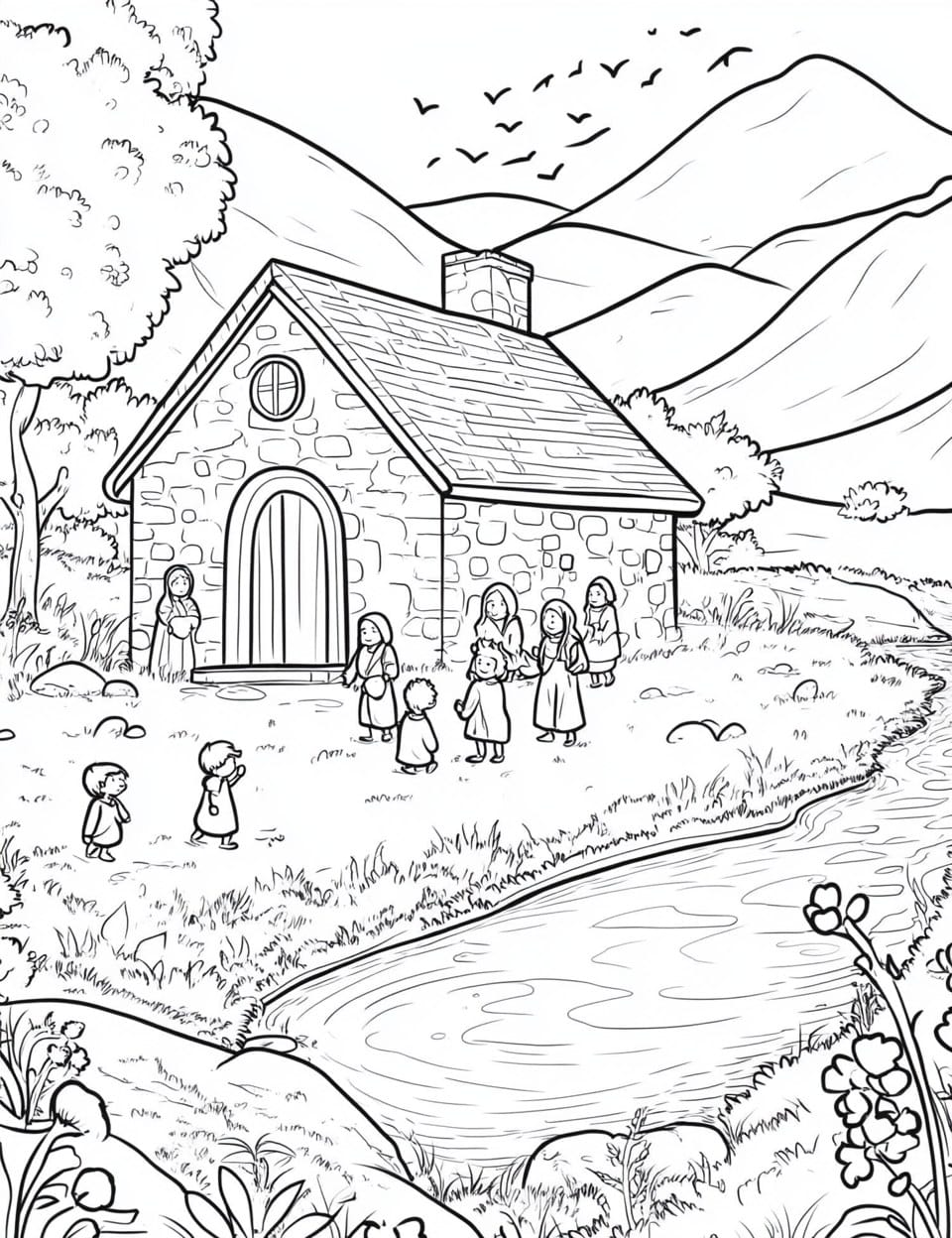
So on the family land, by that cold bright river at a place called Annesi, the big comfortable house quietly became something new: a house of prayer. The women who had been servants and the women who had been mistresses now wore the very same simple robes, and sang the very same Psalms, and worked side by side at the very same tasks — and after a little while you truly could not tell, just by looking, which of them had once been rich and which had once been poor. Which was exactly the point.
And into the middle of all this was born the very last of the children — the baby brother, Peter. Their father was already gone, so Macrina simply gathered the little one up and raised him herself. She was his mother and his teacher and his tutor and his dearest friend, all at the same time, all rolled into one. And Peter grew up good and gentle and strong — and he, too, became a saint and a shepherd of the Church. Four saints, out of one family. Because of a mother who taught them the Psalms, and a sister who showed them the way.
Macrina kept almost nothing for herself. When you looked around her little room there was hardly anything to see — a worn cloak, a covering for her head, a pair of shoes worn thin. She slept on bare boards. She stored up her treasure, she said, in heaven, where nothing rots and no thief ever comes.
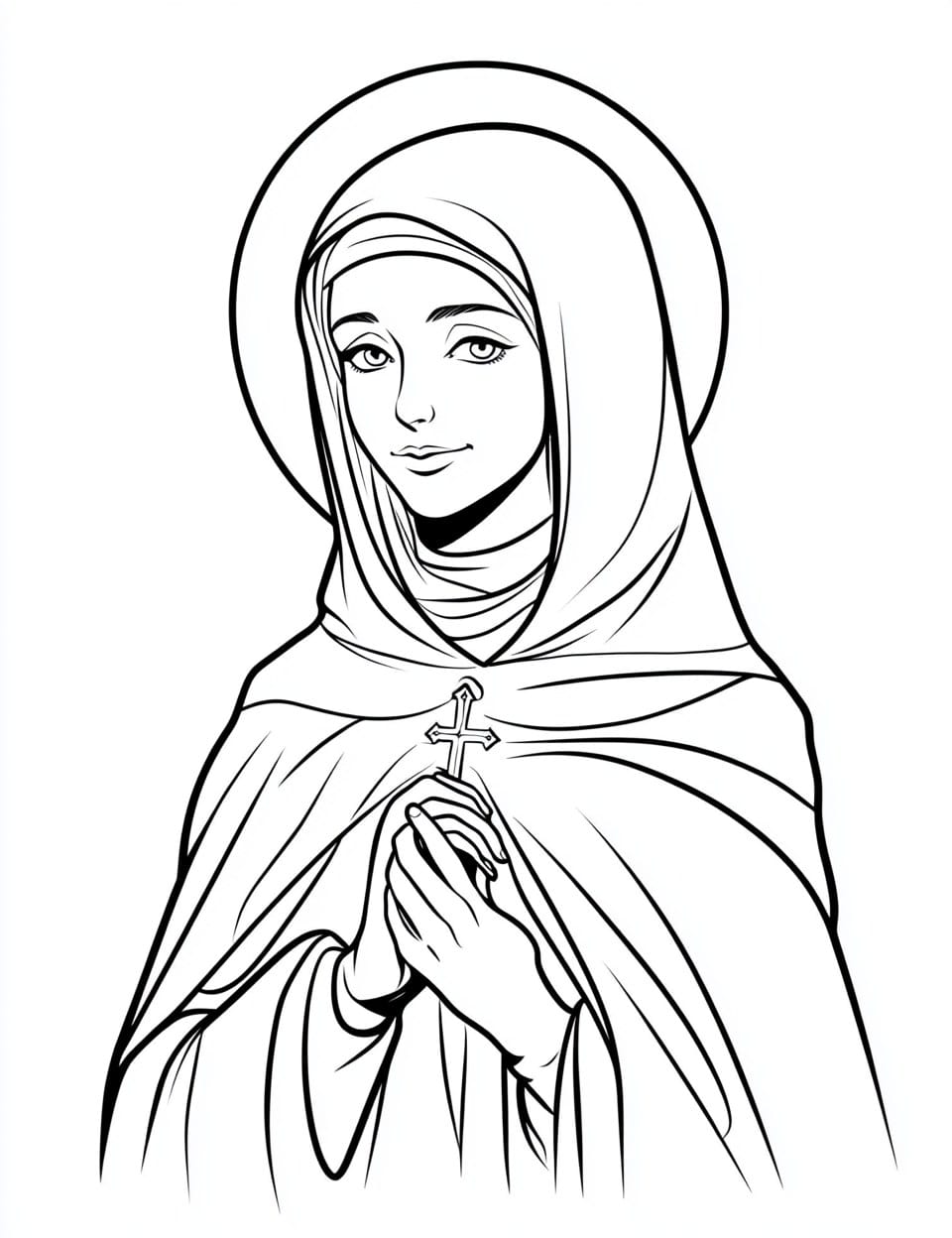
But she did keep one thing close. On a thin thread around her neck, hidden under her robe, right over her heart, she wore a tiny cross of plain iron, and a plain iron ring. And no one knew — not for years and years — that inside that little ring she had hidden a splinter of the True Cross of Christ, so that the Cross rested against her beating heart every hour of every day and every night.
Quiet things happened around her. The sick got better. Once, in a terrible famine when the fields gave nothing, there was somehow always bread in her house for the hungry, and no one ever quite understood how. A soldier came once, years afterward, and told with tears in his eyes how he had brought his little daughter to Macrina with a sickness in her eyes — and how Macrina had bent down and kissed the child's poor sore eyes, and prayed — and how the little girl had gone home seeing clear and bright.
"What is your medicine?" people would ask her. "What is your secret cure?"
"The only medicine I have," Macrina would say, "is prayer."
The years went by, gently, the way the river went by. And then, one summer, her brother Gregory — who was a bishop now — came the long way home to see her, after a very long time apart.
He found her lying not on a bed but on a plank on the floor, and he could see at one glance that she was very ill, and very near the end. His heart broke to see it. But Macrina was not the least bit afraid. Her face, he said afterward, was shining.
She spent that whole last day talking with him — not about her pain, and not about being sad, but about God, and about the soul, and about the life that is coming. "Why do you grieve?" she asked her brother, smiling at him from the floor. "This is not the end. This is the door. I have been getting ready for this my whole life long."
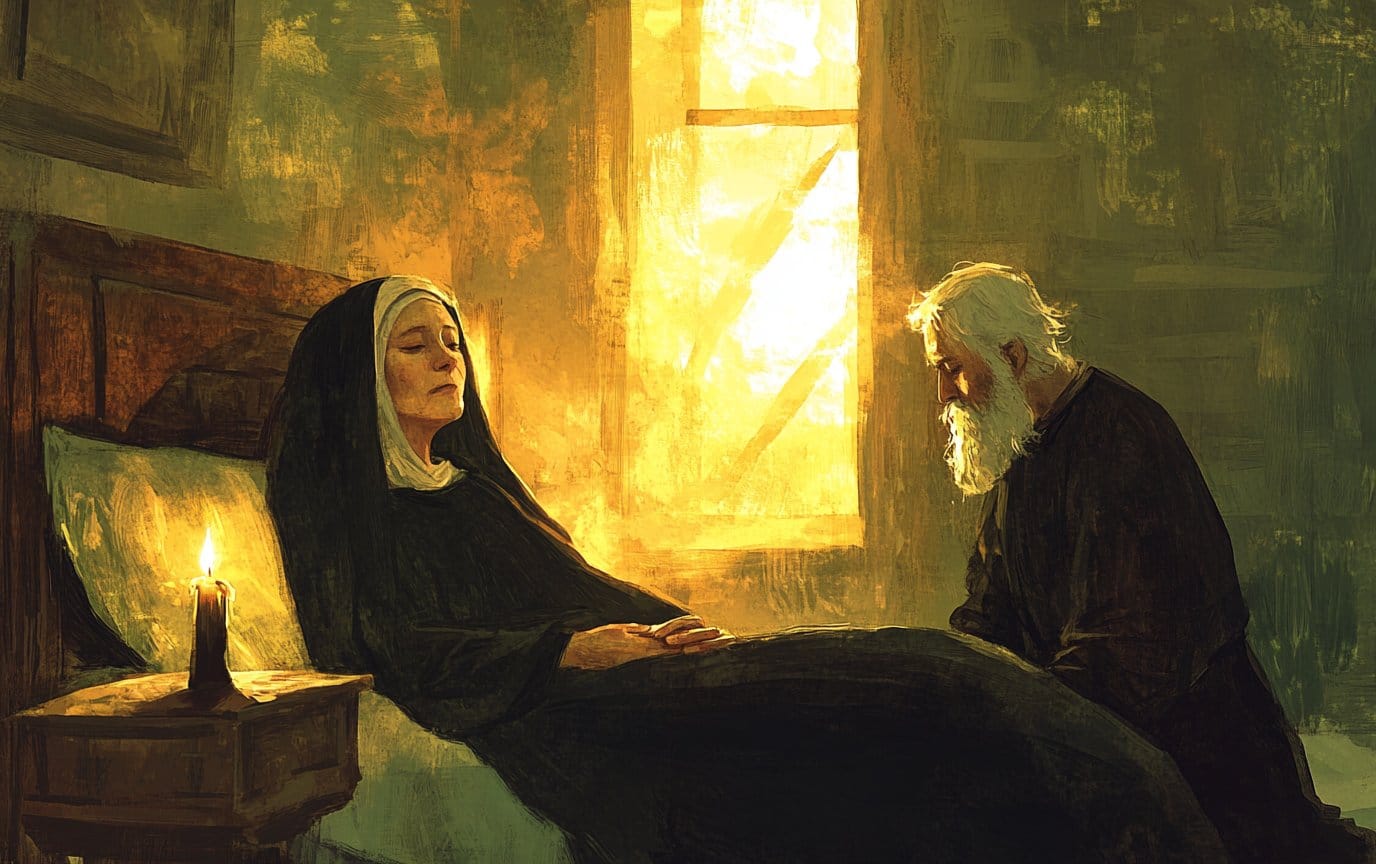
And as the sun went low and the light in the room turned to gold, Macrina turned her face toward the East, toward the place where the sun comes up, and she stopped talking to the people in the room, and she began to talk to God out loud.
She thanked Him for her whole long life. She thanked Him for every good thing. And then she asked Him, simply, the way a child asks a father, "Send me an angel of light to carry me home. And let nothing frightening stand in my way. And forgive me anything I have done wrong, and wipe it all away, so that when I stand before You I am found beautiful, with no stain left on me at all."
Then, with the very last of her strength, she lifted her hand and made the sign of the Cross — over her eyes, and over her mouth, and over her heart. And she breathed out one last quiet breath, like someone falling asleep in a house they have loved their whole life. And she was gone — home to God, and to the young man she had waited for all those years, and to all the saints who came out to meet her.
When the sisters came, weeping, to prepare her for burial, they found the thin thread over her heart, and the little iron cross, and the little iron ring — and only then did they understand the secret she had carried, hidden, all her life: that everything she had, everything she was, had belonged from the very beginning to Christ alone.
They laid her in the ground beside her mother and her father, just as she had always asked. And today, so many hundreds of years later, and so far from that cold bright river in the green hills of Pontus, we say her name once more, out loud, together — Venerable Macrina — and she is praying for us still.
The Prayer
for you took up the Cross and followed Christ.
By so doing, you taught us to disregard the flesh, for it passes away,
but to care instead for the soul, since it is immortal.
Therefore your spirit, O holy Mother Macrina, rejoices with the Angels.
you became an example of the life of piety for all,
teaching the virtues to those who cry:
Rejoice, O Macrina, boast of virginity.
Let's Talk About It Together
Do This Together
- Cut a tiny cross out of paper or card — small enough to hide inside a closed hand.
- Macrina wore a little cross on a thread over her heart, hidden, her whole life — her secret that everything belonged to God. Hold your cross over your own heart and say quietly, "Everything I have is a gift from God."
- Tuck it into a pocket, close to your heart, and carry it there all day — your own quiet secret.
- Each time your hand finds it during the day, say a tiny thank-You to God for one good thing.
- At bedtime, gather and share: what did your secret cross help you remember today?
Print & Color Together
Go in Peace
pray to God for us."
Thy Kingdom come, Thy will be done,
on earth as it is in heaven.
Give us this day our daily bread,
and forgive us our trespasses,
as we forgive those who trespass against us;
and lead us not into temptation,
but deliver us from the evil one. Amen.
Every edition of The Vigil Lamp is an original retelling. The saint is real, and the names, places, and events of this life are drawn faithfully from traditional and public-domain accounts — chiefly Saint Gregory of Nyssa's own "Life of Saint Macrina," written by her brother — and the words are our own, written to make a true story vivid and a joy for families to read aloud together.