
This is one example day with your family, from start to finish
Made to help your family explore the saints and the Orthodox faith together. One saint arrives each day.
Here is a full example of everything your family can experience together with a membership.
The Vigil Lamp
Light the Lamp
O Lord Jesus Christ our God, have mercy on us."
Read the Icon
Before we hear his story, let's look at how the Church has always shown him, and learn to read what the icon is telling us.
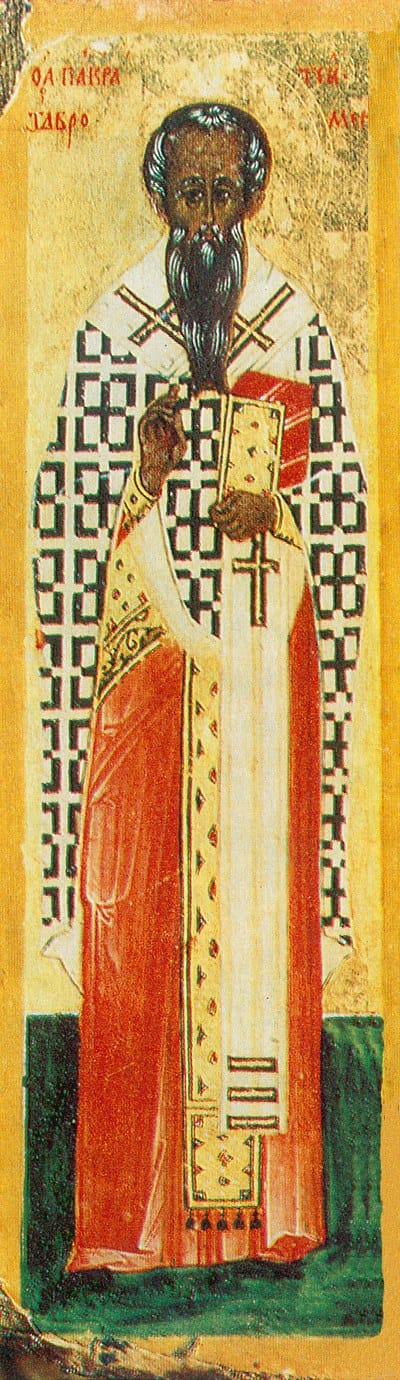
What are we looking at?
An icon isn't a photograph, and it isn't a painting to admire. It's a window. Everything in it is there to teach us something true about the saint.
The Readings
The Scripture the Church appoints for this day. Open your Bible at home and read the passages aloud together, then listen for these words echoing through the saint's story and the rest of your day.
These are the readings appointed for this day in the Church's calendar. Each daily edition carries that day's own.
The Story
Long ago, in the great city of Antioch, there lived a boy named Pancratius who could not stop asking questions.
"Father," he said one morning, tugging at his father's sleeve, "the men at the well are saying there is a Teacher down in Judea who opens the eyes of the blind. With a word. Is it true? Can a man truly do that?"
His father set down his cup and was quiet for a long moment. When he finally spoke, his voice was lower than usual.
"I have heard it too, my son. And I find I cannot sleep for wondering." He looked at the boy across the table. "So. What would you say to a journey?"
"To Judea?" Pancratius was already on his feet. "To Jerusalem?"
"To see for ourselves," his father said, and almost smiled. "A thing like this, a man should not take on rumor."
They joined the roads south, and the roads were thick with travelers, because it turned out that half the world could not sleep for wondering either. When at last they came down into Jerusalem, the boy had never seen so many people crowded into one place — and every one of them was pressing toward the same voice.
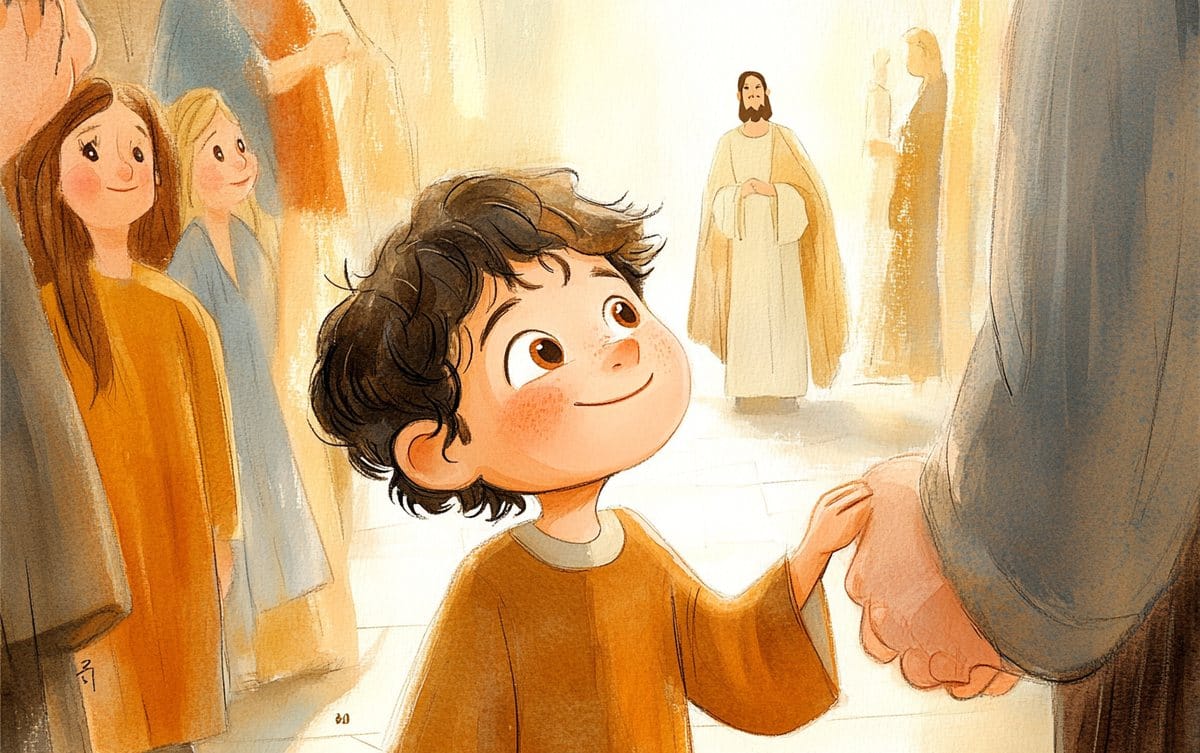
Pancratius wormed his way to the front, and there he saw it happen with his own two eyes. A blind man, led by the hand, calling out over the crowd. The Teacher stopping. A touch. And then the blind man's face — the boy would remember that face for the rest of his life — the blind man's face breaking open like sunrise as he stared, and stared, and began to weep, because for the first time he could see the One standing in front of him.
The boy's mouth hung open. He forgot to breathe.
"You watch very closely, little one," said a broad-shouldered man beside him — a fisherman, by the smell of the sea that still clung to him.
"I don't want to miss anything," Pancratius whispered, not taking his eyes off the Teacher.
The big man laughed, soft and warm, deep in his chest.
"No," he said. "Neither do I. My name is Peter." And he put one heavy, gentle hand on the boy's shoulder, and together they watched.
The boy carried something home to Antioch that day, warm inside his chest like a live coal: he had seen, with his own eyes, the very One the whole waiting world had been longing for. And he never let it go cold.
The years passed, as years do. Pancratius grew tall. One of the Lord's own apostles came at last to Antioch and baptized the young man and his whole household. And then his mother and father died — and Pancratius did a startling thing.
He gave everything away.
"All of it?" said an old servant of the household, staring. "The house? The land? Every last coin your father left you?"
"All of it," said Pancratius.
"But — why? A man could live a hundred lifetimes on what you're giving away!"
Pancratius smiled at him. "I saw a man once who owned nothing at all," he said. "And He was the richest person I have ever seen. I mean to go and find out how."
So he went off alone, far to the wild region of Pontus, and found a cave in a lonely hillside, and there he stayed. He gave his days and his nights to prayer. He wanted nothing the world could sell him. He might well have stayed hidden in that quiet dark for the rest of his life.
But God does not light a lamp in order to hide it under a basket.
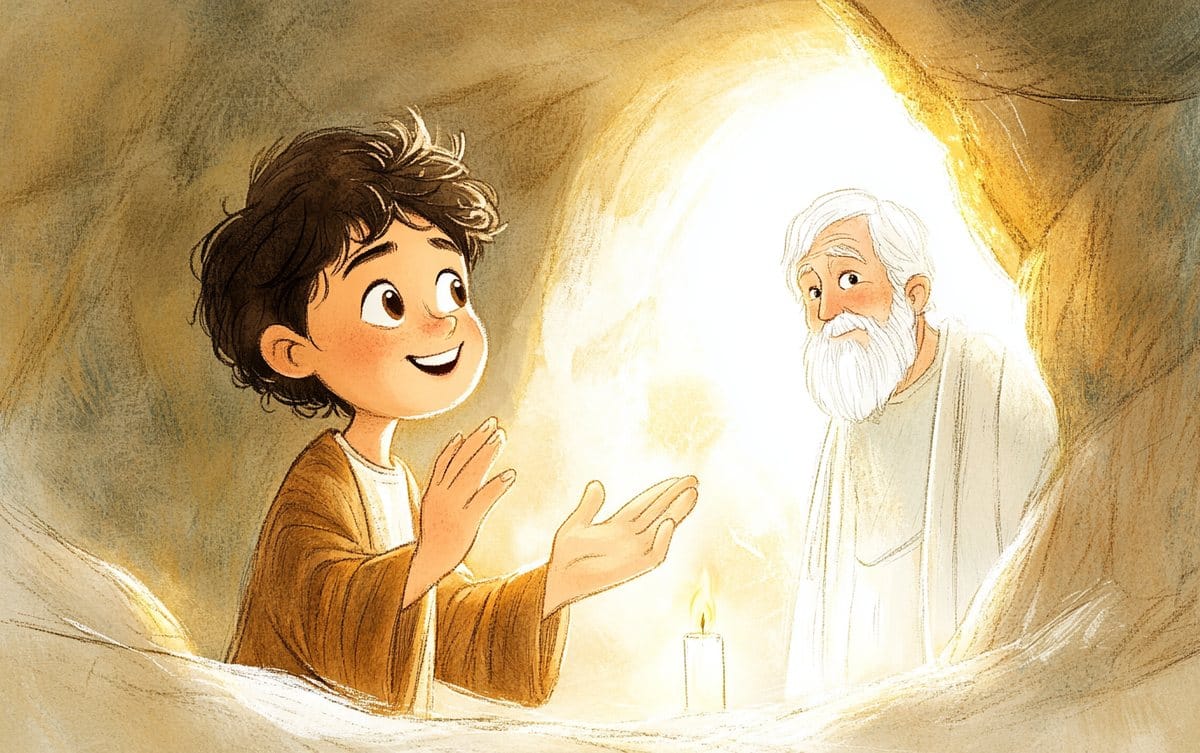
One evening a shadow fell across the mouth of the cave. Pancratius looked up from his prayers.
"So this is where you hid yourself," said a voice — a voice he had not heard in many years, but knew at once.
Pancratius rose slowly to his feet. "…Peter?"
The old fisherman stood in the mouth of the cave, grey now, but his eyes as bright as ever.
"Come out, Pancratius." Peter's voice was gentle, but it was not really a question. "You have prayed long enough in the dark. God has need of your voice out in the daylight. There is a city across the sea that has never once heard His Name. Ten thousand souls, and not one of them knows. Will you come?"
And Pancratius, who had spent all those silent years learning to say one small word to God, now said it out loud to Peter.
"Yes."
And he followed him out without a single backward glance.
They sailed west across the wide green sea to the island of Sicily — to a proud and beautiful city called Taormina that lived in the long shadow of a great smoking mountain. And there, on the shore, the two greatest of the apostles, Peter and Paul, laid their hands upon the young man's head and made him the very first bishop of that city.
Then they made ready to leave him there. Alone. Paul held him by both shoulders and looked hard into his face.
"You will be alone here, son," Paul said. "One man. One whole city, and all its gods."
"Not alone," said Pancratius quietly.
Peter grinned through his grey beard. "No," he said. "Never that."
He did not waste a single day. He preached in the streets and the loud, crowded marketplaces. He prayed over the sick, and they got up well. He walked straight up to a man scowling at him from a temple doorway.
"And what is your god's name, stranger?" the man sneered. "Where is his statue? Show us this god of yours."
"He has no need of a statue," said Pancratius. "He made the mountain you are all so afraid of. He made the sea you sailed me across. He made you. Shall I tell you what He did next?"
And he told them. One by one, the great stone idols that had frightened the people for generations were pulled down and broken and carried away, and nobody was struck by lightning, and the sun came up the next morning just the same. In a single month — just thirty days — Pancratius and his new Christians raised up a church with their own hands, and he stood inside it to serve. A few came at first. Then more. Then more still, until nearly the whole of Taormina had turned from cold dead stone to the living God.
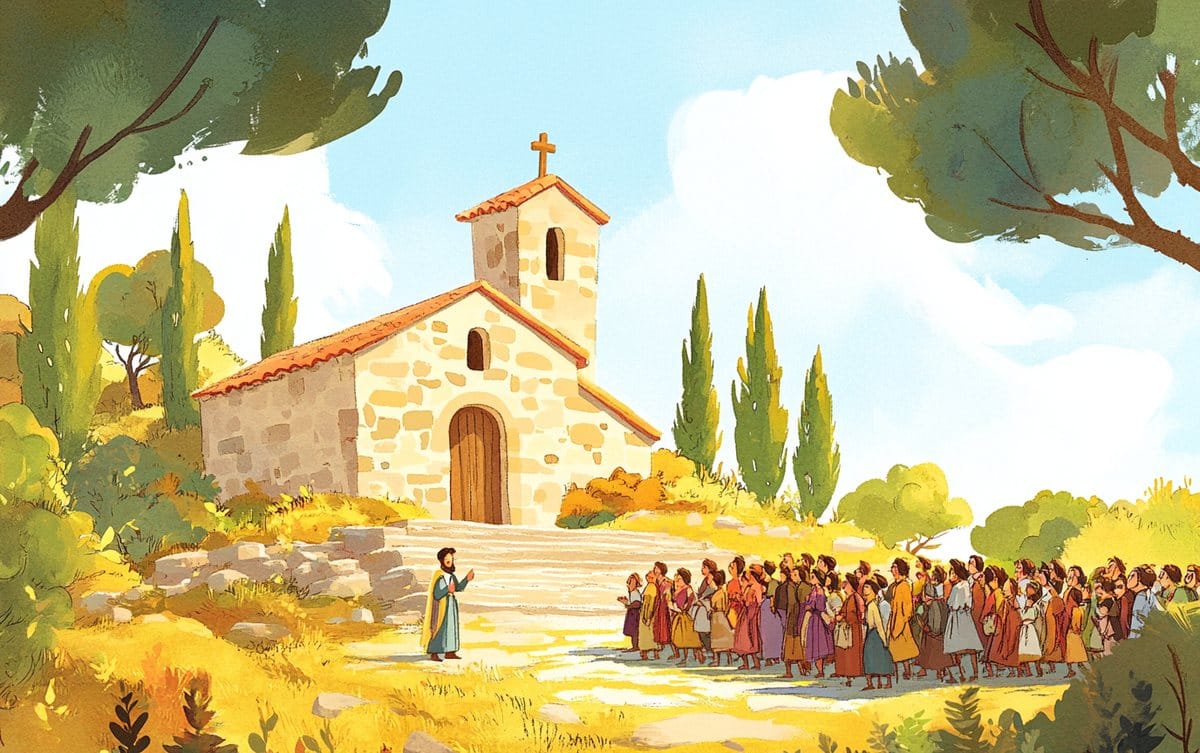
But not everyone was glad.
Word reached a heathen war-captain named Aquilinus that a whole city had thrown down its gods — and he gathered an army and marched to burn Taormina back into line. When the people saw the dust of that army on the road, they ran to the church in terror.
"They'll burn us to the ground!" a man cried. "Bishop — what do we do?"
Pancratius was already reaching for the tall wooden Cross that stood by the altar. "You," he said, "will stay behind the walls. And you will pray. I will go out to meet them."
"Out? Alone? Against an army?"
"Not alone," said Pancratius — for the third time in his life. And he walked out through the gates with nothing in his two hands but the Cross of Christ, lifted high over his head.
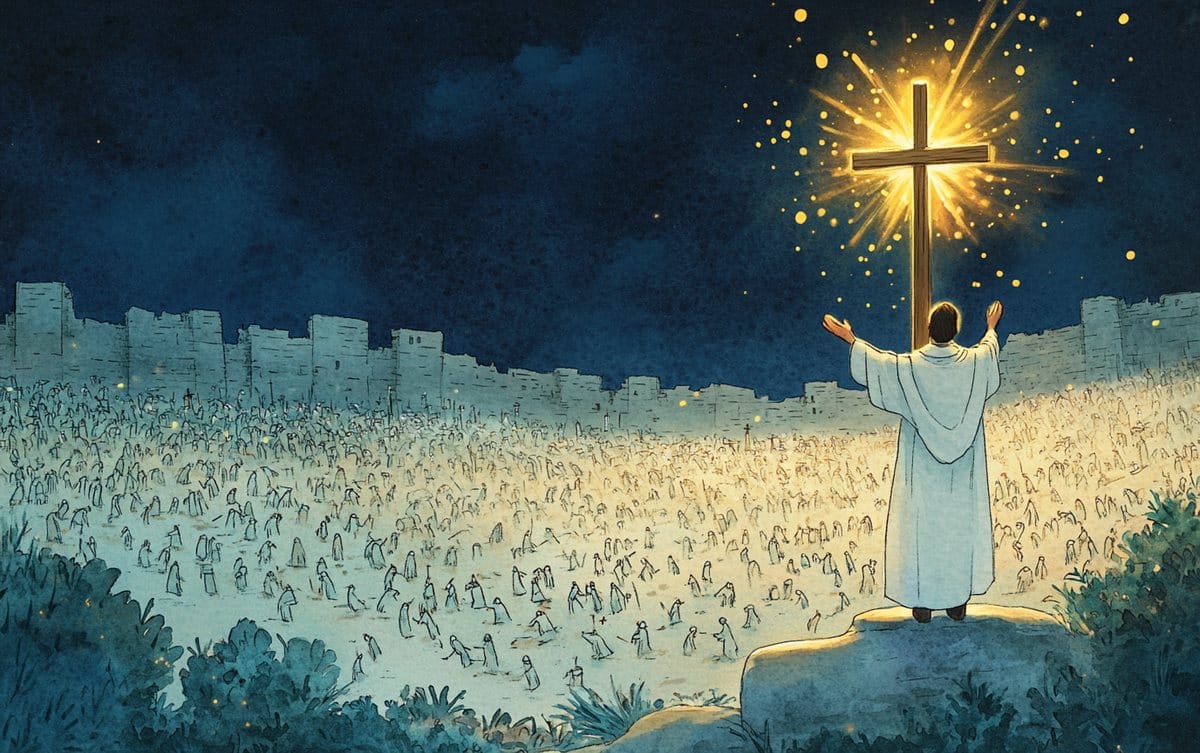
And as he raised it, a strange darkness came down over the field like a sudden falling night. In that darkness the soldiers lost all sense of one another. They swung at shadows; they shouted names that no one answered; and the great army broke apart and scattered to the four winds without ever once touching the city. When the light came back, the road was empty. Taormina was safe — and every soul in it knew exactly Whose hand had saved them.
For many long years after that, Pancratius shepherded his people the way a good father tends his own children. He settled their quarrels and sat with them in their sorrows; he baptized their babies and buried their dead and fed them the Bread of Life. The wide-eyed boy who had once stood on tiptoe in a Jerusalem crowd had grown into a man through whom that very same mercy still quietly flowed.
Yet there were still a few who never forgave him for the gods he had toppled, and they watched, and they waited. At last a band of them caught the old bishop alone — and there they took up stones, and struck him down, and Pancratius gave up his soul to God.
He had given the Lord his very beginning — a small boy, wide-eyed in a crowd. And now, an old man far across the sea, he gave Him his ending too. His people gathered up his holy relics with weeping and with great honor. And today, so many hundreds of years later and so far from that smoking mountain, we say his name once more, out loud, together — and he is blessing us still.
The Prayer
you became a successor to their throne;
inspired by God, you found your way to contemplation
through the practice of virtue.
Rightly dividing the word of truth,
you contested for the faith even unto blood.
Hieromartyr Pancratius, entreat Christ God
that our souls may be saved.
for the people of Taormina;
you were also shown to be a sufferer for Christ.
Since you now stand before Him, O blessed one,
pray for those who honor you.
Let's Talk About It Together
Do This Together
- Build a little "cave": a blanket over a table or two chairs. (No blanket? Just close your eyes at the table.)
- One child curls up inside and stays very still, whispering a quiet "thank You" to God while everyone counts slowly to ten.
- A grown-up plays the Apostle Peter: knock on the "cave" and call out, "Come out — God has work for you to do!"
- The child comes out and does one small, real good work right away: clear a plate, help a little brother, say something kind.
- Take turns until everyone has had a quiet moment and a good work.
Print & Color Together
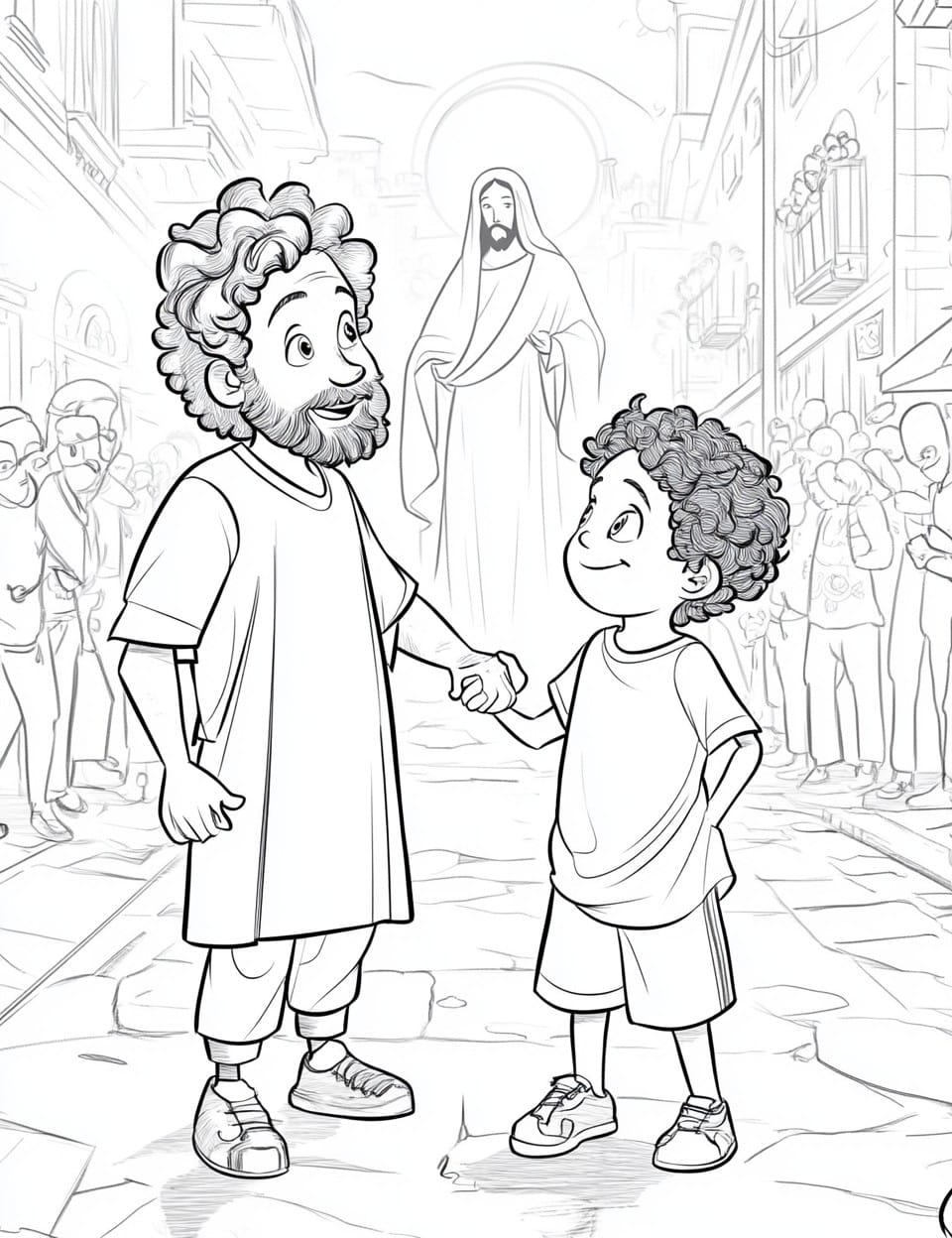
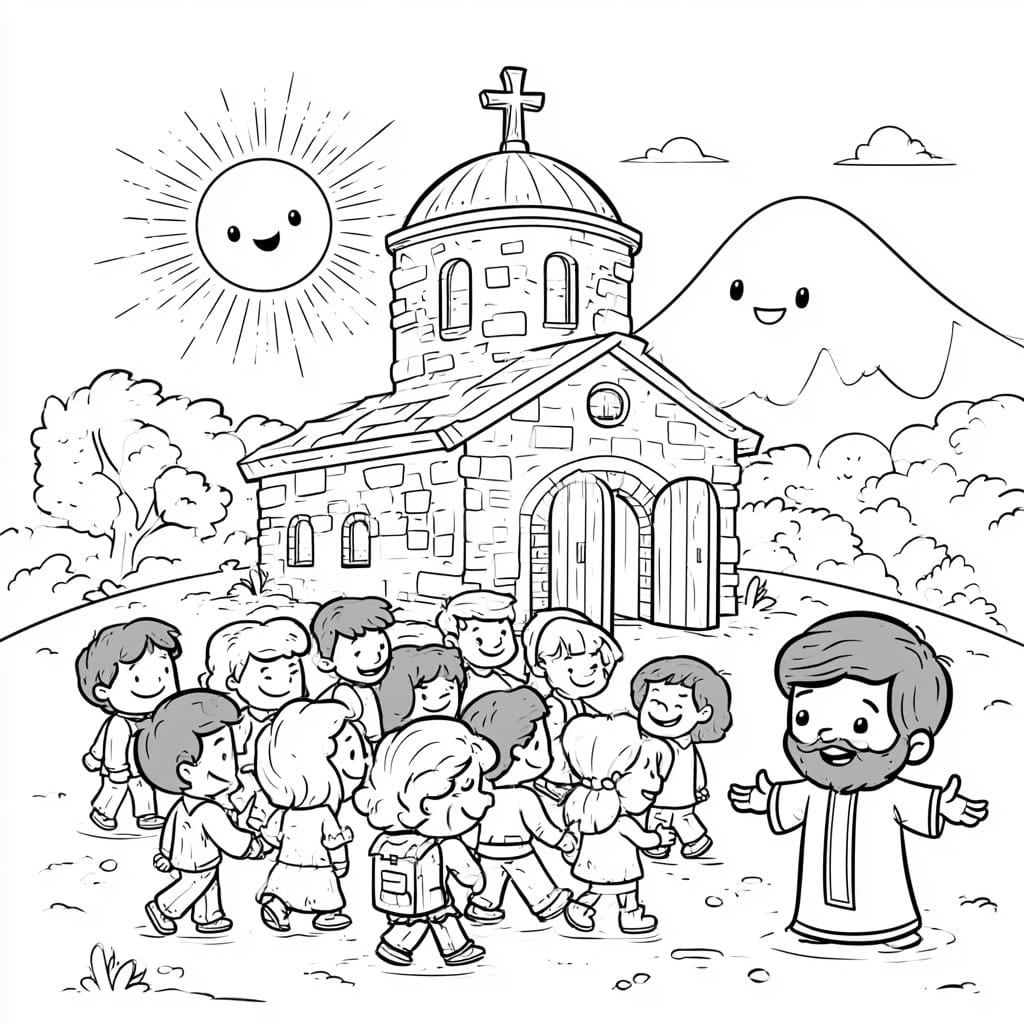
Go in Peace
pray to God for us."
Thy Kingdom come, Thy will be done,
on earth as it is in heaven.
Give us this day our daily bread,
and forgive us our trespasses,
as we forgive those who trespass against us;
and lead us not into temptation,
but deliver us from the evil one. Amen.
Every edition of The Vigil Lamp is an original retelling. The saint is real, and the names, places, and events of this life are drawn faithfully from traditional and public-domain accounts. The words are our own, written to make a true story vivid and a joy for families to read aloud together.
This is every single day.
One saint. One family. Time that belongs to you, all at once or across your day.
Register now