
September 20 · Eustathius Placidas
Afterfeast of the Elevation of the Cross
O Lord Jesus Christ our God, have mercy on us.”
The Cross is still in the house.
Six days ago the Church opened a Great Feast. She lifted up the Precious and Life-Giving Cross, and the people said, "Lord, have mercy." Yesterday she kept the Afterfeast, and she named three who would not bow. Today she does not put that Wood away.
Today is still the Afterfeast of the Elevation of the Cross. It is also the Sunday after the Elevation. The weekday greeting of this season is for the weekday Liturgies. This morning is a Sunday. The Church has already given us a Sunday word about the Cross: "Whosoever will come after me, let him deny himself, and take up his cross, and follow me."
Do you hear that? Take up his cross. The Cross is still in the air. And on this Sunday she has already given us another word: "I am crucified with Christ: nevertheless I live."
The Church remembers more than one name on the twentieth of September. She remembers the Holy Martyr and Confessor Michael and his councilor Theodore, Wonderworkers of Chernigov; Saint Oleg, Prince of Briansk; and the Monastic Martyr Hilarion of Saint Anne Skete on Mount Athos. Those are true days. We will not tell those whole lives this morning.
This morning she asks us to look at a household.
Their names are Eustáthios, and Theopistē, and Agapios, and Theopistos. The Church also writes Eustathius, and Eustace, and Placidas. Before he was baptized he was called Plakidas. Families may hear Theopiste, and Agapius, and Theopistus. All those names are one house.
Do you hear what she is already singing for them? "Your holy martyr Eustáthius and his wife and sons, O Lord, through their sufferings have received incorruptible crowns from You, our God."
That is today's word. Not a general who kept the Name in a locked room. A household. Four who would not worship the idols.
He lived long ago, in Rome, in the days of the emperors Titus and Trajan. He was a Roman general. His name then was Plakidas.
Even before he came to know Christ, Plakidas devoted himself to charitable endeavors, helping the poor and destitute. Those are the Church's words. We will not invent others. He did not yet know the Lord's Name. He was already giving himself away.
Therefore, the Lord did not allow this virtuous pagan to continue in the darkness of idolatry.
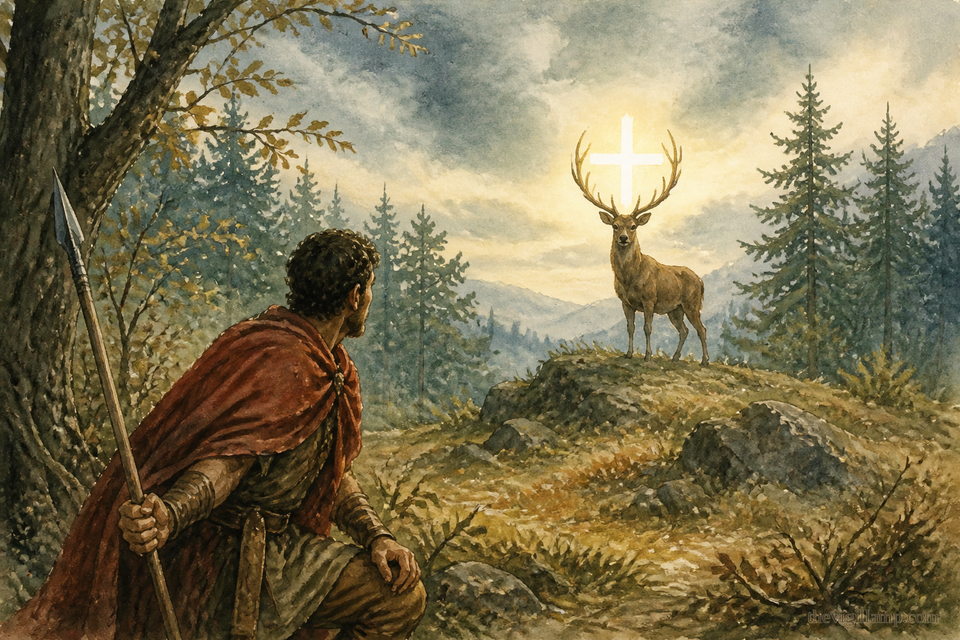
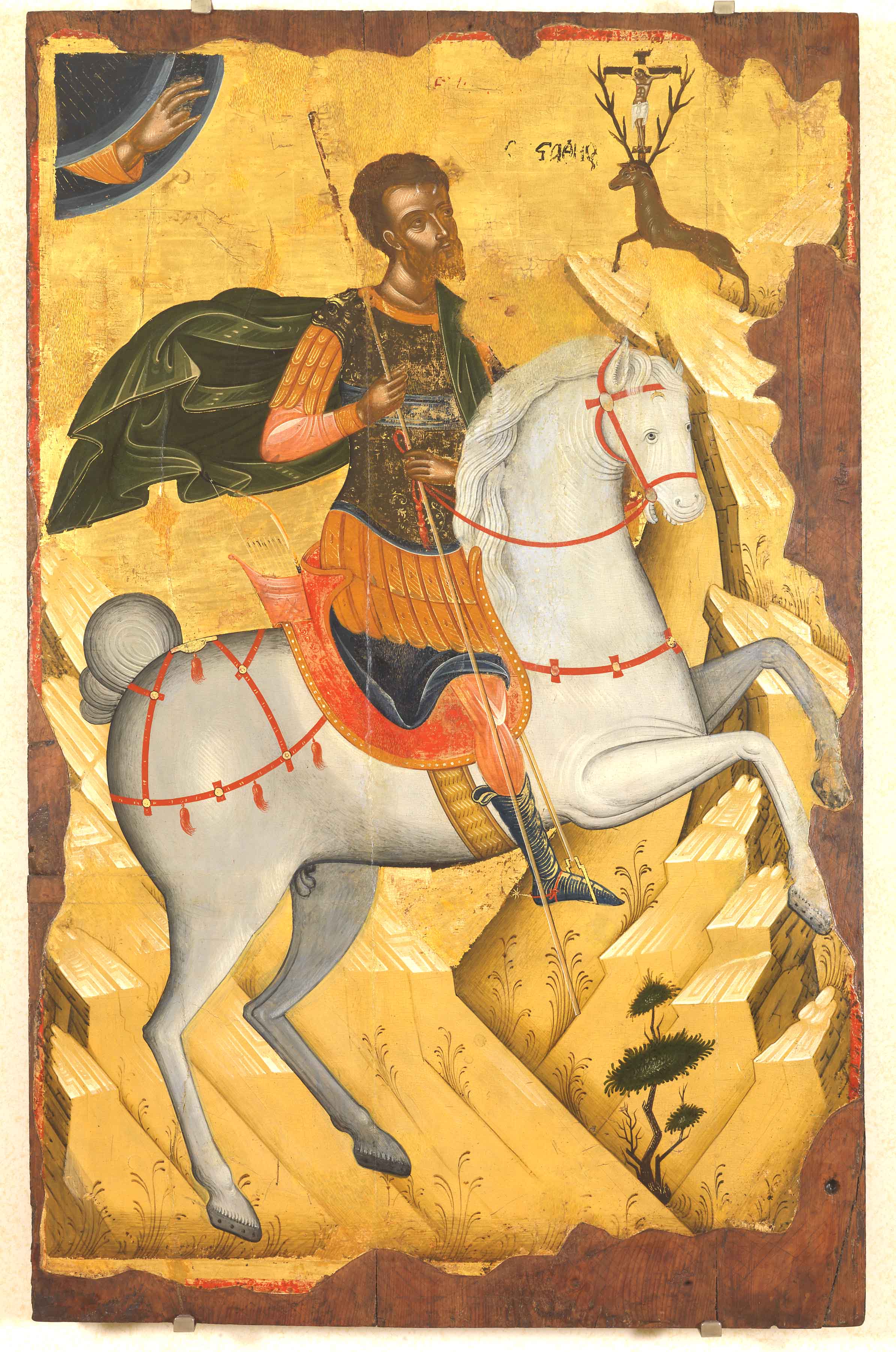
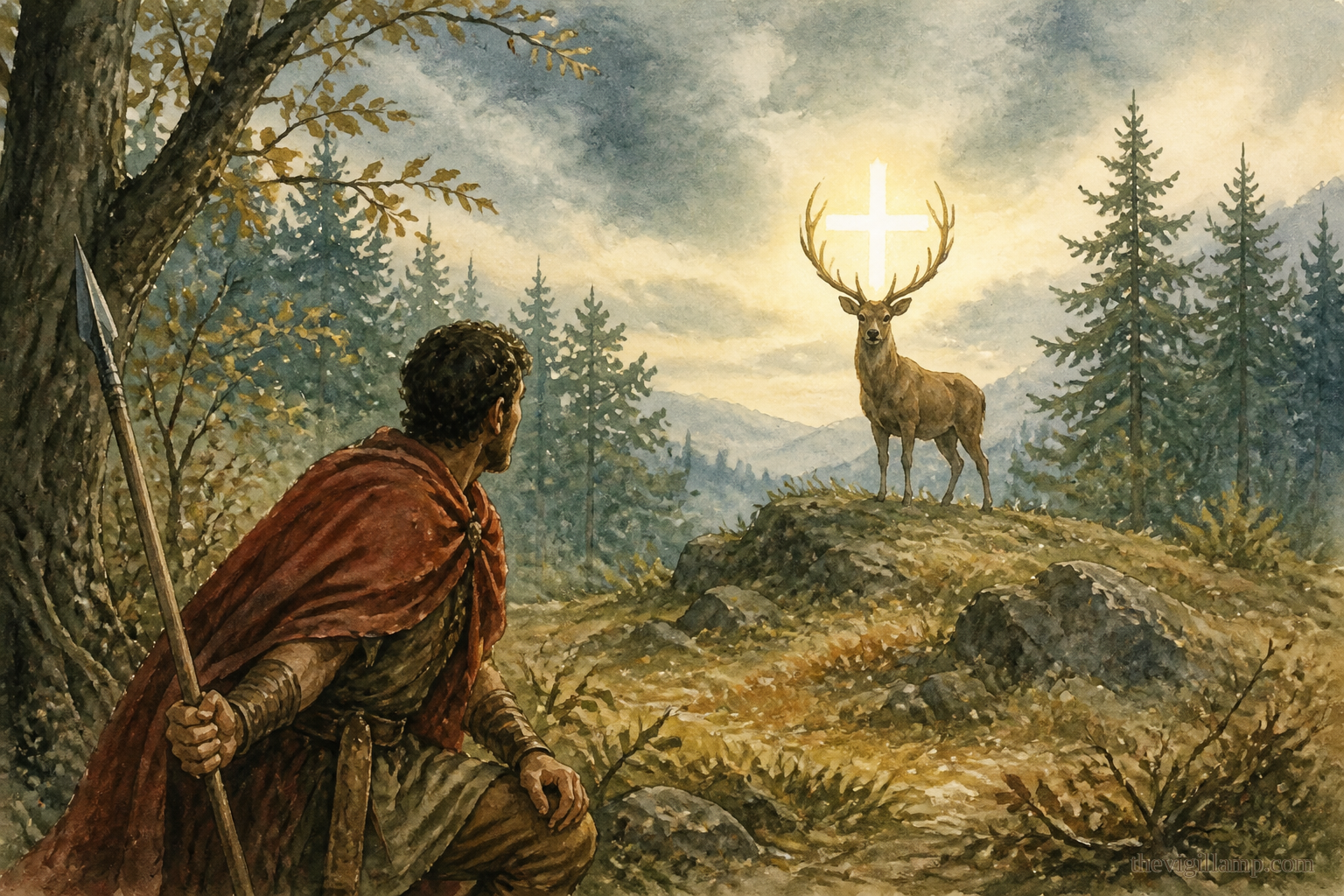
One day, while hunting in a forest, he saw a remarkable stag which stopped now and then to stare at him. Plakidas pursued it on horseback, but could not catch up. The stag jumped over a chasm and stood on the other side facing him. Suddenly, Plakidas saw a radiant Cross between its antlers.
The General was astonished to hear a voice coming from the Cross saying, "Why do you pursue me, Plakidas?"
"Who are You, Master?" asked Plakidas.
The voice replied, "I am Jesus Christ, Whom you do not know, but by your good deeds, you honor me. I have appeared here on this creature for your sake, to draw you into the net of my love for mankind. It is not fitting that one as righteous as you should worship idols and remain ignorant of the truth. It was to save mankind that I came into the world."
Those are the Church's words. We will not invent others. We will not turn them into a longer speech no one wrote down.
Plakidas cried out, "Lord, I believe that You are the God of Heaven and earth, the Creator of all things. Master, teach me what I should do."
Again the Lord replied, "Go to the bishop of your country and receive Baptism from him, and he will instruct you."
Plakidas returned home and joyfully recounted everything to his wife Tatiana. She in turn told him of a strange dream she had the evening before, in which she had been told, "Tomorrow you, your husband and your sons shall come to me and know that I am the true God."
The couple then proceeded to do as they had been told.
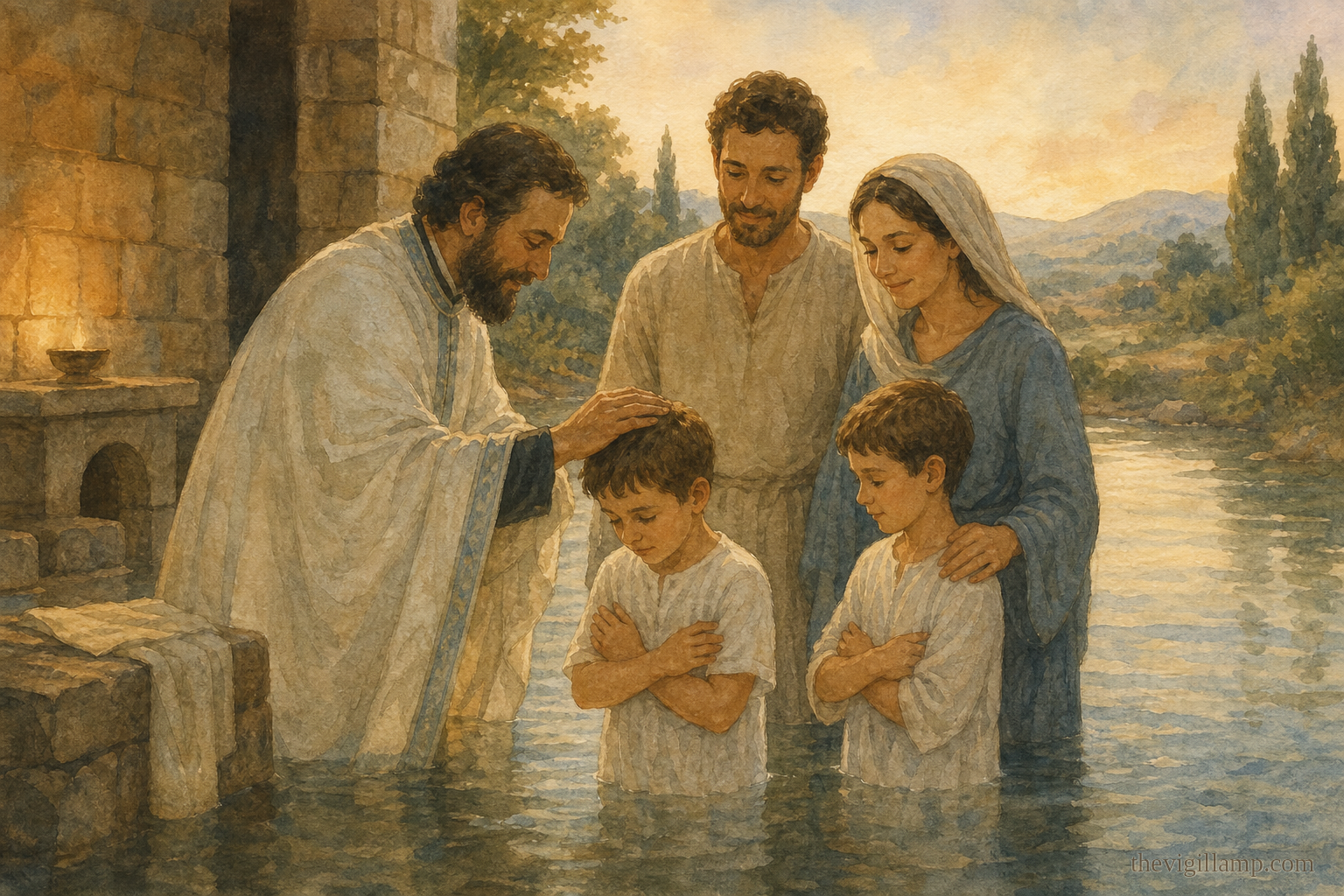
They hastened to the Christian bishop, who baptized all their family, and then communed them with the Holy Mysteries. Plakidas was renamed Eustáthios, his wife was called Theopistē, and their children, Agapios and Theopistos.
Do you hear that? Not a general alone. A household. A new name for the father, a new name for the mother, new names for the two sons. The bishop gave them the Holy Mysteries with his own hands.
On the following day, Saint Eustáthios went to the place of his miraculous conversion and there he gave thanks to the Lord for having called him to the path of salvation.
Saint Eustáthios received another miraculous revelation. The Lord Himself predicted his impending tribulations: "Eustáthios, you shall suffer many misfortunes, as did Job, but in the end you will conquer the devil."
Those are the Church's words. We will not invent others.
Soon Saint Eustáthios was afflicted with misfortune: all of his servants died of the plague, and his cattle perished. Brought to ruin, but not despairing in spirit, Saint Eustáthios and his family secretly abandoned their home, to live in poverty unknown, humble, and poor.
We will not linger on the dying. The Church knows it, and that is enough for us this morning. We say what the Church says: the house was brought low. They did not despair. They went away quietly, to live unknown.
They went to Egypt to board a ship bound for Jerusalem. During the voyage the Saint experienced more sorrow. Captivated by Theopistē's beauty, the ship owner cruelly set Eustáthios and his children ashore, keeping the wife for himself.
Those are the Church's words. We will not invent a shout. We will not invent a speech on the deck. We say what the Church says: they were parted. The father and the two boys were set on the shore. The mother was kept on the ship.
With great sadness the Saint continued on his way, and new calamity befell him. Coming to a tempestuous river, he went to carry his two sons across in turn. When he brought the first one across, the other was seized by a lion and was carried off into the wilderness. As he turned back to shore, a wolf dragged the other child into the forest.
We will not linger on the beasts. We will not invent a roar. The Church knows the hour, and that is enough for us this morning. We say what the Church says: the boys were carried off. The father wept. He realized that Divine Providence had sent him these misfortunes in order to test his endurance and devotion to God.
Saint Eustáthios prepared himself for even more sorrows, knowing that one who endures temptations and has been tested will receive the crown of life which God has promised to those who love Him.
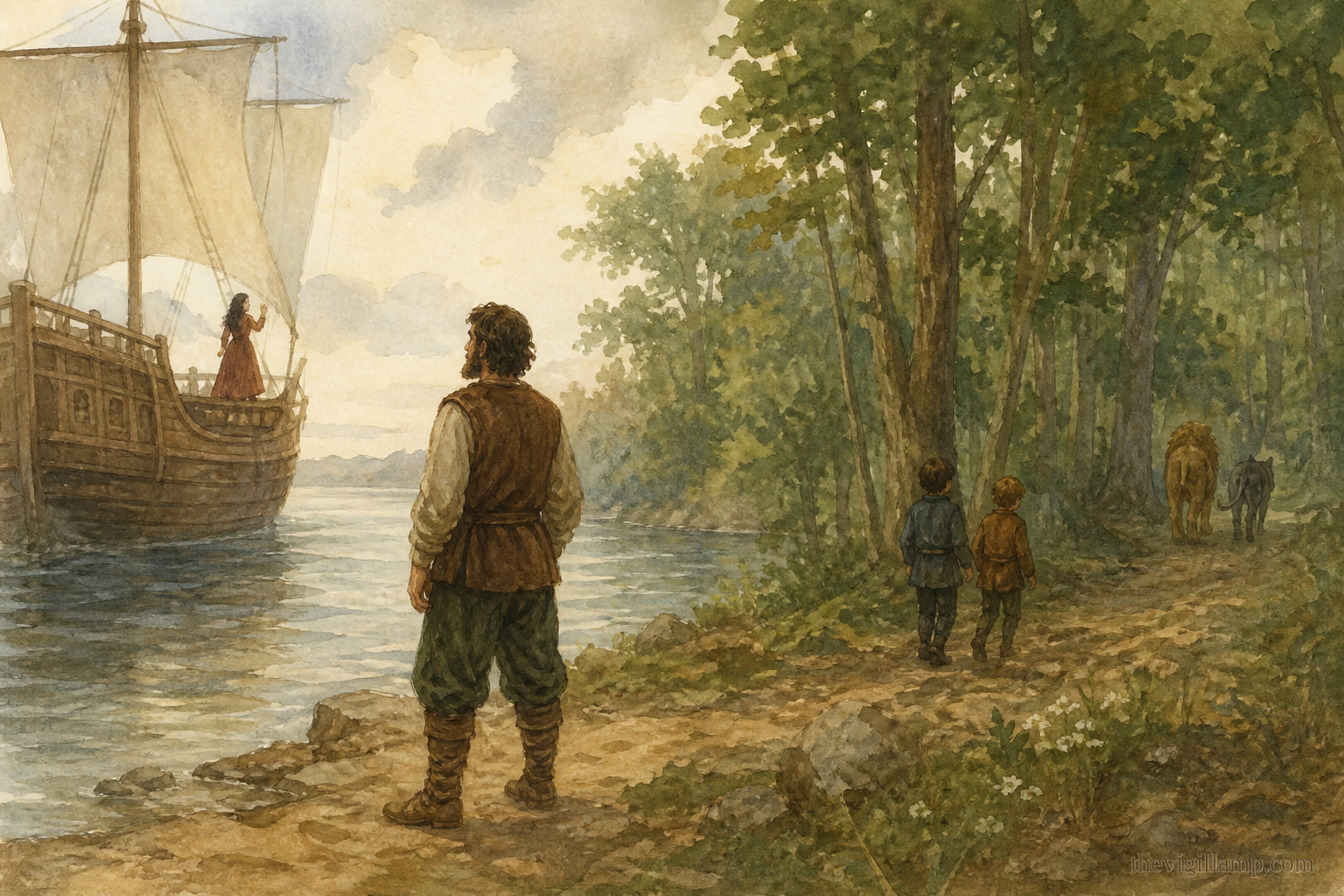
In the village of Badessos he found work and spent five years in ceaseless toil.
Saint Eustáthios did not know at the time that by God's mercy, shepherds and farmers had rescued his sons, and they were living near him. He was also unaware that the impudent shipowner had been struck down with a terrible disease and died, leaving Saint Theopistē untouched. She lived in peace and freedom at the place where the ship landed.
Do you hear that? The Lord had not put the household down. The boys were alive. The mother was safe. The father did not know yet.
During this time it had become difficult for Emperor Trajan to raise an army for Rome to deal with a rebellion, for the soldiers refused to go into battle without Plakidas. They advised Trajan to send men out to all the cities to search for him.
Antiochos and Akakios, who were friends of Plakidas, sought him in various places. Finally, they arrived in the village where Saint Eustáthios lived. The soldiers found him, but they did not recognize him. They began telling him about the person they sought, asking for his help and promising him a large reward. Saint Eustáthios recognized his friends right away, but he did not disclose his identity to them.
Borrowing money from one of his friends, he prepared a meal for his visitors. As they looked at him, they noticed that he resembled their former commander. When they saw a scar on his shoulder, they realized that it was their friend who stood before them. They embraced him with tears and told him why they had been looking for him.
Saint Eustáthios returned to Rome with them and was restored to his former rank. Many new recruits were drafted into the army from all over the Empire. He did not know that the two young soldiers who served him, and whom he loved for their skill and daring, were actually his own sons. They did not realize that they were serving under the command of their own father, nor that they were brothers by birth.
While on campaign, the army led by Eustáthios halted at a certain place. One night, the brothers were talking in their tent. The elder spoke about his life, how he had lost his mother and brother, and how he had been parted from his father. The younger brother then realized that the other man was his own brother, and revealed how he had been rescued from the wolf.
A woman overheard their conversation, since their tent was pitched right next to her house, and she realized that these were her sons. Without identifying herself to them, but not wishing to be separated from them, she went to their general, Saint Eustáthios, and asked that he take her to Rome with him. She said she had been a prisoner, and wanted to go home. Then she came to recognize the general as her husband, and with tears she told him about herself, and about the two soldiers who were their sons.
Thus, through God's great mercy, the entire family was reunited.
Those are the Church's words. We will not invent others. We will not turn the tent into a play. We say what the Church says: the brothers found each other. The mother found the brothers. Then she found her husband. The household was one house again.
Soon thereafter, the rebellion was crushed, and Saint Eustáthios returned to Rome with honor and glory. Emperor Trajan had died in the meantime, and his successor Hadrian wanted to celebrate the victory with a solemn sacrifice to their "gods." To everyone's amazement, Saint Eustáthios did not go to the pagan temple. The Emperor ordered them to find him and bring him to the temple.
"Why don't you want to worship the gods?" the Emperor inquired. "You, above all others, should offer thanks to them. Not only did they preserve you in war and grant you victory, but they also helped you to find your wife and children."
Saint Eustáthios replied: "I am a Christian and I glorify and give thanks to Christ, and I offer sacrifice to Him. I owe my life to Him. I do not know or believe in any other God."
Those are the Church's words. We will not invent others.
Outraged, the Emperor ordered him to remove his military belt and brought Eustáthios and his family before him. They did not succeed in persuading the steadfast confessors of Christ to offer sacrifice to idols.
The Saint's family was sentenced to be torn to pieces by wild beasts, but the animals would not touch the holy martyrs.
Those are the Church's words. We will not invent a roar. We will not invent a speech to a lion. We say what the Church says: the beasts were sent. The household was not harmed.
Then they would not worship the idols, and the Lord received the whole household.
We will not linger on the manner of their death. The Church knows the end, and that is enough for us this morning. We say what the Church says: they were not turned. The Lord received Eustáthios, and Theopistē, and Agapios, and Theopistos. Some pious Christians buried the bodies of the Saints with all honor and reverence.
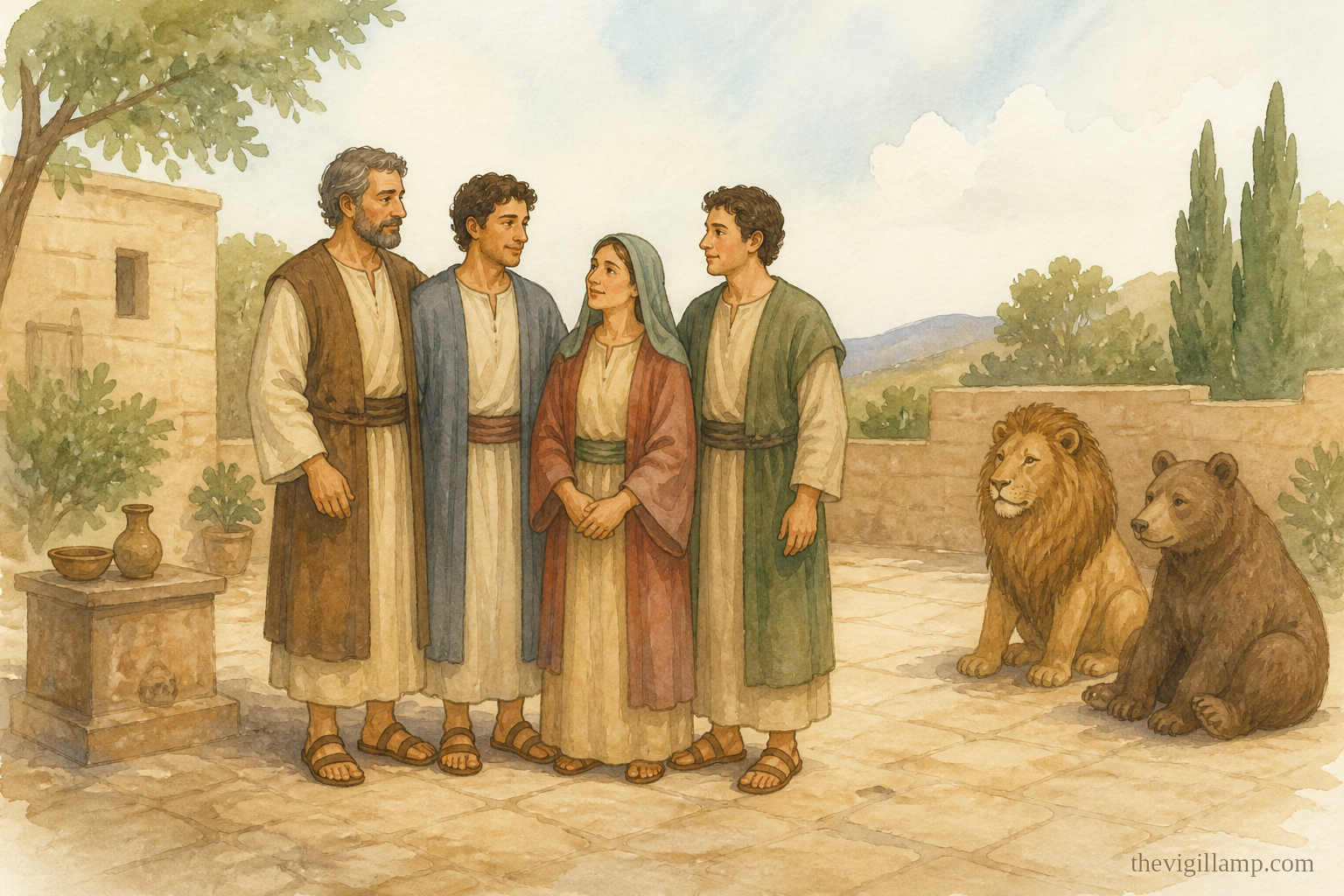
Do you hear what the Church is singing now? Not only that they died. She is singing that they received incorruptible crowns, the father and the wife and the sons.
"Your holy martyr Eustáthius and his wife and sons, O Lord, through their sufferings have received incorruptible crowns from You, our God. For having Your strength, they laid low their adversaries, and shattered the powerless boldness of demons. Through their intercessions, save our souls!"
And again: "Clearly emulating the sufferings of Christ, and faithfully drinking of His cup, O Eustáthios, you became a partaker and joint heir of His glory."
A household. A cup. A share in His glory.
The word we heard this morning is the Sunday-After word. It is not a saint pair. The Church appointed it anyway, on the sixth morning of the Afterfeast, and it already knows the Cross.
"Whosoever will come after me, let him deny himself, and take up his cross, and follow me."
The Lord said that about His own Cross, and about anyone who would come after Him. Six days ago the Church lifted that Wood up. Today she is still saying it. Plakidas saw a radiant Cross between a stag's antlers. Eustáthios would not go to the pagan temple. Theopistē and the two sons would not offer sacrifice to idols. They knew Who had been lifted up.
And the Epistle says, "I am crucified with Christ: nevertheless I live; yet not I, but Christ liveth in me."
Not a general who kept his old name. A man who was crucified with Christ, and lived. A wife who dreamed the true God. Two sons who found each other in a tent. A household the beasts could not touch.
The same reading has another word: "the life which I now live in the flesh I live by the faith of the Son of God, who loved me, and gave himself for me."
A life. Not a prize for the strong. A Name, held, when the city wanted a sacrifice.
The psalm we held in the hand is not a lectionary appointment. It is a word the household already knew how to keep: "He shall call upon me, and I will hearken to him: I am with him in affliction; and I will deliver him, and glorify him."
That is why the Church will not let the Afterfeast stand without these four. While she is still singing the Cross, she names a household that took it up. While she is still saying, "O Lord, save Your people," she names a victory that does not look like a victory — a stag, a Cross, a baptism, a Job-like road, a ship, a river, five years of toil, a scar, a tent, a reunion, a temple they would not enter, beasts that would not harm them, and four names the Church will not put down.
And today, so many hundreds of years later, on the Afterfeast, on the Sunday after the Elevation, we say their names once more, out loud, together — Holy Greatmartyr Eustáthios, and Theopistē, and Agapios, and Theopistos — and they are praying for us still.
through their sufferings have received incorruptible crowns from You, our God.
For having Your strength, they laid low their adversaries,
and shattered the powerless boldness of demons.
Through their intercessions, save our souls!
and faithfully drinking of His cup,
O Eustáthios, you became a partaker and joint heir of His glory,
receiving from the God of all divine forgiveness from on high.
and bless Your inheritance.
Grant victories to the Orthodox Christians
over their adversaries.
And by virtue of Your Cross,
preserve Your habitation.
grant mercy to those who are called by Your Name, O Christ God;
make all Orthodox Christians glad by Your power,
granting them victories over their adversaries,
by bestowing on them the Invincible trophy, Your weapon of Peace.
- Sit together as one house — not four corners of the room. Today the Church remembers a household. This is not yesterday's three of Synnada, and it is not the Great Feast's lifting-up of the Cross. It is four names, and it is a Cross between a stag's horns.
- One child says, slowly, the four names: "Eustáthios. Theopistē. Agapios. Theopistos." Everyone else is quiet. Count slowly to ten. The hard part is not the names. The hard part is remaining with them.
- Then that child says, slowly, the Sunday-After word: "Whosoever will come after me, let him deny himself, and take up his cross, and follow me."
- That child does one small, real good work right away: clear a plate, help a little brother, give up the first turn, stay with someone who is left out. Plakidas was already giving himself away before he knew the Name. We can put one kindness into someone else's hand in this room.
- Take turns. When everyone has had a turn, sit together and each write one place this week where it will be easier to go along than to stay with Christ, and one small way you will stay. Keep the papers under the lamp until next Sunday.


and Theopistē, Agapios, and Theopistos,
pray to God for us.
Most Holy Theotokos, save us.”
on earth as it is in heaven. Give us this day our daily bread,
and forgive us our trespasses, as we forgive those who trespass against us; and lead us not into temptation,
but deliver us from the evil one. Amen.