
September 19 · Trophimus, Sabbatius, and Dorymedon
Afterfeast of the Elevation of the Cross
O Lord Jesus Christ our God, have mercy on us.”
The Cross is still in the house.
Five days ago the Church opened a Great Feast. She lifted up the Precious and Life-Giving Cross, and the people said, "Lord, have mercy." Yesterday she kept the Afterfeast, and she named a bishop of Crete. Today she does not put that Wood away.
Today is still the Afterfeast of the Elevation of the Cross. It is also the Saturday after the Elevation. From this morning until the Leavetaking, the Church keeps singing a greeting at the weekday Liturgies: "O come, let us worship and fall down before Christ. O son of God crucified in the flesh, save us who sing to Thee: Alleluia."
Do you hear that? Crucified in the flesh. The Cross is still in the air. And on this Saturday she has already given us a word about the lifting-up: "When ye have lifted up the Son of man, then shall ye know that I am he."
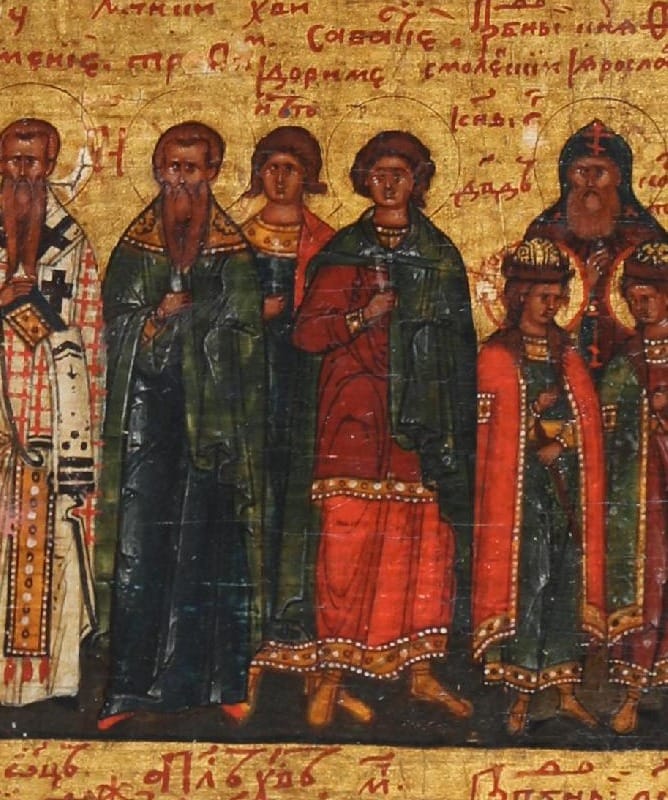
The Church remembers more than one name on the nineteenth of September. She remembers Saint Theodore of Tarsus, Archbishop of Canterbury; Saint Theodore, Prince of Smolensk and Yaroslav, and his sons Saints David and Constantine; Martyr Zosimas the Hermit of Cilicia; and Right-believing Great Prince Igor of Kiev and Chernigov. Those are true days. We will not tell those whole lives this morning.
This morning she asks us to look at three.
Their names are Trophimus, Sabbatius, and Dorymedon. The Church also writes Trophimos, and Sabbatios. Families may hear all those names. They are one company.
Do you hear what she is already singing for them? "God praised in Trinity has glorified a trinity of martyrs: Trophimus, Sabbatius, and Dorymedon."
That is today's word. Not three men who kept the Name in a locked room. A trinity of martyrs. Three who would not bow.
They lived long ago, in the days of the Roman emperor Probus. Two of them, Trophimus and Sabbatius, came into the city of Antioch.
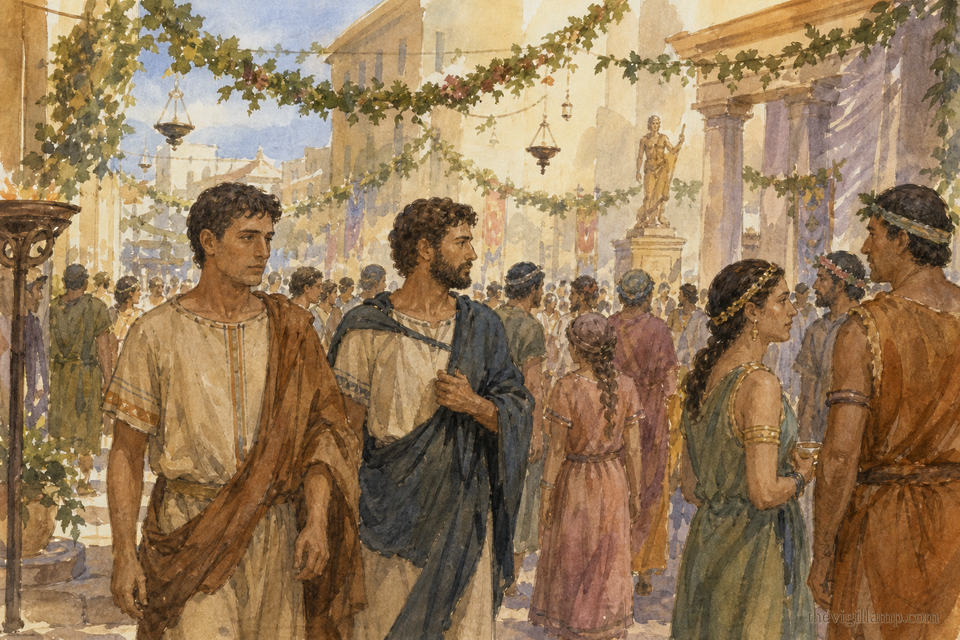
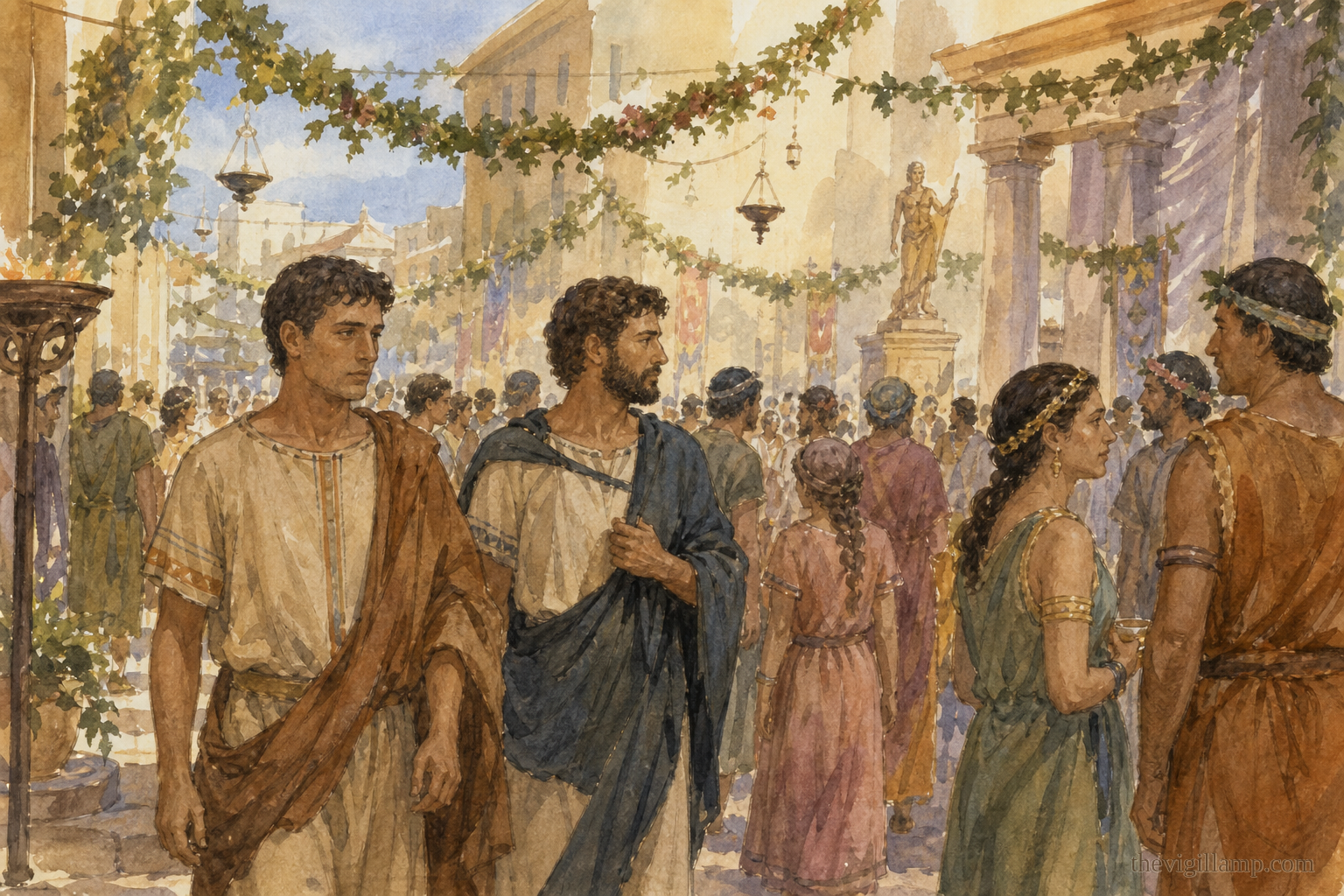
A pagan festival was being celebrated there. Sacrificial offerings were brought. The wine was poured. The city was loud. The older books remember that festival as a feast of Apollo, out at Daphne by the city. The Church's short life does not name the god. The sadness is the same sadness.
Trophimus and Sabbatius arrived just as the festival was taking place, and they were saddened by this loud and indecent spectacle. They prayed that the Lord would guide the errant on the way of salvation.
Do you hear that? They did not come to shout. They came, and they saw, and they asked God to guide people who were going the wrong way.
As they said this, the idolaters noticed their presence. Seeing that the strangers did not worship the idols, they arrested them and took them to the governor.
At their interrogation, the saints firmly confessed their faith. When they were told to renounce Christ, they resolutely refused to do so.
Those are the Church's words. We will not invent others. We will not turn them into a speech no one wrote down. We say what the Church says: they were asked to put the Name down. They would not.
Saint Sabbatius died under the fierce torment.
We will not linger on the manner of his sufferings. The Church knows them, and that is enough for us this morning. We say what the Church says: he was not turned. He gave his soul to God.
Saint Trophimus was sent to the city of Synnada in Phrygia.
Synnada was a real city. Families may hear Synnada, or Synnas. It stood in Phrygia, in Asia Minor. The ruins are still there. We will not invent the streets. We say what the Church says: they sent him on.
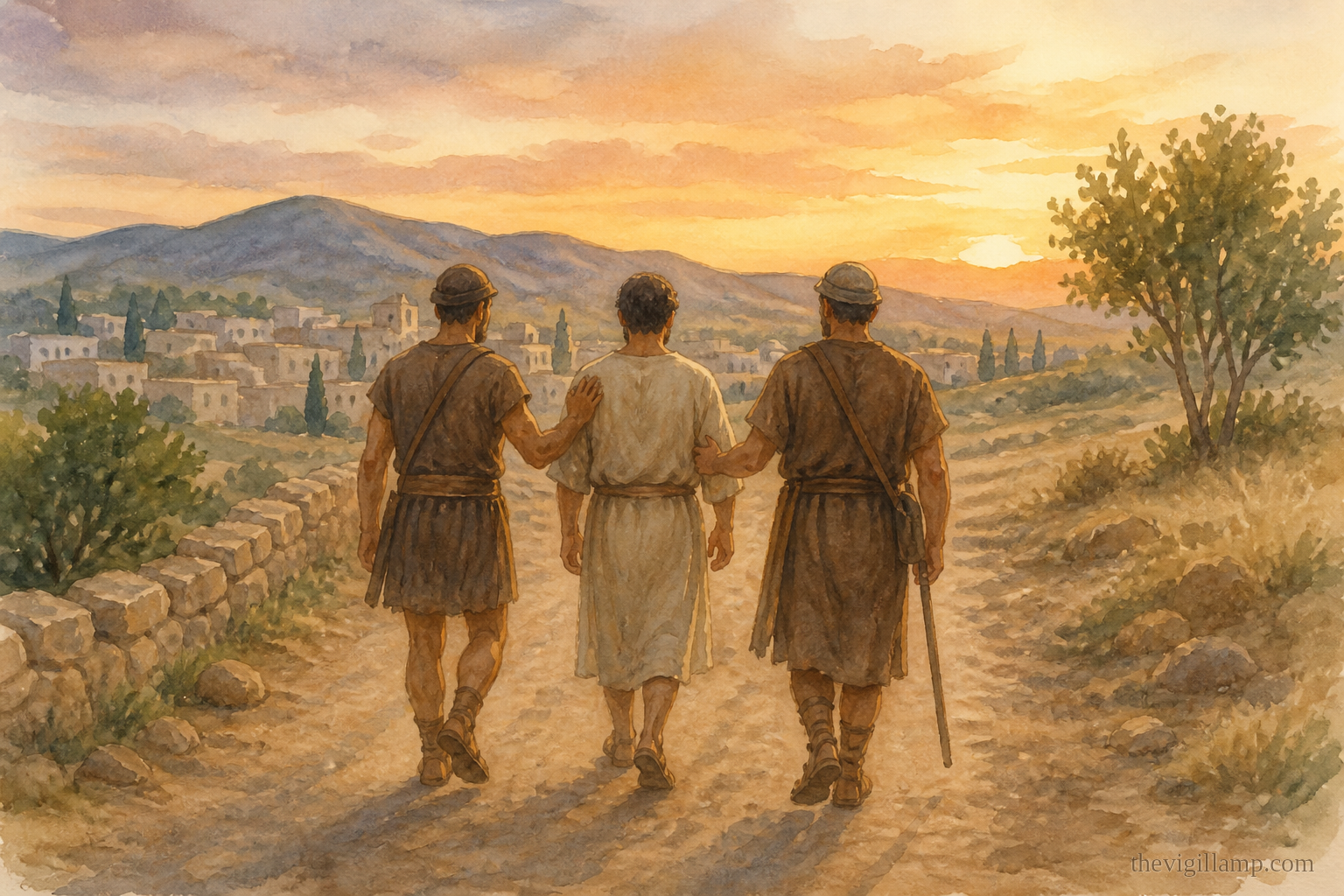
In Synnada the governor used all manner of tortures to break the will of the brave Christian. Saint Trophimus merely repeated the words of Scripture: "many afflictions has the righteous one, but from them all will the Lord deliver him."
Those are the words the Church has kept in his mouth. We will not invent others. The psalm we held in the hand is already that word: "Many are the afflictions of the righteous: but out of them all the Lord will deliver them."
Then a senator came.
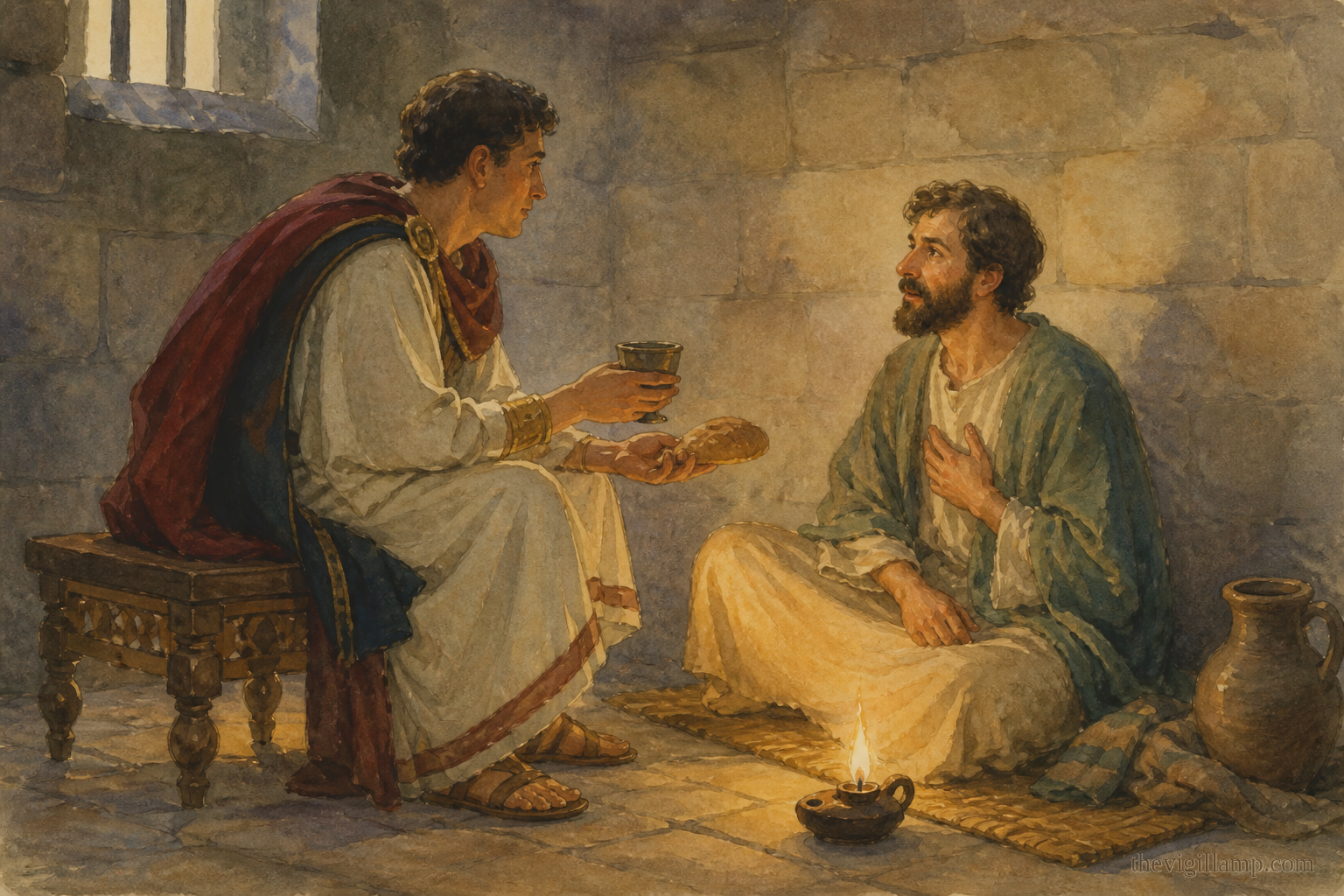
His name was Dorymedon. He was a secret Christian. He visited Saint Trophimus in prison, and he cared for him.
Do you hear that? Not a speech in a hall. A man with a senator's name, walking into a prison, to look after a stranger who would not bow.
When the pagans learned that the senator would not participate in the festival of Castor and Pollux, they asked the reason for his refusal. He said that he was a Christian, and would not attend a festival in honor of the demons.
Those are the Church's words. We will not invent others. A festival was going on in Synnada. The city expected the senator. He would not go. He said why.
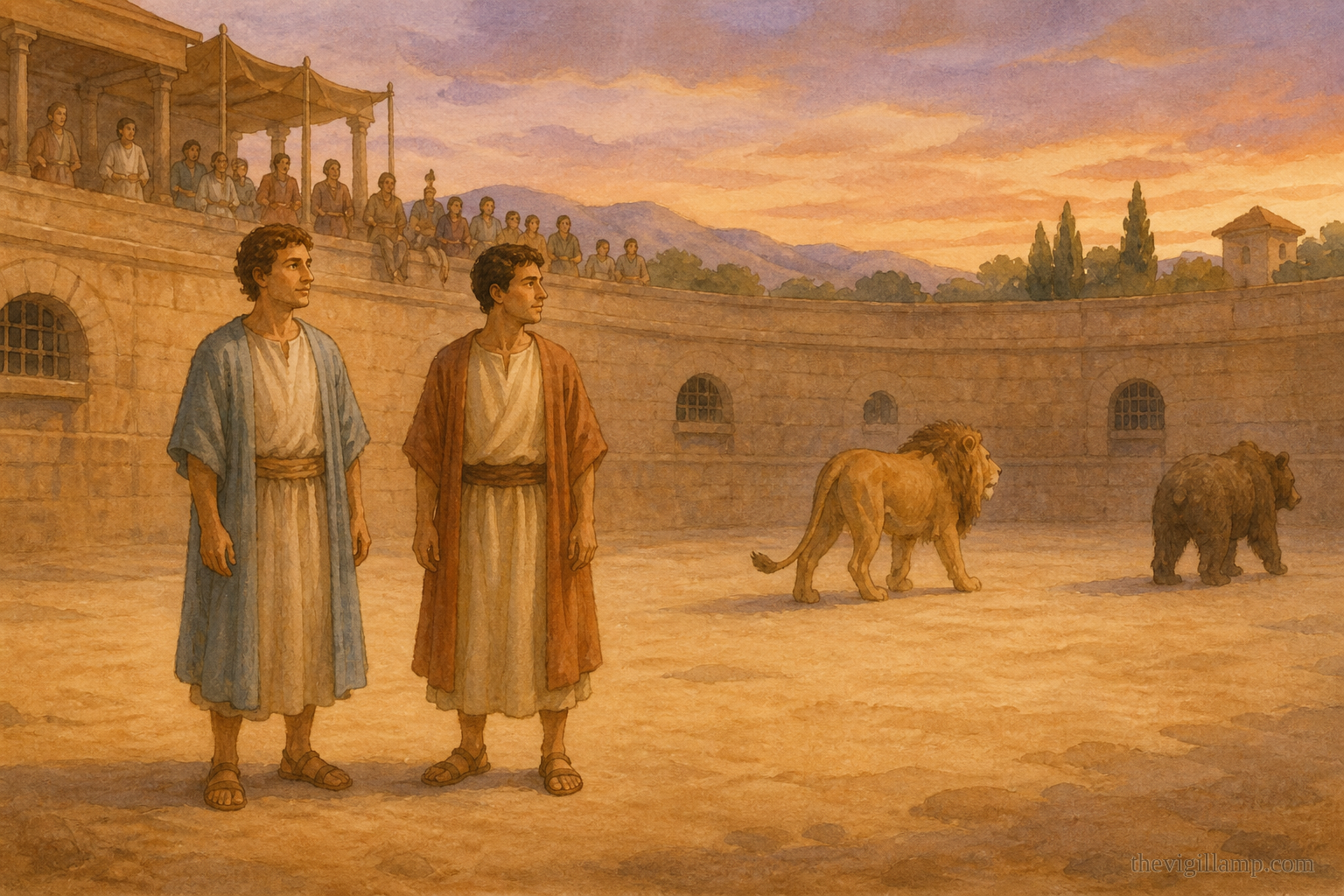
He and Saint Trophimus were thrown to the wild beasts to be eaten by them, but the martyrs remained unharmed.
Those are the Church's words. We will not invent a roar. We will not invent a speech to a bear. We say what the Church says: the beasts were sent. The two were not harmed.
Then they were beheaded with the sword.
We will not linger on the blade. The Church knows the end, and that is enough for us this morning. We say what the Church says: they were not turned. They were killed by the sword. They went to Christ.
Do you hear what the Church is singing now? Not only that they died. She is singing that God, praised in Trinity, has glorified a trinity of martyrs.
"God praised in Trinity has glorified a trinity of martyrs: Trophimus, Sabbatius, and Dorymedon. By their faith, they overthrew the adversary. Through their prayers, O Christ our God, have mercy on us."
And again: "As the foundation of athletes and the confirmation of piety the Church honors and glorifies your brilliant suffering, wise and glorious Trophimus, ever-praised and blessed athlete. Together with your fellow sufferers, ask cleansing for those who hymn you, for you are invincible."
Together with your fellow sufferers. Sabbatius first. Then Trophimus. Then the senator who would not leave him. One company.
The word we heard this morning is the Saturday-After word. It is not a saint pair. The Church appointed it anyway, on the fifth morning of the Afterfeast, and it already knows the lifting-up.
"When ye have lifted up the Son of man, then shall ye know that I am he."
The Lord said that about His own Cross. Five days ago the Church lifted that Wood up. Today she is still saying it. Trophimus and Sabbatius would not worship the idols. Dorymedon would not go to the festival of the demons. They knew Who had been lifted up.
And the Epistle says, "But God hath chosen the foolish things of the world to confound the wise; and God hath chosen the weak things of the world to confound the things which are mighty."
Not many mighty. Not many noble. A stranger in Antioch. A man sent on to Synnada. A senator who left his festival and went to a prison. God chose them. The beasts could not touch them. The sword could not make them bow.
The same reading has another word: "For ye see your calling, brethren, how that not many wise men after the flesh, not many mighty, not many noble, are called."
A calling. Not a prize for the strong. A Name, held, when the city was loud.
The psalm we held in the hand is not a lectionary appointment. It is the word Trophimus already knew how to keep: "Many are the afflictions of the righteous: but out of them all the Lord will deliver them."
That is why the Church will not let the Afterfeast stand without these three. While she is still singing the Cross, she names a trinity of martyrs. While she is still saying, "O Lord, save Your people," she names a victory that does not look like a victory — two strangers who would not bow, a torment, a road to Synnada, a senator in a prison, beasts that would not harm them, a sword, and three names the Church will not put down.
And today, so many hundreds of years later, on the Afterfeast, on the Saturday after the Elevation, we say their names once more, out loud, together — Holy Martyrs Trophimus, Sabbatius, and Dorymedon — and they are praying for us still.
Trophimus, Sabbatius, and Dorymedon.
By their faith, they overthrew the adversary.
Through their prayers, O Christ our God, have mercy on us.
the Church honors and glorifies your brilliant suffering,
wise and glorious Trophimus, ever-praised and blessed athlete.
Together with your fellow sufferers, ask cleansing for those who hymn you,
for you are invincible.
and bless Your inheritance.
Grant victories to the Orthodox Christians
over their adversaries.
And by virtue of Your Cross,
preserve Your habitation.
grant mercy to those who are called by Your Name, O Christ God;
make all Orthodox Christians glad by Your power,
granting them victories over their adversaries,
by bestowing on them the Invincible trophy, Your weapon of Peace.
- Sit together as one house — not three corners of the room. Today the Church remembers a trinity of martyrs. This is not yesterday's bishop of Gortyna, and it is not the Great Feast's lifting-up of the Cross. It is three names, and it is a refusal to bow.
- One child says, slowly, the three names: "Trophimus. Sabbatius. Dorymedon." Everyone else is quiet. Count slowly to ten. The hard part is not the names. The hard part is remaining with them.
- Then that child says, slowly, his own day's shout: "God praised in Trinity has glorified a trinity of martyrs: Trophimus, Sabbatius, and Dorymedon."
- That child does one small, real good work right away: clear a plate, help a little brother, go toward someone who is left out, give up the first turn. Dorymedon left a festival and went to a prison. We can put one kindness into someone else's hand in this room.
- Take turns. When everyone has had a turn, sit together and each write one place this week where it will be easier to go along than to stay with Christ, and one small way you will stay. Keep the papers under the lamp until next Sunday.


pray to God for us.
Most Holy Theotokos, save us.”
on earth as it is in heaven. Give us this day our daily bread,
and forgive us our trespasses, as we forgive those who trespass against us; and lead us not into temptation,
but deliver us from the evil one. Amen.