
September 18 · Eumenius of Gortyna
Afterfeast of the Elevation of the Cross
O Lord Jesus Christ our God, have mercy on us.”
The Cross is still in the house.
Four days ago the Church opened a Great Feast. She lifted up the Precious and Life-Giving Cross, and the people said, "Lord, have mercy." Yesterday she kept the Afterfeast, and she named a mother and three daughters. Today she does not put that Wood away.
Today is still the Afterfeast of the Elevation of the Cross. From this morning until the Leavetaking, the Church keeps singing a greeting at the weekday Liturgies: "O come, let us worship and fall down before Christ. O son of God crucified in the flesh, save us who sing to Thee: Alleluia."
Do you hear that? Crucified in the flesh. The Cross is still in the air.
The Church remembers more than one name on the eighteenth of September. She remembers Martyr Ariadne of Phrygia; Martyrs Sophia, Irene, and Castor of Egypt; Greatmartyr Prince Bidzini and Martyrs Princes Elizabar and Shalvi of Georgia; the Staro Rus Icon of the Mother of God; the Healer Icon of the Mother of God; Venerable Euphrosyne of Suzdal; and Venerable Hilarion of Optina. Those are true days. We will not tell those whole lives this morning.
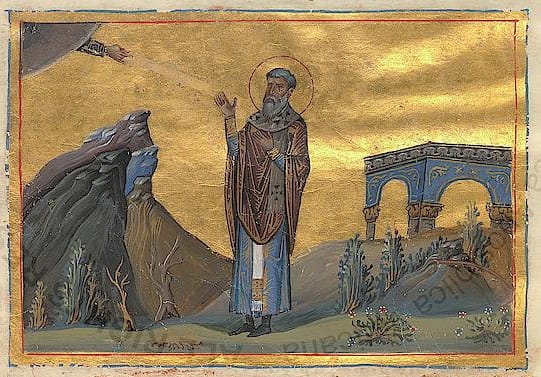
This morning she asks us to look at Eumenius.
His name is Eumenius. The Church also writes Eumenes. Families may hear Evmenios. All those names are one man. The name means gracious. Kindly. Merciful.
Do you hear what she is already singing for him? "We have you as a friend and helper, gracious advocate Eumenius: For compassion flowed from you and you pour forth healing on the Church."
That is today's word. Not a man who kept his house closed. A man from whom compassion flowed.
He lived long ago, on the island of Crete, in the seventh century. From the time of his youth he was noted for his virtuous life. He strove to serve the One God, and therefore he shunned worldly temptations.
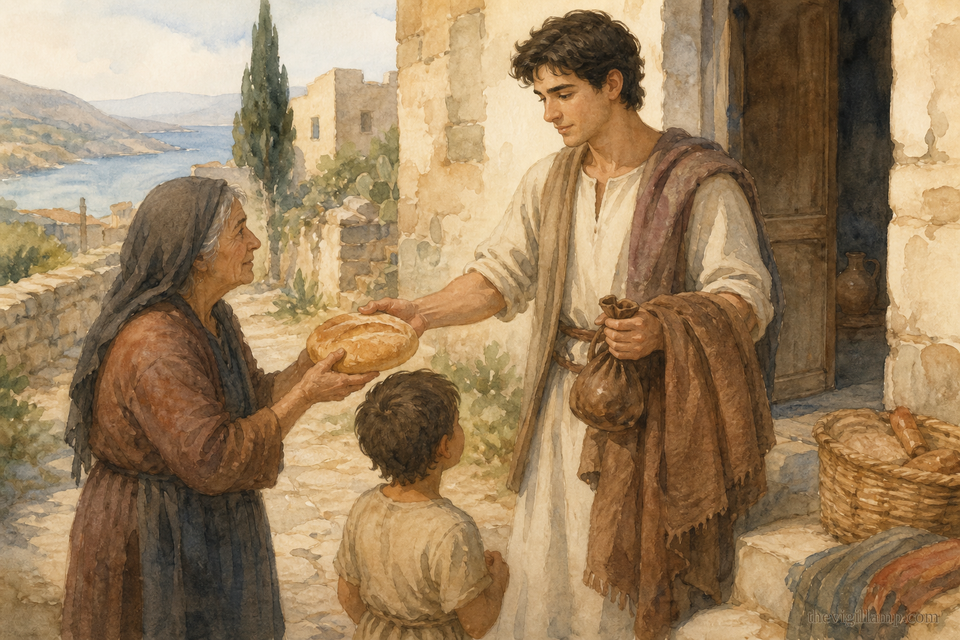
Concerned for the salvation of his soul, he distributed all his substance to the poor.
Do you hear that? All of it. Not the leftover. Not the thing he did not need. The Church will not let us tell him as if he kept a little back.
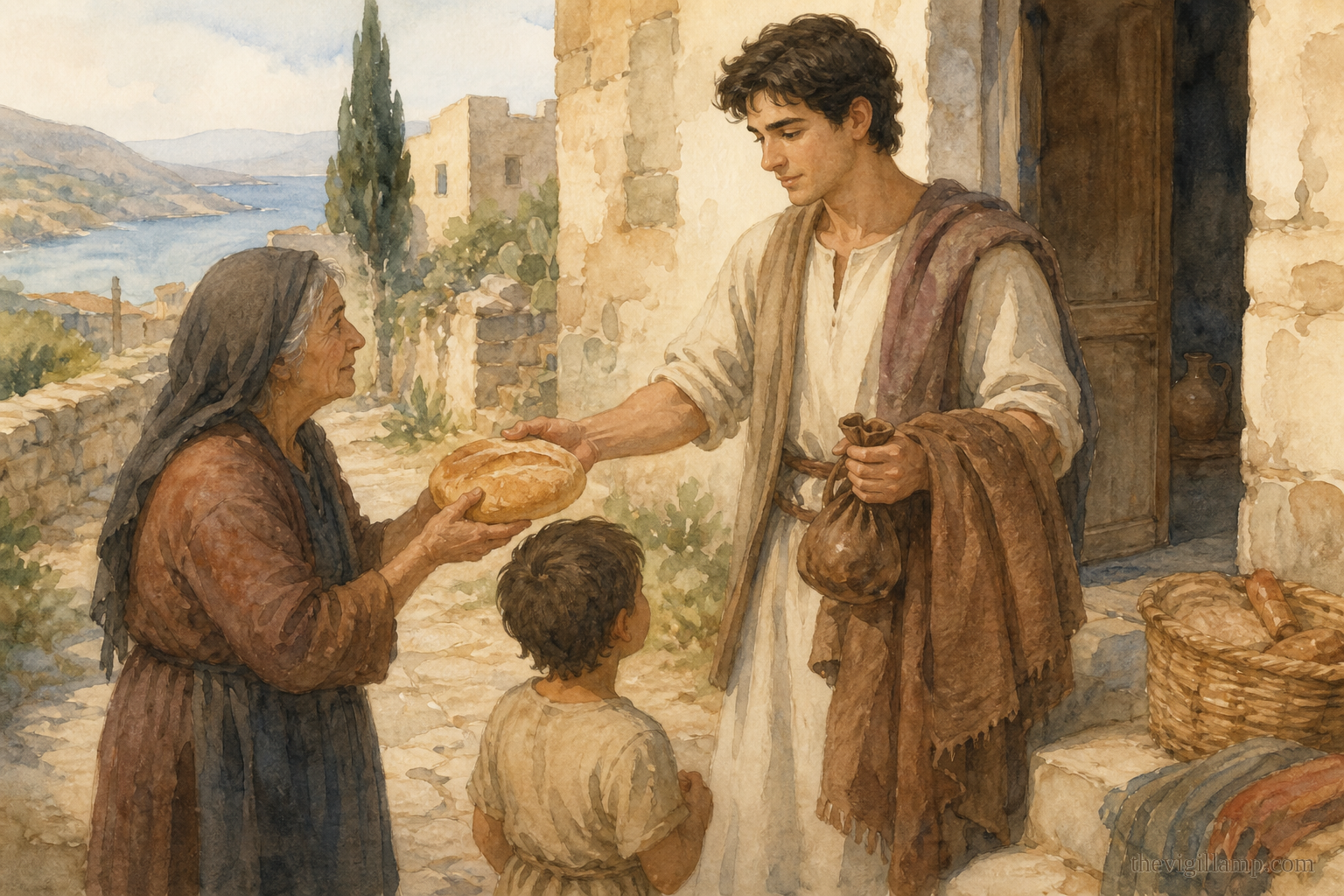
The psalm we held in the hand already knows this kind of house: "Blessed is the man who thinks on the poor and needy: the Lord shall deliver him in an evil day."
The older books remember it this way: he freed himself of two heavy burdens — the burden of wealth, and the burden of living only for himself. He gave the first away. He kept a hard, simple life of prayer. We will not turn that into a rule for this table. We say what the Church says: he gave. He prayed. He became light enough to walk the narrow way.
His good life could not be hidden. By the blessing of God he was chosen as Bishop of Gortyna, on the island of Crete.
Gortyna was a real city. Families may hear Gortyn. It stood on Crete, by a river the old books name. The ruins are still there. We will not invent the streets. We say what the Church says: he was made their bishop.
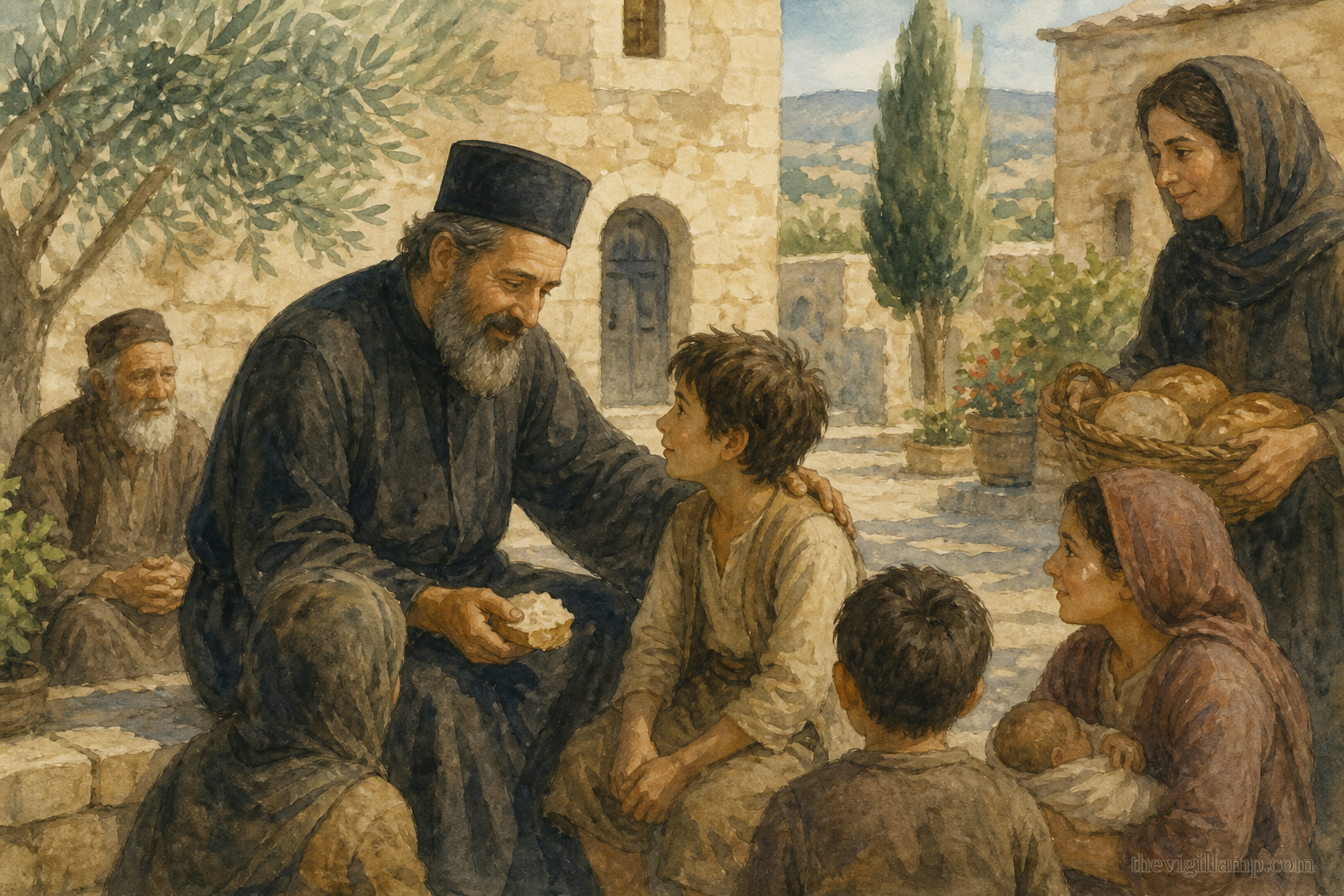
The saint, like a compassionate father, comforted his flock in their sorrows, and cared for the orphaned and the indigent.
The older books say it with a row of names, and every name is a work: a father to orphans, wealth to the poor, a giver to those who asked, consolation to the sorrowful, a physician to those who suffered.
He taught first by the life he lived, and then by the word he spoke. He did not keep the mercy for a feast day.
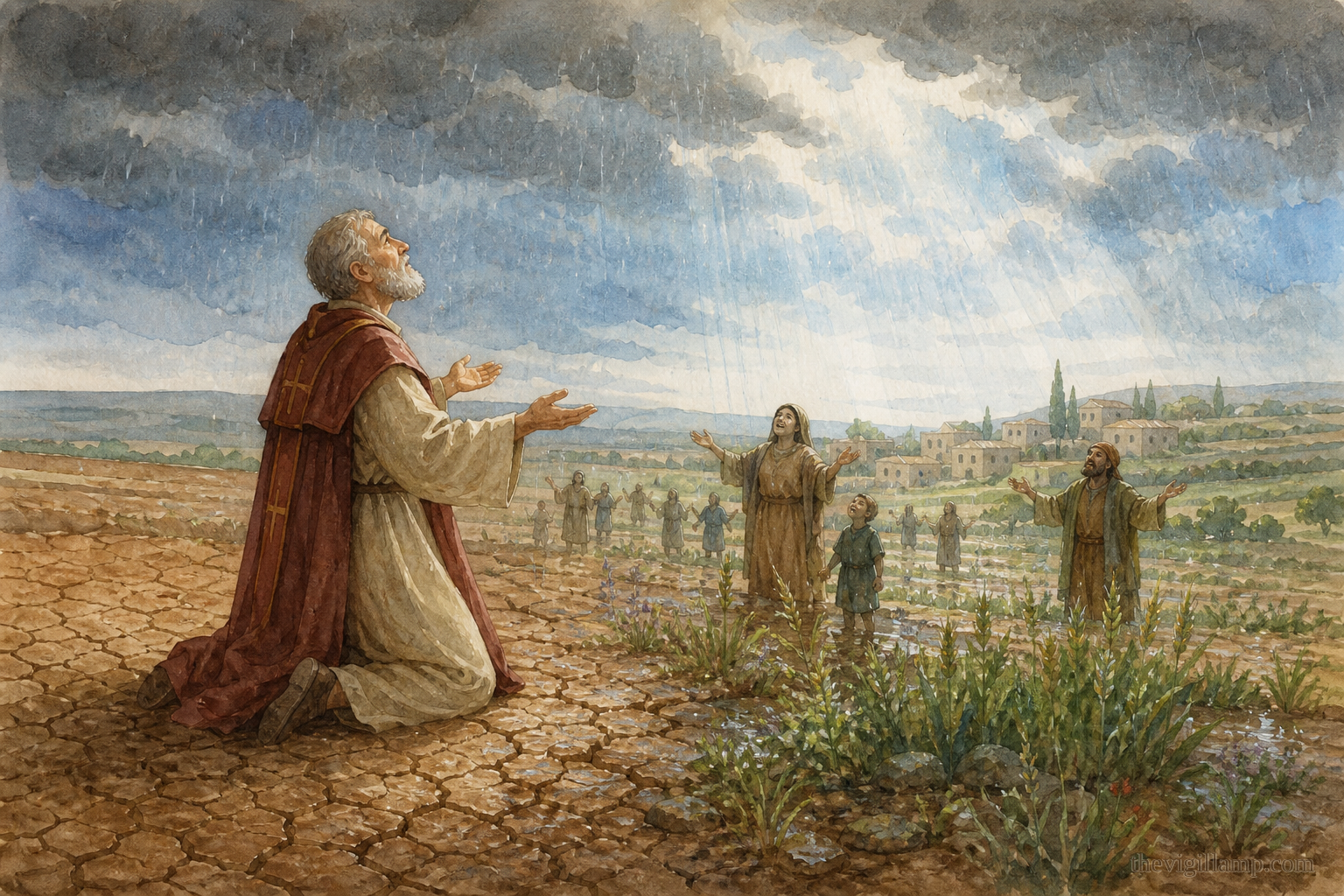
His prayers were so strong before God that once, during a drought, he called forth abundant rain upon the earth.
Those are the Church's words. We will not invent others. We will not turn them into a speech no one wrote down. We say what the Church says: the ground was dry. He prayed. Rain came.
The older books place that rain in the Thebaid — the desert country of Egypt, far from Crete. The Church's short life does not name the place. The rain is the same rain.
The older books also remember, briefly, another wonder. Once, by prayer, he stopped a great serpent that came at him. Then they say the greater wonder was this: he trampled the old enemy underfoot, and kept the flock. We will not linger on a serpent. We will not invent a battle. The Church has already told us the one thing we need: his prayer was not a show. It was a help.
And they remember that he healed the sick, and that he did this not only in Gortyna. The Church is already singing it: "you pour forth healing on the Church."
Saint Eumenius wisely and zealously defended the Orthodox Faith. For that defense he was banished to the Thebaid.
Do you hear that? Not a quiet ending in his own city. The Faith was under a hard teaching that was not the Church's. He would not put the Faith down. So they sent him far away, to the desert country of Egypt.
The older books tell the Thebaid as a journey, and they remember rain there, and a peaceful repose. The Church's short life tells it as an exile. We will not invent a courtroom. We will not invent a road. We say both things the Church has kept: he went to the Thebaid. He died there, in the seventh century.
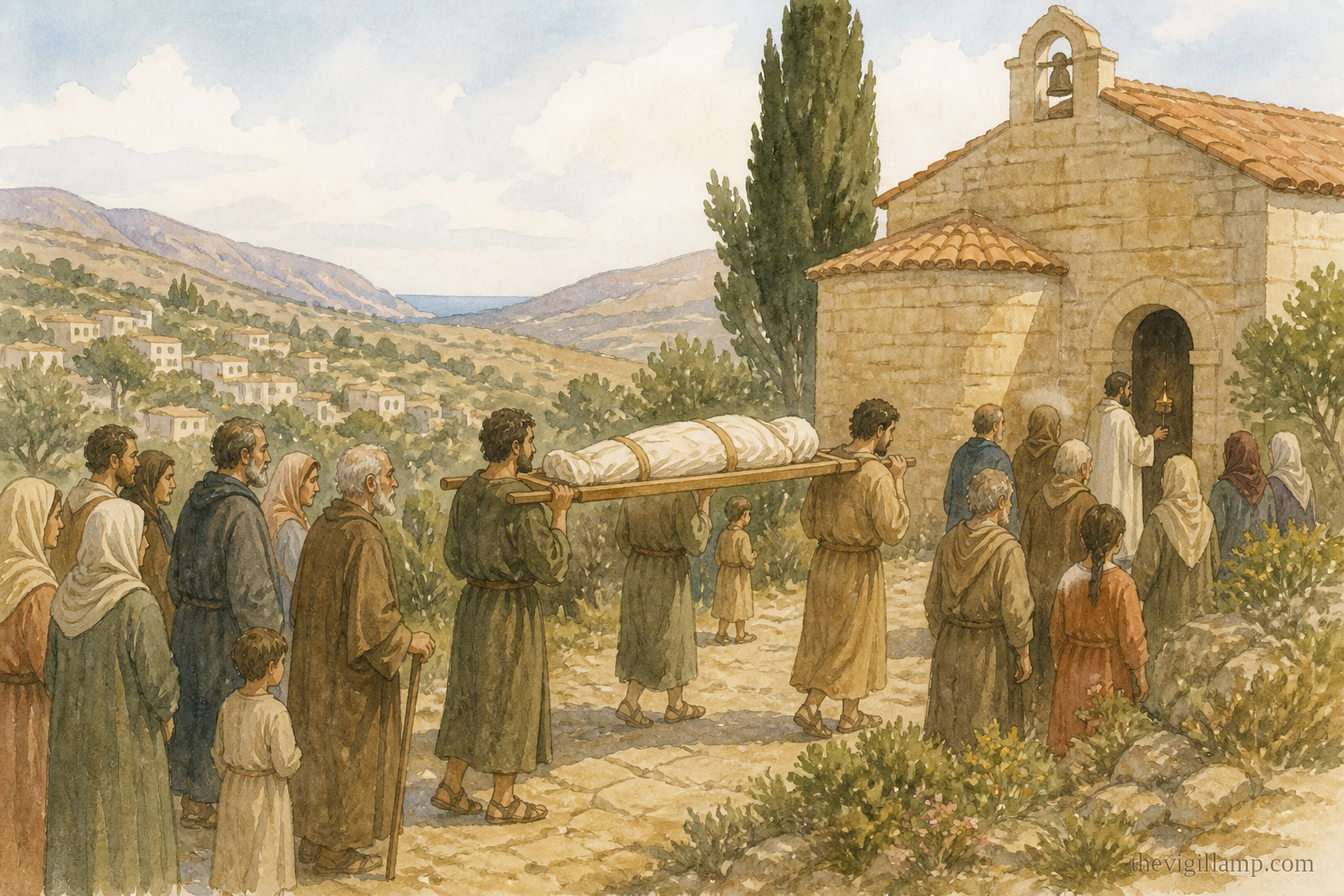
His body was then transferred and buried in Gortyna.
The Church will not let us tell the end as if Crete forgot him. They brought him home. They laid him in the place of his serving.
Do you hear what the Church is singing now? Not only that he gave. She is singing that he is still a friend.
"We have you as a friend and helper, gracious advocate Eumenius: For compassion flowed from you and you pour forth healing on the Church. Protect those who honor you."
And again: "Radiant with divine light, O blessed one, illumine us who lovingly praise your precious and glorious passing; hierarch father Eumenius, unceasingly intercede for us all."
Radiant with divine light. The gold behind him was already saying that. The Hand from heaven was already saying that.
The word we heard this morning is the weekday word. It is not a feast pair, and it is not a saint pair. The Church appointed it anyway, on the fourth morning of the Afterfeast, and it already knows compassion.
"I have compassion on the multitude, because they have now been with me three days, and have nothing to eat."
The Lord looked at a hungry crowd and would not send them away empty. He took what was there. He gave thanks. He broke it. They ate, and they were filled.
Eumenius looked at the poor and did not keep his substance. He looked at a dry land and asked for rain. The Gospel is not a second life of this bishop. It is the word the Church set down on his morning: compassion, and bread for people who had nothing.
And the Epistle says, "In whom we have redemption through his blood, the forgiveness of sins, according to the riches of his grace."
Through his blood. The Cross is still in the house. The riches are not a locked chest. They are grace, poured out.
The same reading has another word: "That the God of our Lord Jesus Christ, the Father of glory, may give unto you the spirit of wisdom and revelation in the knowledge of him."
Wisdom. A bishop on Crete. A Hand from heaven. A name that means merciful.
The psalm we held in the hand is not a lectionary appointment. It is a word this bishop already knew how to keep: "Blessed is the man who thinks on the poor and needy: the Lord shall deliver him in an evil day."
That is why the Church will not let the Afterfeast stand without this Cretan. While she is still singing the Cross, she names a man from whom compassion flowed. While she is still saying, "O Lord, save Your people," she names a victory that does not look like a victory — a youth who gave everything away, a bishop who comforted the sorrowful, a prayer over dry ground, a man sent far from home, a body carried back to Gortyna.
And today, so many hundreds of years later, on the Afterfeast, we say his name once more, out loud, together — Saint Eumenius, Bishop of Gortyna — and he is praying for us still.
gracious advocate Eumenius:
For compassion flowed from you
and you pour forth healing on the Church.
Protect those who honor you.
illumine us who lovingly praise your precious and glorious passing;
hierarch father Eumenius,
unceasingly intercede for us all.
and bless Your inheritance.
Grant victories to the Orthodox Christians
over their adversaries.
And by virtue of Your Cross,
preserve Your habitation.
grant mercy to those who are called by Your Name, O Christ God;
make all Orthodox Christians glad by Your power,
granting them victories over their adversaries,
by bestowing on them the Invincible trophy, Your weapon of Peace.
- Sit together as one house — not three corners of the room. Today the Church remembers a bishop from whom compassion flowed. This is not yesterday's mother and three daughters, and it is not the Great Feast's lifting-up of the Cross. It is a giving, and it is a name that means merciful.
- One child says, slowly, the name: "Eumenius." Everyone else is quiet. Count slowly to ten. The hard part is not the name. The hard part is remaining with it.
- Then that child says, slowly, his own day's shout: "We have you as a friend and helper, gracious advocate Eumenius."
- That child does one small, real good work right away: clear a plate, help a little brother, give up the first turn, set something aside for someone who needs it. He gave his substance. We can put one thing into someone else's hand in this room.
- Take turns. When everyone has had a turn, sit together and each write one person you want to help this week, and one small way you will do it. Keep the papers under the lamp until next Sunday.


pray to God for us.
Most Holy Theotokos, save us.”
on earth as it is in heaven. Give us this day our daily bread,
and forgive us our trespasses, as we forgive those who trespass against us; and lead us not into temptation,
but deliver us from the evil one. Amen.