
September 17 · Sophia, Faith, Hope, and Love
Afterfeast of the Elevation of the Cross
O Lord Jesus Christ our God, have mercy on us.”
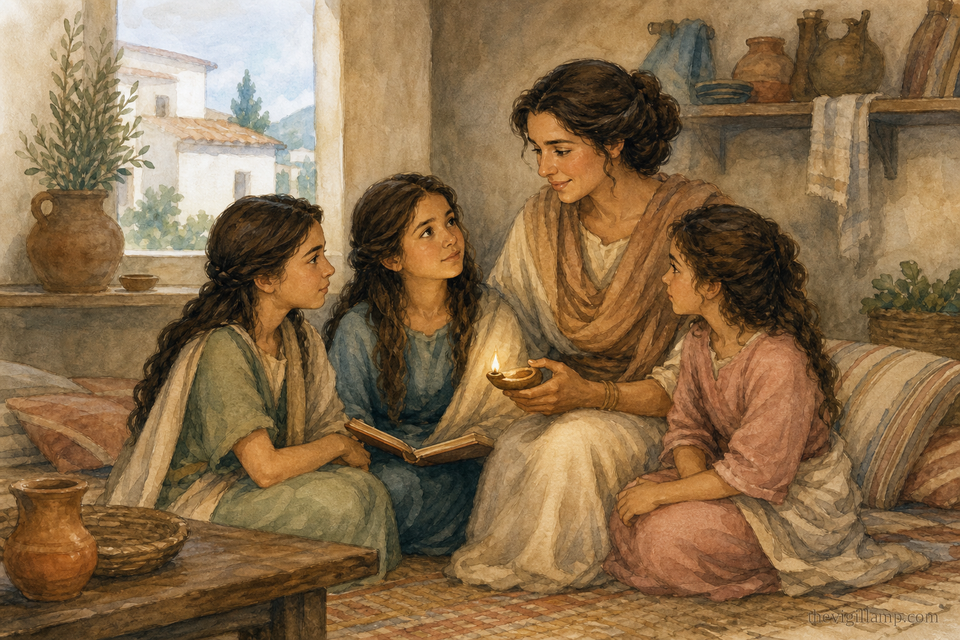
The Cross is still in the house.
Two days ago the Church opened a Great Feast. She lifted up the Precious and Life-Giving Cross, and the people said, "Lord, have mercy." Yesterday she kept the Afterfeast, and she named a girl of Chalcedon. Today she does not put that Wood away.
Today is still the Afterfeast of the Elevation of the Cross. From this morning until the Leavetaking, the Church keeps singing a greeting at the weekday Liturgies: "O come, let us worship and fall down before Christ. O son of God crucified in the flesh, save us who sing to Thee: Alleluia."
Do you hear that? Crucified in the flesh. The Cross is still in the air.
The Church remembers more than one name on the seventeenth of September. She remembers Martyr Theodota at Nicea; Martyr Agathocleia; the 156 Martyrs of Palestine, including Bishops Peleus and Nilus, the Presbyter Zeno, the Noblemen Patermuthius and Elias, and others; the Constantinople Icon of the Mother of God; and the Icon of the Mother of God of Macariev. Those are true days. We will not tell those whole lives this morning.
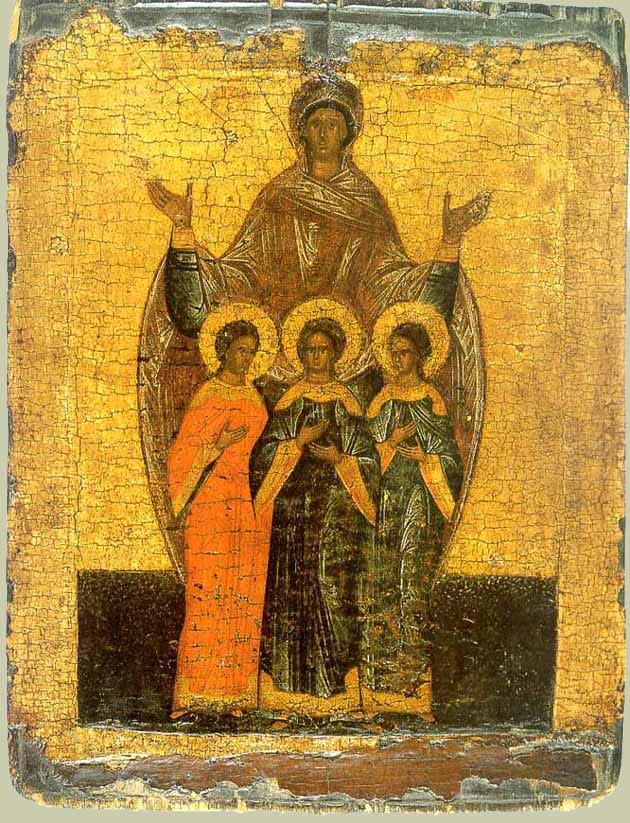
This morning she asks us to look at a mother and three daughters.
Their names are Sophia, Faith, Hope, and Love. The Church also writes Faith as Vera, and in Greek Pistis; Hope as Nadézhda, and in Greek Elpis; Love as Liubóv', and Charity, and in Greek Agape. Sophia means wisdom. All those names are one house. The Church remembers them at Rome, about the year 137, in the days of the emperor Hadrian.
Do you hear what she is already singing for them? "The Church celebrates and rejoices in the feast of the three daughters: Faith, Hope, and Love and their Mother Sophia, named for her wisdom."
That is today's word. Not four strangers. A mother who named her children for the three things a Christian house cannot do without.
They were born in Italy. Their mother was a pious Christian widow. She named her daughters for the three Christian virtues. Faith was twelve. Hope was ten. Love was nine.
Do you hear the ages? Twelve. Ten. Nine. The Church will not let us tell this as if they were old.
Saint Sophia raised them in the love of the Lord Jesus Christ.
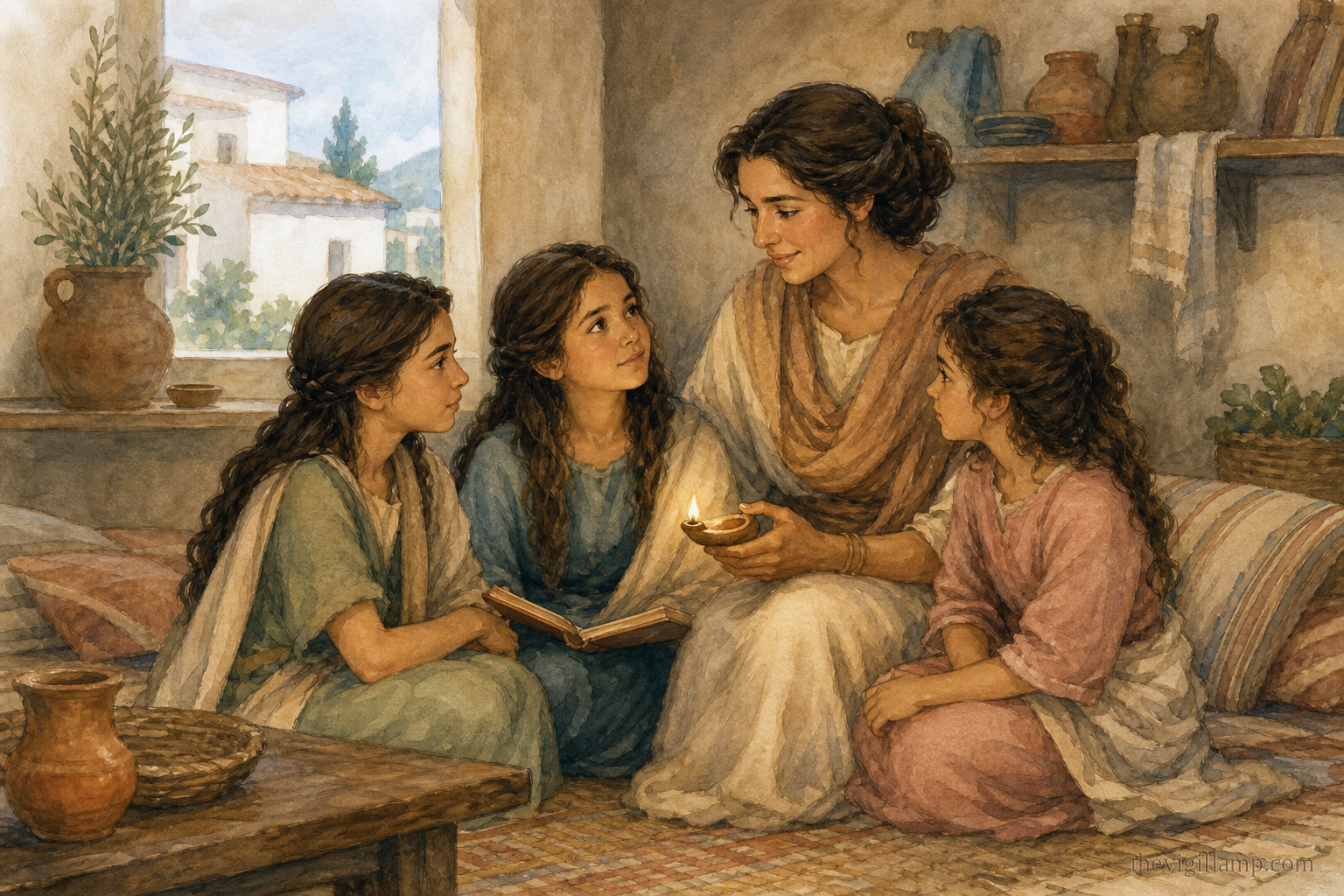
She did not hide the names. She did not wait until they were grown to tell them whose they were. The psalm we held in the hand already knows this kind of house: "Come, ye children, hear me: I will teach you the fear of the Lord."
Saint Sophia and her daughters did not hide their faith in Christ. They openly confessed it before everyone.
An official named Antiochus denounced them to the emperor Hadrian, who reigned from 117 to 138. Hadrian ordered that they be brought to Rome.
Realizing that they would be taken before the emperor, the holy virgins prayed fervently to the Lord Jesus Christ, asking that He give them the strength not to fear torture and death.
Those are the Church's words. We will not invent others. We will not turn that prayer into a speech no one wrote down. We say what the Church says: they asked for strength. They asked not to be afraid.
When the holy virgins and their mother came before the emperor, everyone present was amazed at their composure. They looked as though they had been brought to some happy festival, rather than to harm.
Do you hear that? A widow. Three girls. The emperor's room. And they looked as if they had been invited to a feast.
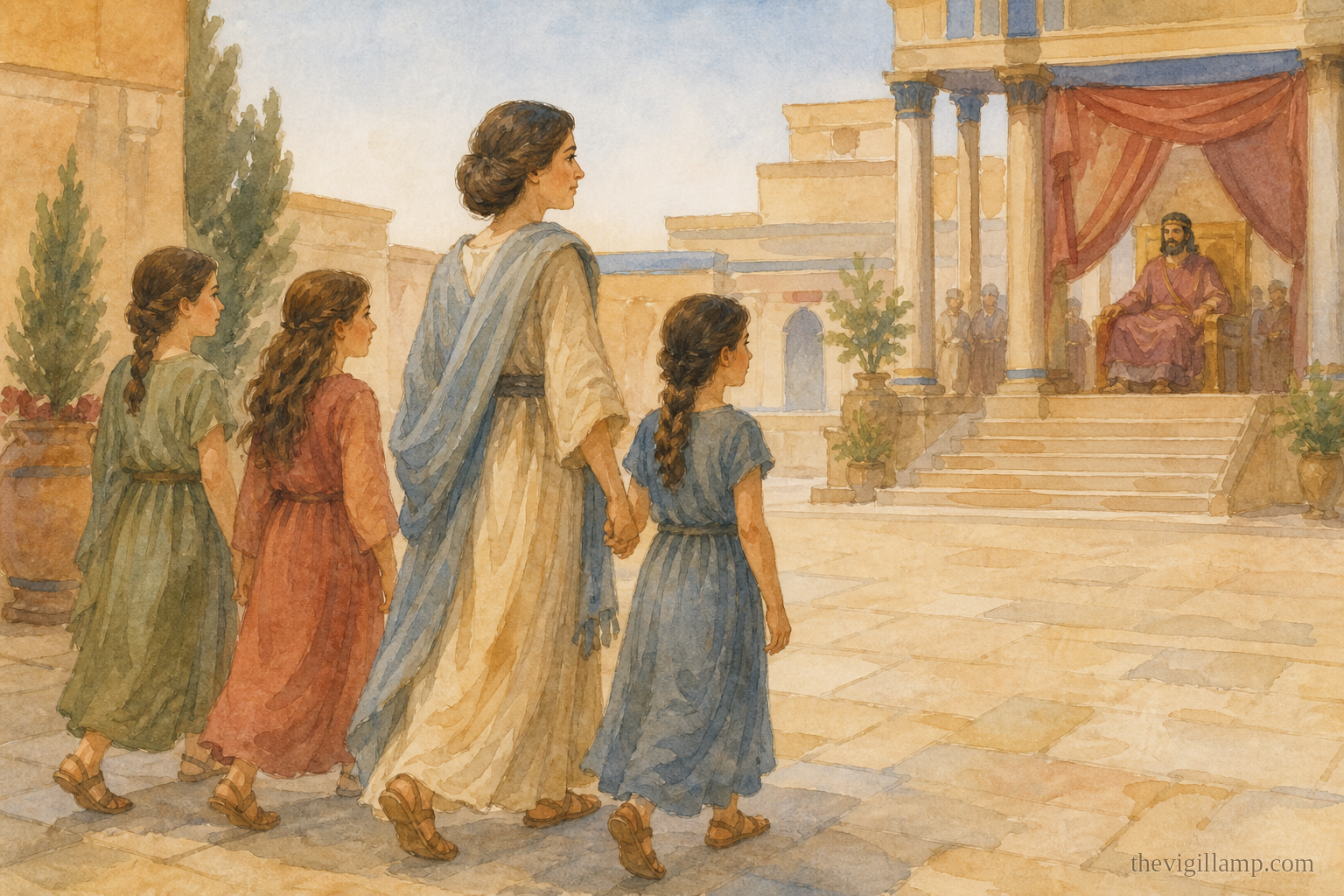
Summoning each of the sisters in turn, Hadrian urged them to offer sacrifice to the goddess Artemis.
The young girls remained unyielding.
We will not invent what they said to him. The Church has already told us the one thing we need: they would not worship the idols.
Then the emperor ordered them to be made to suffer.
We will not linger on the manner of their sufferings. We will not name the instruments. We will not make a picture of hurt for children. The Church knows those things, and that is enough for us this morning.
The Church says it this way: the Lord preserved them.
After undergoing what the Church will not let us forget, the holy virgins glorified their Heavenly Bridegroom and remained steadfast in the Faith.
They kept the names they had been given.
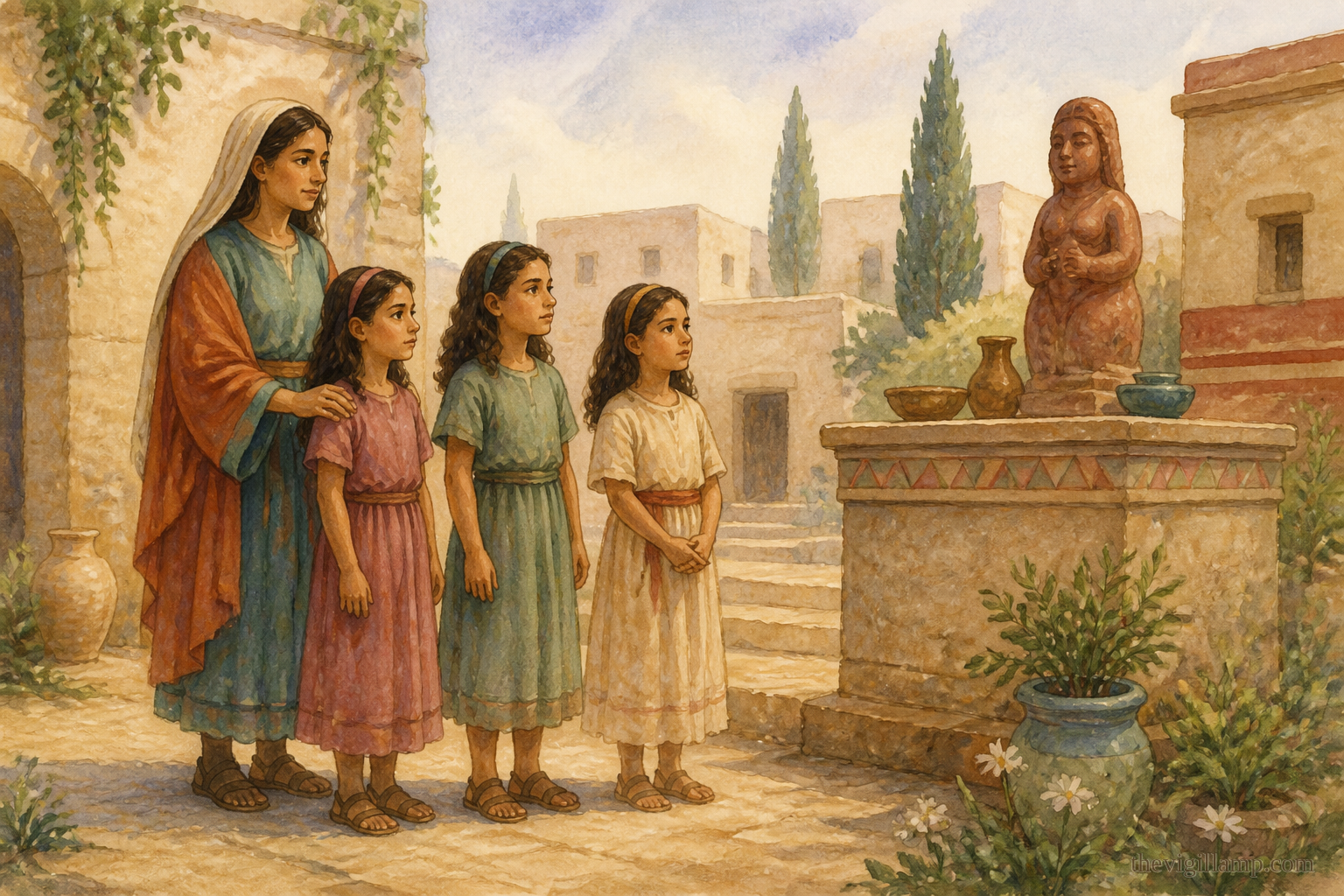
They subjected Saint Sophia to another hard thing: the mother was made to be there. She displayed adamant courage. She urged her daughters to endure for the sake of the Heavenly Bridegroom.
Those are the Church's words. We will not invent a speech for her. We will not linger on a mother's grief in a way that would frighten a child. We say what the Church says: she was brave. She told them to stay with Christ.
All three maidens offered their lives. The Lord received them.
The Church will not let us pretend they grew old in their beds. They were young. They were brave. They kept the names they had been given. And the Church says they did it with joy.
In order to make Saint Sophia's inner suffering heavier, the emperor permitted her to take the bodies of her daughters. She placed their remains in coffins and loaded them on a wagon. She drove beyond the city limits and reverently buried them on a high hill.
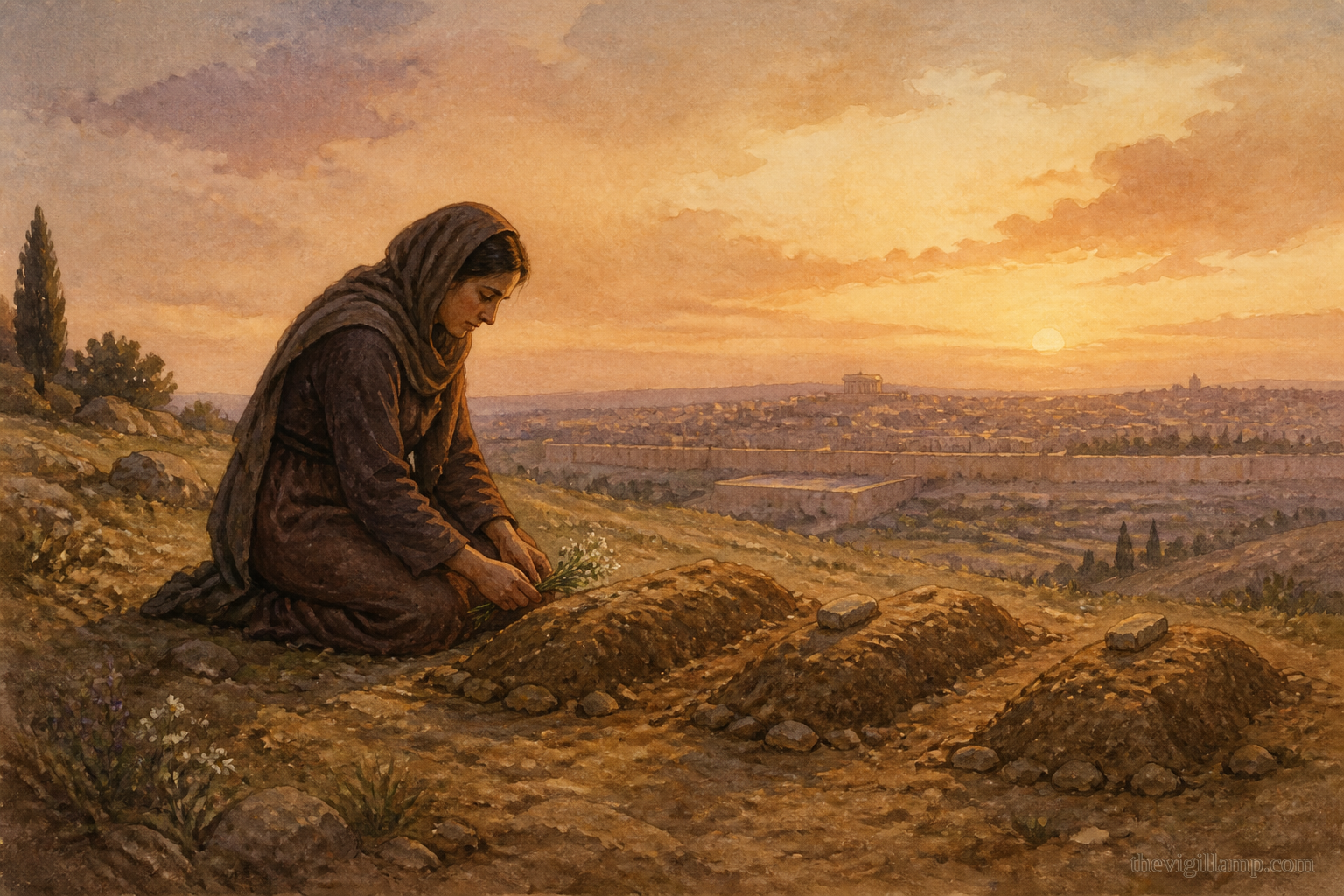
Saint Sophia sat there by the graves of her daughters for three days, and finally she gave up her soul to the Lord.
She buried them. Soon she went to Him.
Even though she did not suffer for Christ in the flesh, she was not deprived of a martyr's crown. Instead, she suffered in her heart. Believers buried her body there beside her daughters.
Do you hear that? The Church will not leave her outside the crown. She did not die the way her daughters died. She is still counted with them. A widow. Three graves. Three days. Then she went home.
The relics of the holy martyrs have rested at El'zasa, in the church of Esho — families may hear Eschau — since the year 777.
Do you hear what the Church is singing now? Not only that they died. She is singing that a mother gave birth to the three godly virtues, and that the three still behold their Bridegroom.
"For in them she gave birth to the three godly virtues. Now they eternally behold their bridegroom, God the Word."
And again: "You blossomed in the courts of the Lord as a fruitful olive tree, holy martyr Sophia; in your contest you offered to Christ the sweet fruit of your womb, your daughters Faith, Hope, and Love."
And again: "The holy branches of noble Sophia, Faith, Hope, and Love, confounded Greek sophistry through Grace. They struggled and won the victory and have been granted an incorruptible crown by Christ the Master of all."
The proud talk of the old gods did not get the last word. Grace did.
The word we heard this morning is the weekday word. It is not a feast pair, and it is not a saint pair. The Church appointed it anyway, on the third morning of the Afterfeast, and it already knows what a mother is for.
"And she answered and said unto him, Yes, Lord: yet the dogs under the table eat of the children's crumbs."
A woman of Tyre and Sidon. A mother. A daughter she would not leave. She kept asking. The Lord heard her. "For this saying go thy way; the devil is gone out of thy daughter."
Sophia would not leave her daughters. The daughters would not leave the Name. The Gospel is not a second life of these four. It is the word the Church set down on their morning: a mother, a child, a asking that would not stop.
And the Epistle says, "According as he hath chosen us in him before the foundation of the world, that we should be holy and without blame before him in love." The same reading has another word: "Having predestinated us unto the adoption of children by Jesus Christ to himself."
In love. Children. A house chosen before the world was made.
The psalm we held in the hand is not a lectionary appointment. It is a word a widow already knew how to keep: "Come, ye children, hear me: I will teach you the fear of the Lord."
That is why the Church will not let the Afterfeast stand without this house. While she is still singing the Cross, she names a mother who taught three girls the Name, and three girls who would not put it down. While she is still saying, "O Lord, save Your people," she names a victory that does not look like a victory — twelve, and ten, and nine, a festival face in an emperor's room, a hill outside the city, a mother who sat three days and then went to the Lord.
And today, so many hundreds of years later, on the Afterfeast, we say their names once more, out loud, together — holy martyrs Sophia, Faith, Hope, and Love — and they are praying for us still.
in the feast of the three daughters: Faith, Hope, and Love
and their Mother Sophia, named for her wisdom:
For in them she gave birth to the three godly virtues.
Now they eternally behold their bridegroom, God the Word.
Let us rejoice spiritually in their memory and cry:
O our three Heavenly Protectors,
establish, confirm and strengthen us
in Faith, Hope and Love.
as a fruitful olive tree,
holy martyr Sophia;
in your contest you offered to Christ the sweet fruit of your womb,
your daughters Faith, Hope, and Love.
Together with them intercede for us all.
Faith, Hope, and Love,
confounded Greek sophistry through Grace.
They struggled and won the victory
and have been granted an incorruptible crown by Christ the Master of all.
and bless Your inheritance.
Grant victories to the Orthodox Christians
over their adversaries.
And by virtue of Your Cross,
preserve Your habitation.
grant mercy to those who are called by Your Name, O Christ God;
make all Orthodox Christians glad by Your power,
granting them victories over their adversaries,
by bestowing on them the Invincible trophy, Your weapon of Peace.
The two troparia and the kontakion of Saint Sophia and her daughters, and the troparion and kontakion of the Afterfeast, appointed by the Orthodox Church in America on the September 17 hymn pages. Wording is exact; slash marks were converted to line breaks only. These are today's appointed hymns. They are not a second printing of September 14 as if that Great Feast had come again. Hymns for Theodota, Agathocleia, the 156 Martyrs of Palestine, and the Constantinople Icon are not printed here.
- Sit together as one house — not three corners of the room. Today the Church remembers a mother and three daughters who would not come apart. This is not yesterday's girl of Chalcedon, and it is not the Great Feast's lifting-up of the Cross. It is a staying, and it is three names.
- One child says, slowly, the three names Sophia gave: "Faith. Hope. Love." Everyone else is quiet. Count slowly to ten. The hard part is not the words. The hard part is remaining with them.
- Then that child says, slowly, their own day's shout: "O our three Heavenly Protectors, establish, confirm and strengthen us in Faith, Hope and Love."
- That child does one small, real good work right away: clear a plate, help a little brother, give up the first turn, say something kind. They kept the names they had been given. We can keep one small name in this room.
- Take turns. When everyone has had a turn, sit together and each write one of the three names — Faith, or Hope, or Love — and one person you want to stay with this week. Keep the papers under the lamp until next Sunday.


pray to God for us.
Most Holy Theotokos, save us.”
on earth as it is in heaven. Give us this day our daily bread,
and forgive us our trespasses, as we forgive those who trespass against us; and lead us not into temptation,
but deliver us from the evil one. Amen.