
September 16 · Euphemia
Afterfeast of the Elevation of the Cross
O Lord Jesus Christ our God, have mercy on us.”
Yesterday the Church opened a Great Feast.
She lifted up the Precious and Life-Giving Cross, and the people said, "Lord, have mercy."
Today she does not put that Wood away.
Today is the Afterfeast of the Elevation of the Cross. From this morning until the Leavetaking, the Church keeps singing a new greeting at the weekday Liturgies: "O come, let us worship and fall down before Christ. O son of God crucified in the flesh, save us who sing to Thee: Alleluia."
Do you hear that? Crucified in the flesh. The Cross is still in the air.
The Church remembers more than one name on the sixteenth of September. She remembers the repose of Saint Cyprian, Metropolitan of Moscow and All Russia — the daily line also writes Kiprián; Saint Sebastiana, disciple of the Apostle Paul, at Heraclea; Martyr Melitinḗ of Marcianopolis; Martyrs Victor and Sosthenes at Chalcedon; Venerable Dorotheus the Hermit of Egypt; Martyr Ludmilla, grandmother of Saint Wenceslaus; and the New Martyrs Isaac and Joseph of Georgia. Those are true days. We will not tell those whole lives this morning.
This morning she asks us to look at Euphemia.
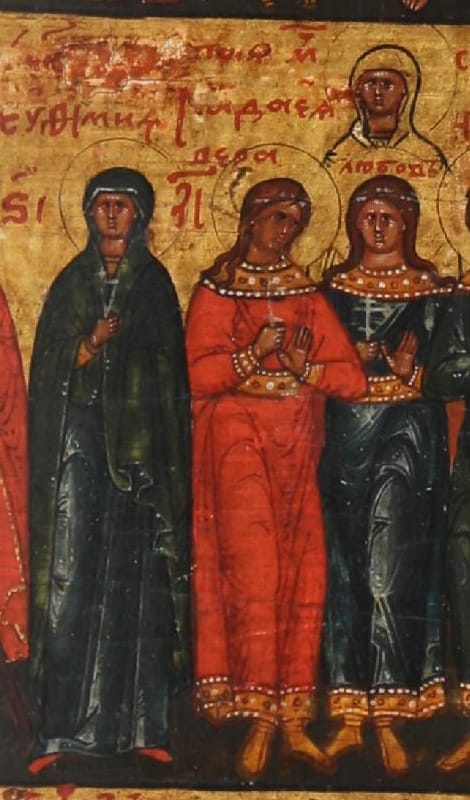
Her name is Euphemia. The Church also writes Euphēmia, and in Greek Ευφημία. Families may hear Eufemia. All those names are one girl. The Church calls her the All-praised.
Do you hear what she is already singing for her? "I love You, my Bridegroom, and in seeking You I endure suffering."
That is today's word. Not a girl who trusted a festival. A girl who loved Christ.
She was the daughter of Christian parents. Her father was the senator Philophronos. Her mother was Theodosia. She suffered for Christ in the year 304, in the city of Chalcedon, on the Bosphorus, opposite Constantinople, the Queen of Cities.
Chalcedon sat across the water from the great city. A girl could stand on that shore and see the other side. The Faith had already come that far.
Priscus was the Proconsul of Chalcedon. He issued a decree. Every inhabitant of Chalcedon and the country around it had to come to a pagan festival, to worship and offer sacrifice to the idol of Ares. He threatened grave torments for anyone who failed to appear.
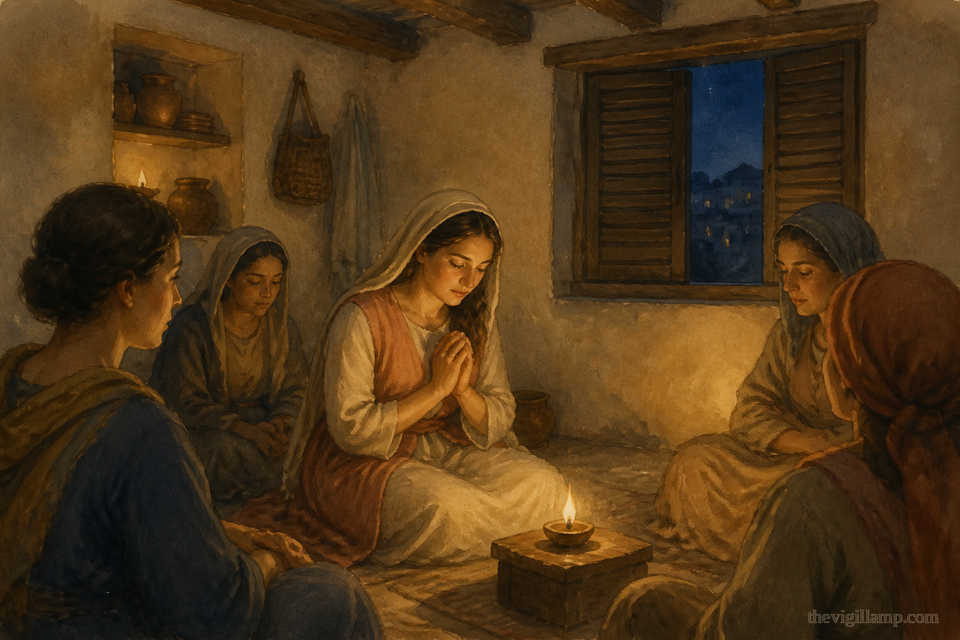
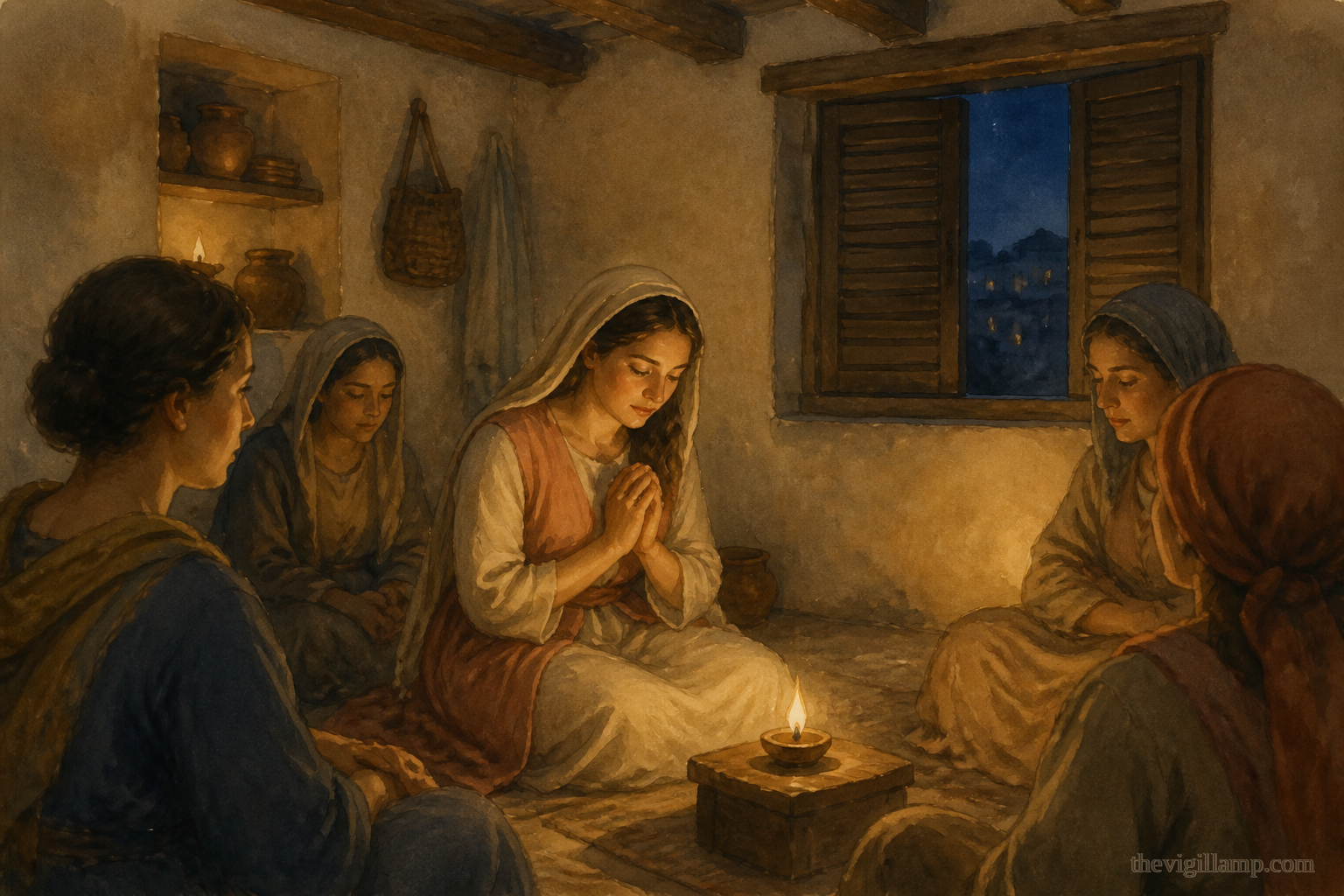
During that impious festival, forty-nine Christians were hidden in one house. They worshiped the true God in secret. The young virgin Euphemia was among those who prayed there.
Do you hear that? Not a crowd in the street. A house. A door shut. Forty-nine people, and a girl among them, keeping the Name while the city kept a feast she would not keep.
Soon their hiding place was discovered. They were brought before Priscus to answer the charges against them.
For nineteen days the martyrs were subjected to various torments. None of them wavered in their faith. None of them consented to offer sacrifice to the idol.
We will not linger on the manner of those days. The Church knows them, and that is enough for us this morning. We say what the Church says: they were not turned.
The governor, beside himself with rage, and not knowing any other way of forcing the Christians to abandon their faith, sent them to Emperor Diocletian for trial. He kept the youngest. He kept the virgin Euphemia, hoping that she would not persevere if she were left all alone.
Separated from her fellow-Christians, Saint Euphemia fervently prayed that the Lord Jesus Christ would strengthen her for her impending ordeal.
Priscus urged the Saint to offer sacrifice to the idol, promising her many rewards. When she refused, he ordered that she be tortured.
Those are the Church's words. We will not invent others. We will not turn them into a speech no one wrote down.
She confessed Christ. She suffered. The Lord did not leave her.
The Church says it this way: she was tied to a wheel, and she prayed aloud, and the wheel stopped by itself. An angel of the Lord came down from Heaven, removed Euphemia from the wheel, and healed her of her wounds. The Saint gave thanks to God.
Those are the Church's words. We will not invent others. We will not turn them into a picture of hurt for children. We say what the Church says: she prayed. The wheel stopped. An angel took her down. She gave thanks.
Priscus did not notice the miracle which had taken place. He ordered the soldiers Victor and Sosthenes to take the Saint to a red-hot furnace.
But the soldiers, seeing two angels in the midst of the flames, refused to carry out the Proconsul's order. They declared that they believed in the God Whom Euphemia worshipped. Boldly proclaiming that they were Christians, Victor and Sosthenes awaited punishment.
Do you hear that? Two soldiers. They were sent to throw a girl into a furnace. They saw, and they would not. They said they believed in her God. They said they were Christians.
The Church names them on this same day: Martyrs Victor and Sosthenes at Chalcedon. Their life is not a second story. It is this story. They belong to her hour.
They were sentenced to be devoured by wild beasts. In the arena they begged God to forgive the sins they had committed, asking the Lord to receive them into the Heavenly Kingdom. A Divine voice was heard, and the two soldiers entered into eternal life. The beasts, however, did not harm their bodies.
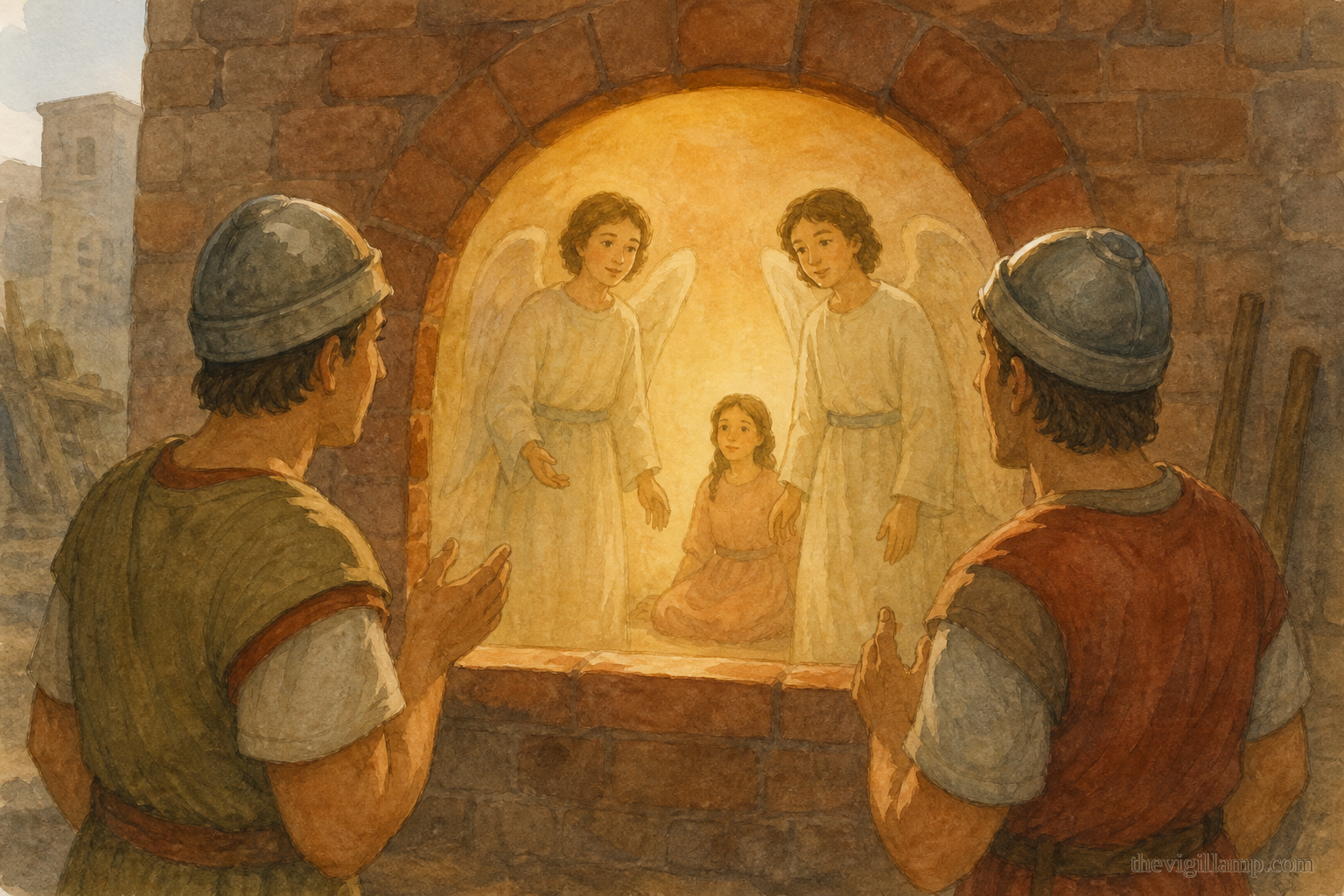
Saint Euphemia, cast into the fire by other soldiers, did not suffer. With God's help she emerged unscathed after many other torments.
Ascribing these things to sorcery, Priscus ordered a pit to be dug. He had it covered over with earth and grass, so that the martyr would not notice the trap. Once again, Saint Euphemia remained safe, walking over the pit.
Finally she was sentenced to be devoured by wild beasts in the arena. Before her execution the Saint prayed that the Lord would deem her worthy of martyrdom.
We will not linger on the arena. The Church knows it, and that is enough for us this morning.
The Church says it this way: none of the bears or lions attacked her, but only licked her feet. At last one she-bear wounded her foot, which bled slightly, and the Holy Great Martyr Euphemia died right away. As her soul departed, there was an earthquake. The city was shaken, the walls fell down, and the pagan temples crumbled.
Those are the Church's words. We will not invent others. We will not turn them into a picture of hurt for children. We say what the Church says: she prayed. She was not turned. A small wound. The Lord received her. The city shook.
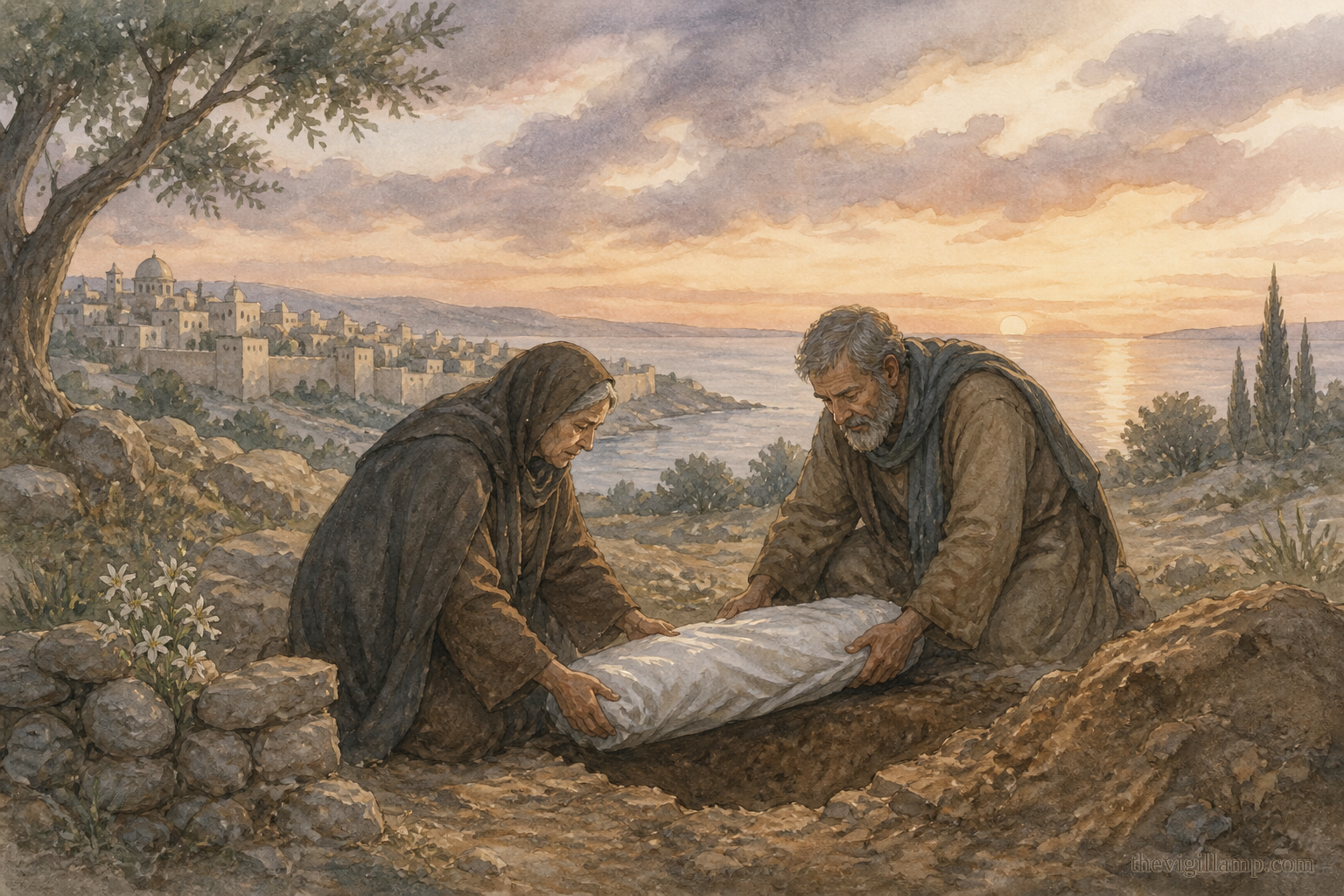
As Saint Euphemia lay dead in the sand, the guards and spectators fled in terror, so that the Saint's parents were able to take her body and bury it near Chalcedon.
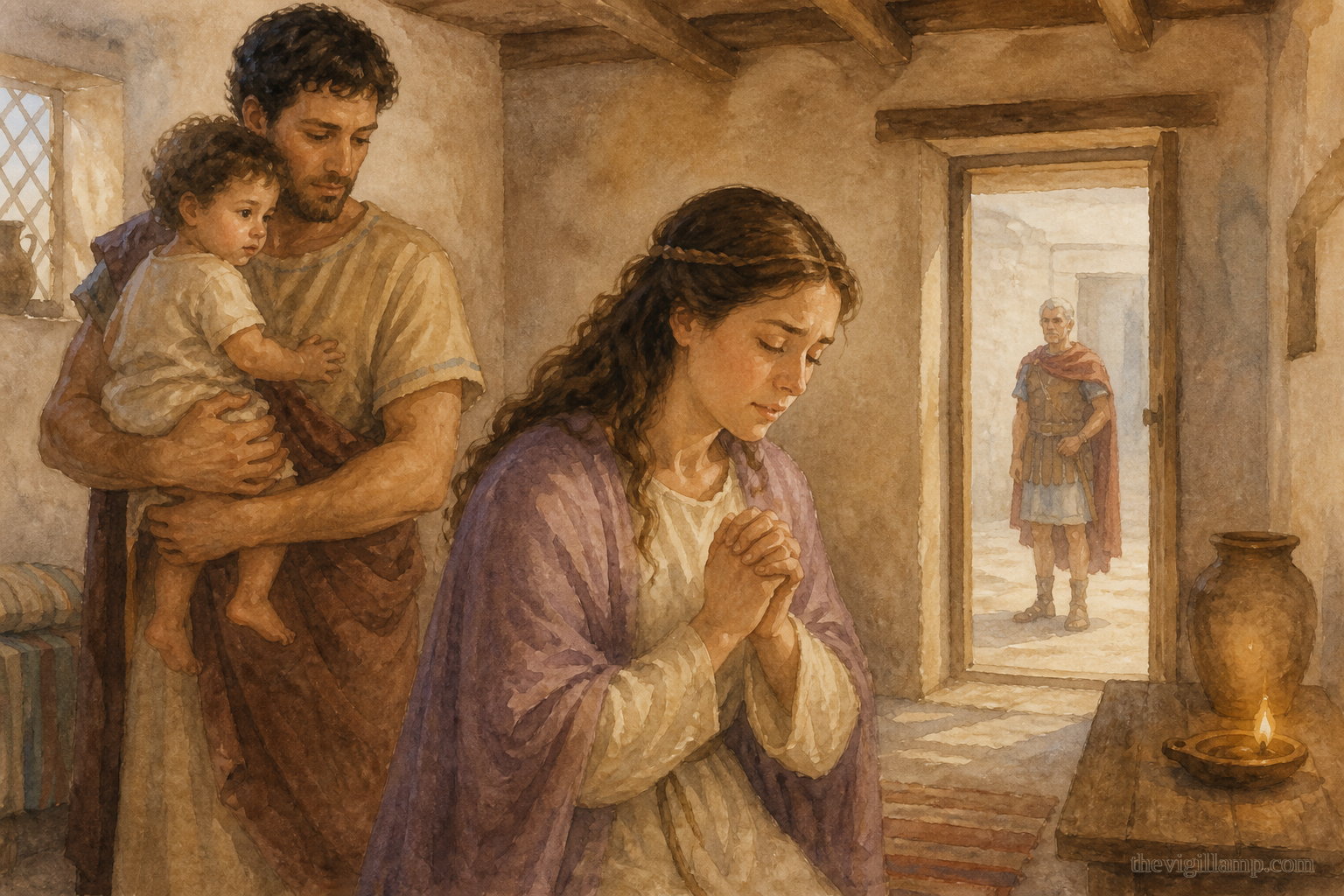
Philophronos and Theodosia. The senator and his wife. The father and the mother who had raised a Christian girl. They took their daughter home.
The Church will not let us tell the end as if the body were forgotten. The house that had hidden her was not the last house. Her own people came. They buried her near the city where she had stood.
Later, a majestic church was built over the grave of the Great Martyr Euphemia. The sessions of the Fourth Ecumenical Council took place there in the year 451. At that time the Holy Great Martyr Euphemia confirmed the Orthodox confession of faith in a miraculous way. That miracle is commemorated on July 11. We will not tell that day this morning. We name it, because the Church names it over her grave.
When the Persians captured Chalcedon in the year 617, the relics of the holy Great Martyr were transferred to Constantinople. The incorrupt body of Saint Euphemia is in the Patriarchal Church of Saint George at the Phanar in Constantinople.
Do you hear what the Church is singing now? Not only that she died. She is singing that a girl loved her Bridegroom, and that her lamp was not left dark.
"I love You, my Bridegroom, and in seeking You I endure suffering. In Baptism I was crucified so that I might reign in You, and I died so that I might live with You."
And again, in the Church's Slavic usage for this same day: "You loved your Bridegroom Christ, and your lamp was well trimmed shining with virtue, O All-praised Euphēmia, and so you went in with Him to the wedding feast, receiving from Him a crown of martyrdom."
The word we heard this morning is the weekday word. It is not a feast pair, and it is not a saint pair. The Church appointed it anyway, on the second morning of the Afterfeast, and it already knows what a house is for.
"Bear ye one another's burdens, and so fulfil the law of Christ."
Forty-nine people hid in one house. Victor and Sosthenes would not leave a girl to the fire. The law of Christ is not a festival for Ares. It is a burden borne together.
And the Gospel says, "There is nothing from without a man, that entering into him can defile him: but the things which come out of him, those are they that defile the man." Priscus could put a feast around a city. He could put a furnace in front of two soldiers. He could not make a heart deny the Name.
The same reading has another word: "If any man have ears to hear, let him hear." Euphemia heard. The forty-nine heard. Victor and Sosthenes heard. A Divine voice was heard.
The psalm we held in the hand is not a lectionary appointment. It is a word the Afterfeast already knows, and a word a martyr's morning already knows: "Precious in the sight of the Lord is the death of his saints."
Precious — not forgotten. Not wasted. Not a girl thrown away on a shore across from the Queen of Cities. Precious in the sight of the Lord.
That is why the Church will not let the Afterfeast stand without this girl. While she is still singing the Cross, she names a young woman who would not bow to Ares. While she is still saying, "O Lord, save Your people," she names a victory that does not look like a victory — a youngest child left alone, two soldiers who saw angels, a small wound, a father and a mother walking out of an empty arena toward a grave near Chalcedon.
And today, so many hundreds of years later, on the Afterfeast, we say her name once more, out loud, together — Great Martyr Euphemia the All-praised — and she is praying for us still.
"I love You, my Bridegroom, and in seeking You I endure suffering.
In Baptism I was crucified so that I might reign in You,
and I died so that I might live with You.
Accept me as a pure sacrifice,
for I have offered myself in love."
Through her prayers, save our souls, since You are merciful.
even after death you make us holy by gushing forth miracles, O All-praised one.
Therefore, we honor your holy repose, standing by your august relics with faith,
in order to be delivered from spiritual afflictions,
and that we may draw forth the grace of your miracles.
and bless Your inheritance.
Grant victories to the Orthodox Christians
over their adversaries.
And by virtue of Your Cross,
preserve Your habitation.
grant mercy to those who are called by Your Name, O Christ God;
make all Orthodox Christians glad by Your power,
granting them victories over their adversaries,
by bestowing on them the Invincible trophy, Your weapon of Peace.
- Light your lamp, or take the candle you already lit. This is not a game of fire. It is the sign the Church sings for Euphemia: a lamp well trimmed, shining with virtue.
- One child holds it still, the way the icon holds the Cross to the heart. Everyone else is quiet. Count slowly to ten. The hard part is not the holding. The hard part is remaining with it.
- Then that child says, slowly, her own day's shout: "I love You, my Bridegroom, and in seeking You I endure suffering."
- That child does one small, real good work right away: clear a plate, help a little brother, give up the first turn, say something kind. She loved her Bridegroom. We can put down one selfish thing in this room.
- Take turns. When everyone has had a turn, sit together and each name one place a lamp already stands in this house — a wall, a doorway, a mercy you did not make yourselves. Write those words on scraps of paper and keep them under the lamp until next Sunday.


pray to God for us.
Most Holy Theotokos, save us.”
on earth as it is in heaven. Give us this day our daily bread,
and forgive us our trespasses, as we forgive those who trespass against us; and lead us not into temptation,
but deliver us from the evil one. Amen.