
September 15 · Niketas the Goth
Afterfeast of the Elevation of the Cross
O Lord Jesus Christ our God, have mercy on us.”
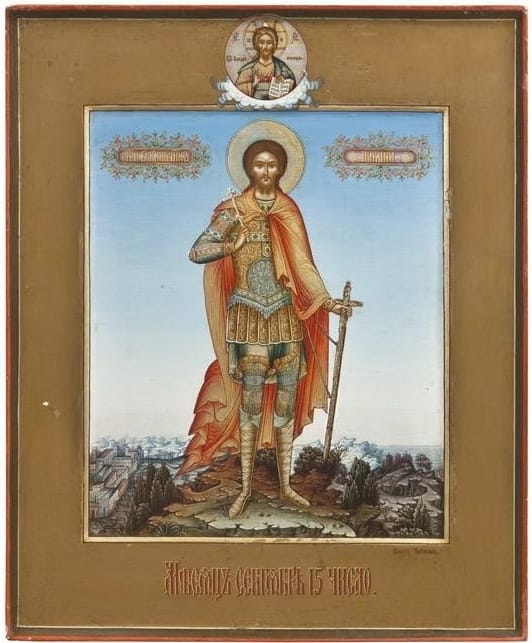
Yesterday the Church opened a Great Feast.
She lifted up the Precious and Life-Giving Cross, and the people said, "Lord, have mercy."
Today she does not put that Wood away.
Today is the Afterfeast of the Elevation of the Cross. From this morning until the Leavetaking, the Church keeps singing a new greeting at the weekday Liturgies: "O come, let us worship and fall down before Christ. O son of God crucified in the flesh, save us who sing to Thee: Alleluia."
Do you hear that? Crucified in the flesh. The Cross is still in the air.
The Church remembers more than one name on the fifteenth of September. She remembers the uncovering of the relics of Saint Acacius, Bishop of Melitene; the Martyrs Theodotus, Asclepiodotus, and Maximus of Adrianopolis; Martyr Porphyrius the Actor; the uncovering of the relics of the Holy Protomartyr and Archdeacon Stephen; Saint Philotheus the Presbyter in Asia Minor; Venerable Joseph, Abbot of Alaverdi in Georgia; Saint Joseph the New of Partos; and the Icon of the Mother of God of Novonikḗta. Those are true days. We will not tell those whole lives this morning.
This morning she asks us to look at Niketas.
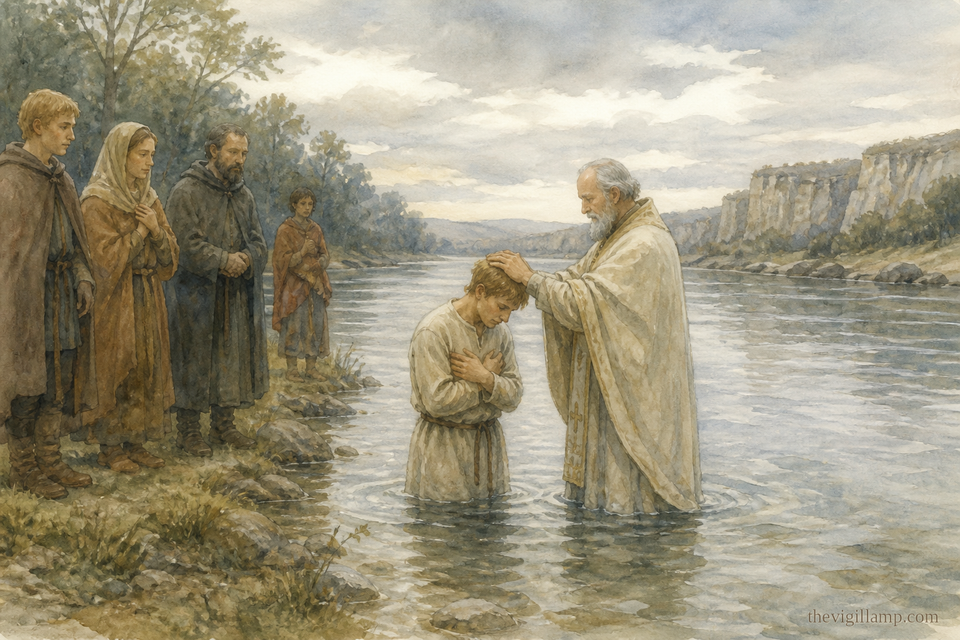
His name is Niketas. The Church also writes Nikḗtas. Families may hear Nicetas, or Nikita. All those names are one man. In Greek the name means victory.
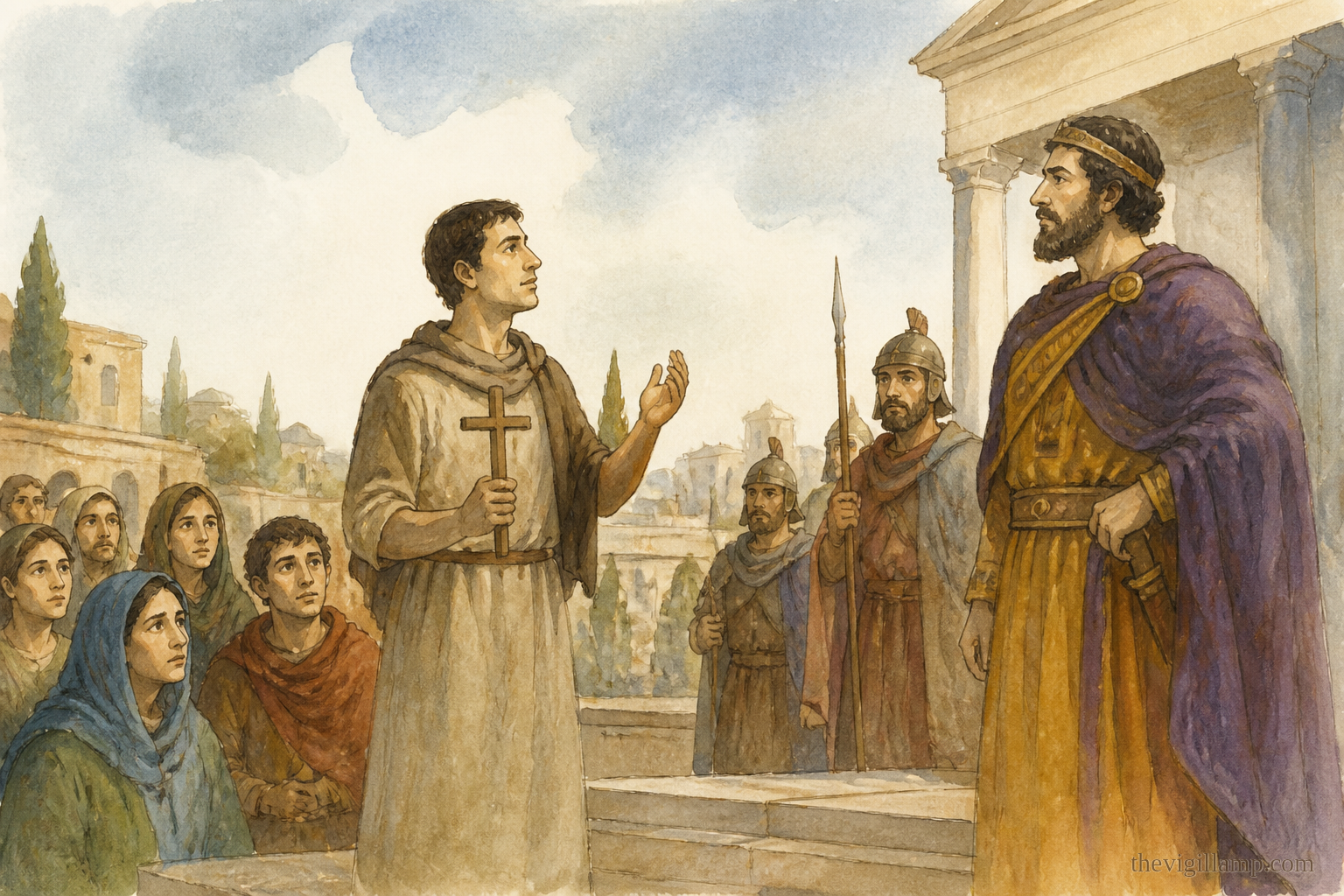
Do you hear what she is already singing for him? "You took up the Cross of Christ bravely, as though taking up arms."
That is today's word. Not a man who trusted a sword. A man who took up the Cross.
He was a Goth — a people who lived far to the north of the old Roman world. He was born and lived on the banks of the Danube River. He suffered for Christ in the year 372.
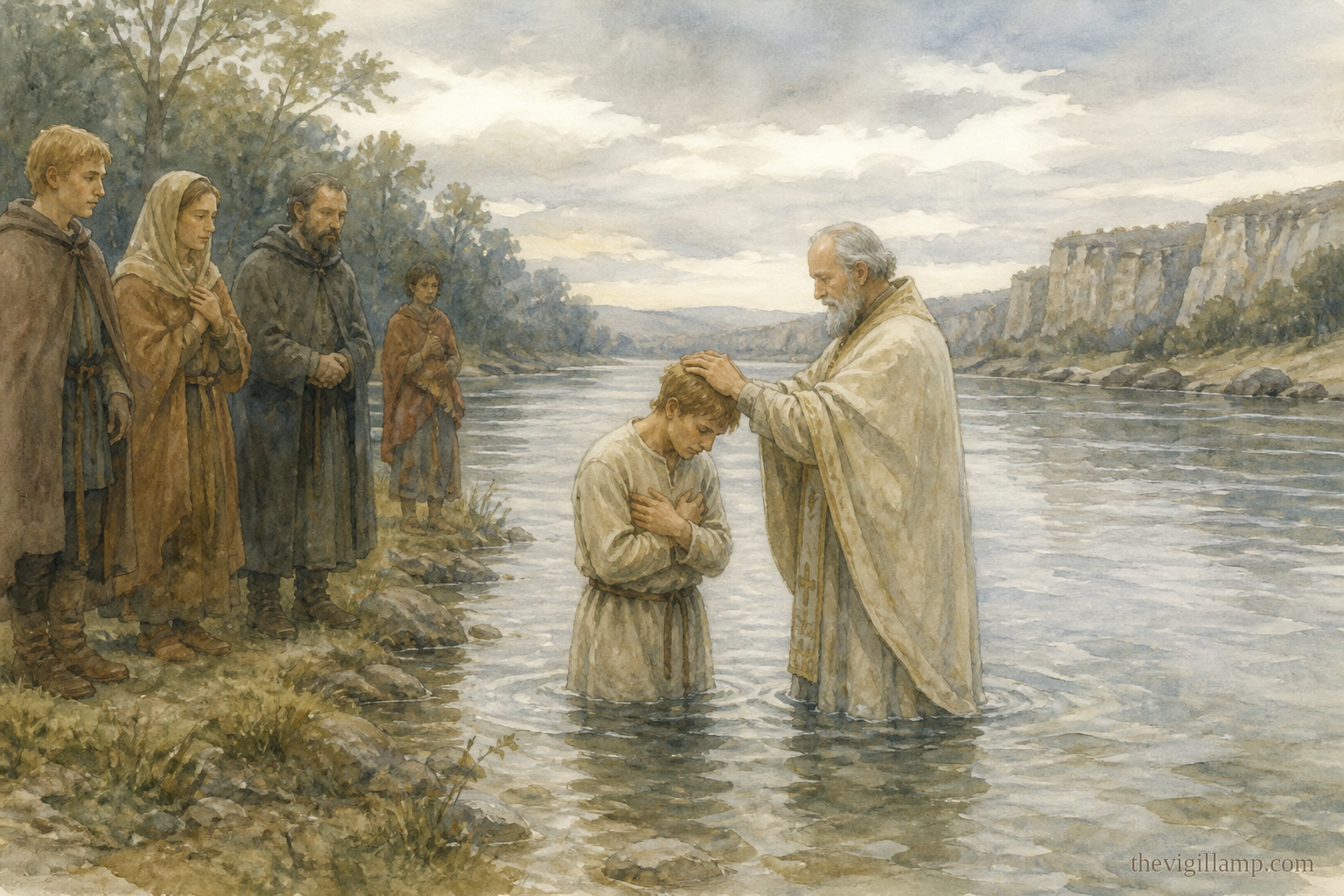
The Christian Faith was already spreading throughout the territory of the Goths at that time. Saint Niketas believed in Christ. He was baptized by the Gothic bishop Theophilus — the Church also writes Theophilos — who took part in the First Ecumenical Council, the great gathering at Nicaea.
A bishop from the Danube sat with the fathers. A Goth was washed in the Name. The Faith had already come that far.
Pagan Goths started to oppose the spread of Christianity. There was a civil war.
The Church names two leaders. Fritigern stood at the head of a Christian army. Athanaric remained a pagan. Fritigern defeated Athanaric, and the Christian Faith continued to spread among the Goths.
When Bishop Theophilus died, Ulfilas came after him. The Church names Ulfilas as the bishop who made a Gothic alphabet, and who translated many spiritual books into the Gothic language, including the Holy Scriptures.
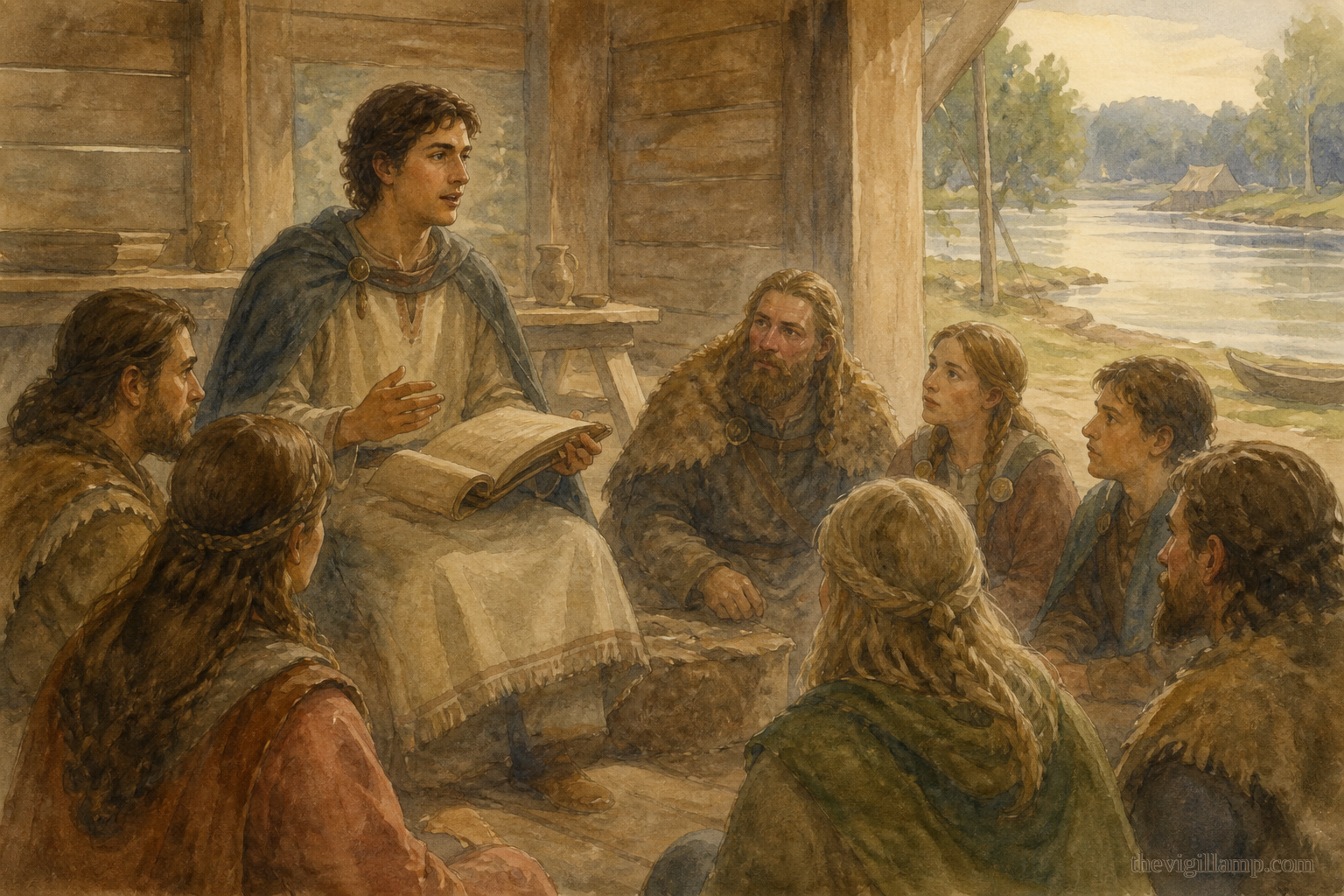
Do you hear that? The word was no longer only a guest in someone else's tongue. It had letters of its own. A child of the Danube could hear the Scriptures in the speech of his own house.
Saint Niketas worked tirelessly among his fellow Goths to teach them about Christ. Through his personal example and inspired words, he brought many of them to the Christian Faith.
The Church will not let us tell him as if he kept the Name to himself.
Then Athanaric came back.
After his defeat he managed to regroup his forces. He returned to his own country and regained his former power. Since he remained a pagan, he continued to hate the Christians and persecuted them, seeking revenge for the humiliation he had endured.
Saint Niketas had to contend against both visible and invisible enemies. In opposing those invisible enemies, he converted many pagans to Christ, and strengthened the faithful for the contest of martyrdom.
Filled with zeal for God, he denounced the persecutor Athanaric for his cruelty and impiety, because Athanaric subjected the Christians to severe torments.
Those are the Church's words. We will not invent others. We will not turn them into a speech no one wrote down.
The Church says he prevailed against both of these enemies. He trampled the devil underfoot, and defeated Athanaric in battle. The cruel tormentor was troubled because he was unable to convert Saint Niketas to his own impiety, and so he resolved to capture the Saint and put him to death.
Niketas confessed Christ. He was arrested. He died for the Faith.
We will not linger on the manner of his sufferings. The Church knows them, and that is enough for us this morning.
The Church says it this way: he endured many tortures, and then he was thrown into a fire. Although his body was not burnt by the fire, he surrendered his soul to God, and his relics were illumined by a radiant light.
Those are the Church's words. We will not invent others. We will not turn them into a picture of hurt for children. We say what the Church says: he was not turned. He gave his soul to God. A light shone.
Thus Saint Niketas received an unfading crown of glory from Christ on September 15, 372.
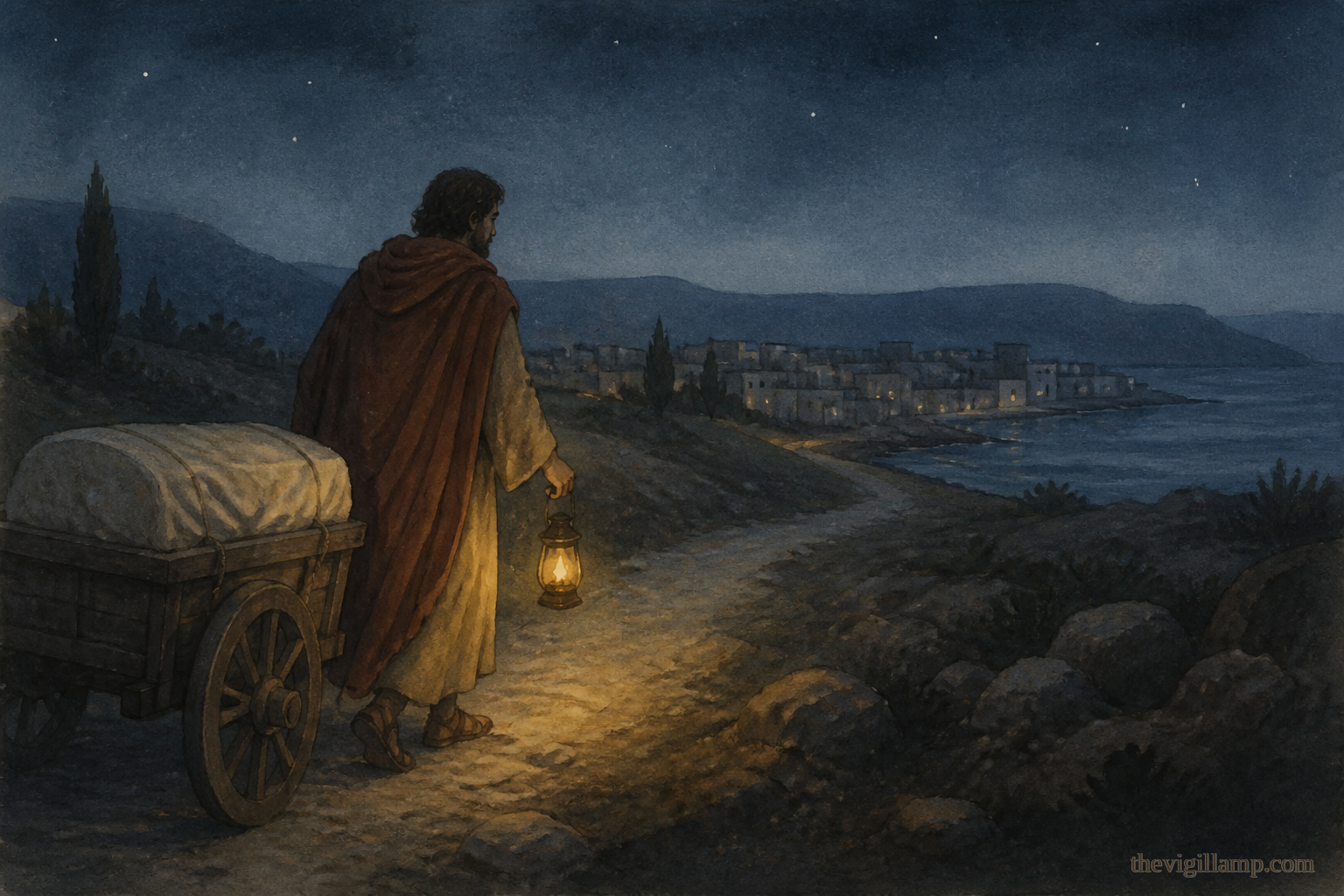
By night, a Christian named Marianus took the body of Saint Niketas.
Marianus was from Cilicia, from a city called Mopsuestia. He had come into the land of the Goths, and he had come to love this friend. He took the holy body by night, and he brought it home. He buried it in Cilicia, in Mopsuestia.
Afterward the relics were transferred to Constantinople. Part of them were later given to the monastery of Vysokie Dechani in Serbia.
The Church will not let us tell the end as if the body were forgotten. A friend came by night. A city in Cilicia received him. The Name went on.
Do you hear what the Church is singing now? Not only that he died. She is singing that he took up the Cross, and that his name is victory.
"You took up the Cross of Christ bravely, as though taking up arms, and hastening to battle against the enemies, you suffered for Christ, after which you gave your sacred soul to the Lord."
And again: "You defeated the might of delusion by your firm resolve, and receiving a crown of victory through your suffering, O Nikḗtas, namesake of victory, you rejoice with the Angels."
The word we heard this morning is the weekday word. It is not a feast pair, and it is not a saint pair. The Church appointed it anyway, on the first morning of the Afterfeast, and it already knows the Cross.
"And I, brethren, if I yet preach circumcision, why do I yet suffer persecution? then is the offence of the cross ceased."
The offence of the Cross has not ceased. Niketas suffered persecution. The Cross was not put away because a Great Feast had a yesterday.
And the Gospel says, "This people honoureth me with their lips, but their heart is far from me." Niketas did not honor the Lord with his lips only. His heart was not far. He taught. He stood. He confessed. He died for the Faith.
The same reading has another word: "There is nothing from without a man, that entering into him can defile him: but the things which come out of him, those are they that defile the man." Athanaric could put a fire around a body. He could not make a heart deny the Name.
The psalm we held in the hand is not a lectionary appointment. It is a word the Afterfeast already knows: "But God is our King of old; he has wrought salvation in the midst of the earth."
In the midst of the earth — on a hill, on a Wood, and also on the banks of a river far from Jerusalem, in a people who had only just received letters for the Scriptures.
That is why the Church will not let the Afterfeast stand without this Goth. While she is still singing the Cross, she names a man who took it up as though taking up arms. While she is still saying, "O Lord, save Your people," she names a victory that does not look like a victory — a man arrested, a man who died, a light on relics, a friend walking at night toward Mopsuestia.
The Church asks us to pray to Saint Niketas for the preservation of children. We will say his name for the children in this house, and for the children we have not met.
And today, so many hundreds of years later, on the Afterfeast, we say his name once more, out loud, together — Greatmartyr Niketas the Goth — and he is praying for us still.
and hastening to battle against the enemies,
you suffered for Christ, after which you gave your sacred soul to the Lord;
therefore, you were worthy to receive from Him the gift of healing,
O Great Martyr Nikḗtas.
Pray to Christ God for the salvation of our souls.
and receiving a crown of victory through your suffering,
O Nikḗtas, namesake of victory, you rejoice with the Angels;
and with them, pray unceasingly to Christ God for us all.
and bless Your inheritance.
Grant victories to the Orthodox Christians
over their adversaries.
And by virtue of Your Cross,
preserve Your habitation.
grant mercy to those who are called by Your Name, O Christ God;
make all Orthodox Christians glad by Your power,
granting them victories over their adversaries,
by bestowing on them the Invincible trophy, Your weapon of Peace.
- Take a simple Cross — two clean sticks tied with string, or a Cross your house already has. This is not a game of soldiers. It is the sign Niketas took up, the same Wood the Church is still keeping today.
- One child holds it close, the way the icon holds it to the heart. Everyone else is quiet. Count slowly to ten. The hard part is not the holding. The hard part is remaining with it.
- Then that child says, slowly, his own day's shout: "You took up the Cross of Christ bravely, as though taking up arms."
- That child does one small, real good work right away: clear a plate, help a little brother, give up the first turn, say something kind. He took up the Cross. We can put down one selfish thing in this room.
- Take turns. When everyone has had a turn, sit together and each name one place the Cross already stands in this house — a wall, a doorway, a mercy you did not make yourselves. Write those words on scraps of paper and keep them under the lamp until next Sunday.


pray to God for us.
Most Holy Theotokos, save us.”
on earth as it is in heaven. Give us this day our daily bread,
and forgive us our trespasses, as we forgive those who trespass against us; and lead us not into temptation,
but deliver us from the evil one. Amen.