
September 25 · Sergius of Radonezh
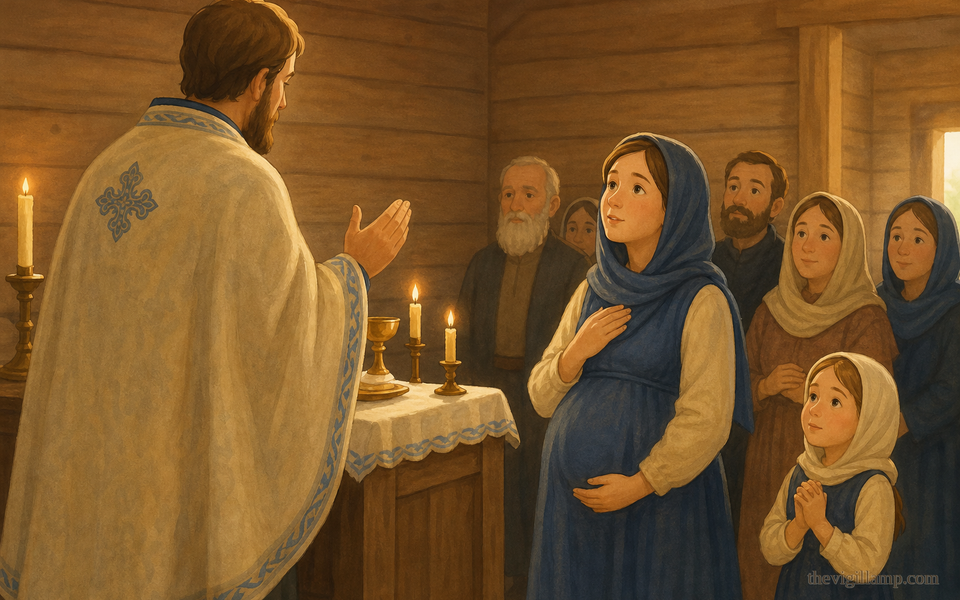
Repose of Venerable Sergius the Wonderworker, Abbot of Radonezh
O Lord Jesus Christ our God, have mercy on us.”
Today the Church remembers more than one holy name.
She remembers Venerable Euphrosyne of Alexandria. She remembers Venerable Euphrosyne of Suzdal. She remembers the first translation of the relics of Saint Herman, Archbishop of Kazan. She remembers Martyr Paphnutius and five hundred and forty-six companions in Egypt. She remembers Saint Arsenius the Great, Catholicos of Georgia. She remembers the Wonderworking Boyan Icon of the Mother of God, and the Assuage My Sorrows Icon. She remembers the earthquake of the year 447 in Constantinople. Those are true days. We will not tell those whole lives this morning.
This morning she asks us to look at Sergius.
His name is Sergius. The Church also writes Sérgii, and families may hear Sergei. On this page those names are one man: Venerable Sergius the Wonderworker, Abbot of Radonezh. Before the monastery he was a boy named Bartholomew.
Do you hear what she is already singing for him? "Athlete of virtues, true warrior of Christ God." "Since you possess boldness before the Holy Trinity, remember the flock which you gathered wisely, and do not forget to visit your children as you promised, O Venerable Sergius our Father."
That is today's word. Not a man who climbed up to be great. A boy the Lord chose, a monk who stayed small, an abbot who kept a house for the Holy Trinity.
Long ago, in the village of Varnitsa, near Rostov, there lived a pious and illustrious couple named Cyril and Maria. The Lord chose their son while he was still in his mother's womb.
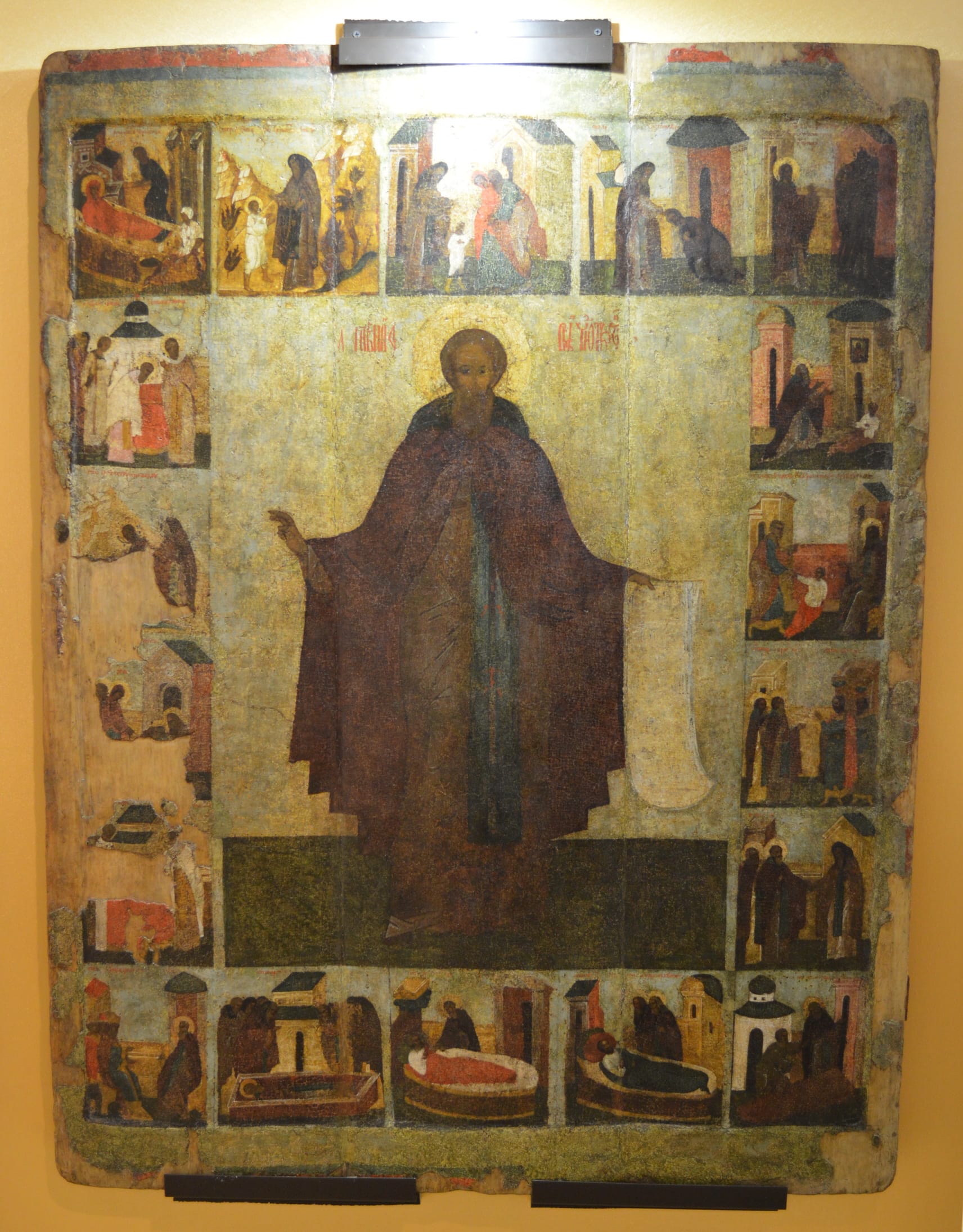
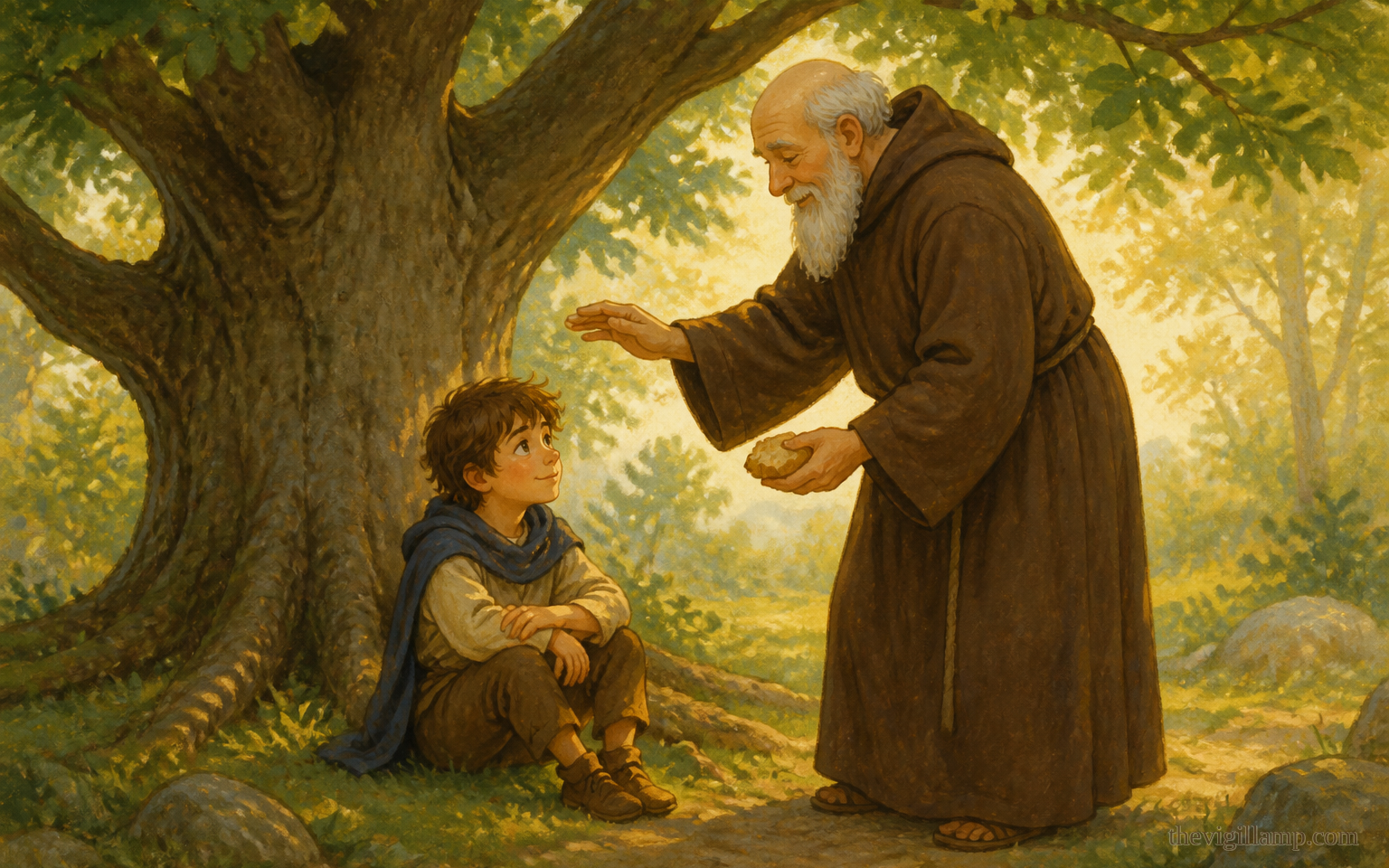
One day Saint Maria stood at the Divine Liturgy, and those who were praying with her heard the infant cry out three times: before the reading of the Holy Gospel, during the Cherubic hymn, and when the priest said, "Holy Things are for the Holy."
Those are the Church's words. We will not invent others. The child had not yet been born. The Lord had already named the hour.
God gave Cyril and Maria a son, and they named him Bartholomew. From his first days the infant amazed everyone by his fasting. We will say that once, the way the Church says it, and we will not turn it into a rule for this house.
At seven they sent him to study with his two brothers: the older, Stephen, and the younger, Peter. The brothers learned. Bartholomew did not. The teacher gave him special attention. It was not enough. His parents scolded him. The teacher chastised him. His classmates made fun of him.
He asked the Lord, with tears, to grant him the ability to read.
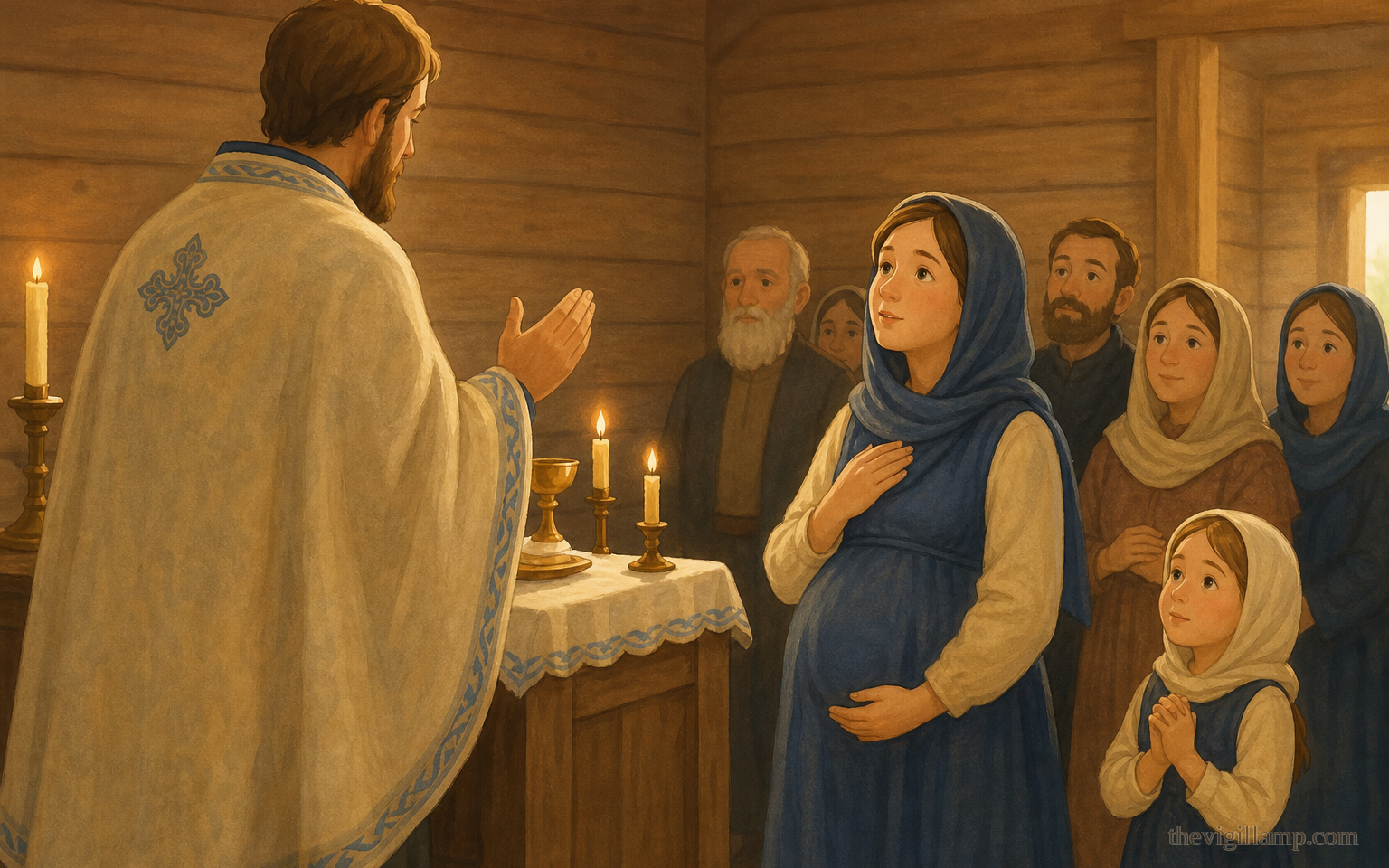
Once his father sent him after the horses in the field. Along the way he met an Elder standing at prayer beneath an oak. The Life says the Elder was an angel sent by God under the appearance of a monk. Bartholomew came near, and bowed, and waited until the prayer was finished.
The monk blessed him, kissed him, and asked what he wanted.
Bartholomew answered, "With all my soul I want to learn reading and writing. Holy Father, pray for me to God, that He may help me to become literate."
Those are the boy's own words as the Church kept them. We will not invent others.
The Elder prayed. Then he blessed the child and said, "Henceforth, my child, God gives you to understand reading and writing, and in this you will surpass your brothers and peers."
He took a vessel and gave Bartholomew a piece of prosphora. "Take, child, and eat," he said. "This is given to you as a sign of the grace of God, and for the understanding of Holy Scripture."
Bartholomew asked him to come home. Cyril and Maria received the guest with joy and set food before him. The Elder said it was proper to partake of spiritual nourishment first, and he bade their son to read the Psalter.
Bartholomew began to read. His parents were amazed.
In parting the Elder said, "Your son shall be great before God and the people. He shall become a chosen habitation of the Holy Spirit."
After that the holy child read without difficulty, and understood the books. He did not miss a single church service.
About the year 1328 the family moved from Rostov to Radonezh. When the older sons had married, Cyril and Maria received the monastic schema at the Khot'kov monastery of the Protection of the Most Holy Theotokos, not far from Radonezh, and there they reposed. Stephen was widowed, and became a monk in that same house.
Having buried his parents, Bartholomew and Stephen withdrew into the forest, twelve versts from Radonezh. They made cells. They made a small church. With the blessing of Metropolitan Theognostus it was consecrated in the name of the Most Holy Trinity.
Stephen could not bear the wilderness. He left his brother and went to the Moscow Theophany monastery.
Bartholomew stayed.
On October 7, 1337, Igumen Metrophanes tonsured him, and gave him the name of the holy Martyr Sergius. He began to build a new habitation to the glory of the Life-Creating Trinity.
He suffered temptations. He went on. Other monks came, looking for a guide. He accepted them all with love. Soon there were twelve.
He distinguished himself by an extraordinary love for work. With his own hands he built cells. He carried water. He chopped wood. He baked bread. He sewed clothing. He prepared food for the brethren. He took the humble tasks and did not put them down. He joined the heavy work to prayer, and vigil, and fasting.
The brethren were amazed that the work did not wear him away. It was not without difficulty that they implored him to be their igumen. In 1354 Bishop Athanasius of Volyn ordained him a hieromonk and elevated him to that rank.
Often the monks had only scant food. Through his prayers, unknown people provided what was needed.
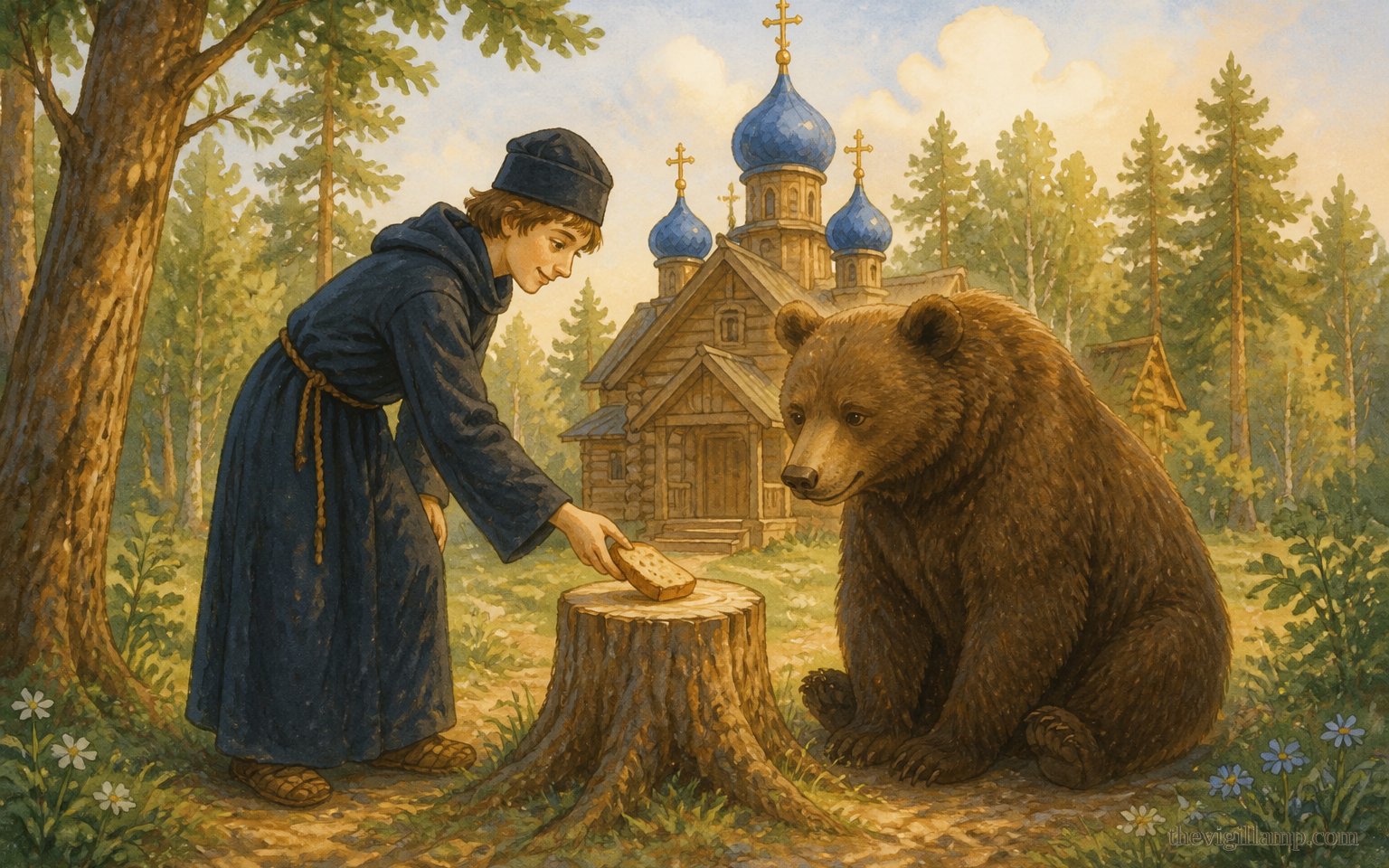
The traditional life tells one more thing from those first years, when he was still alone in the trees. One day he saw a bear before his cell, very hungry. He took pity. He brought out a piece of bread and laid it on a stump. After that the bear came often. The saint shared his bread — often even his last piece. For a whole year the wild animal visited him every day.
Those are the Church's traditional words. We will not invent a conversation for the bear. We will not make a game of it. A hungry creature came. A poor monk fed it. That is enough.
Already in his lifetime he was given the gift of wonderworking. He raised a lad, at the point when the despairing father had given up on his only son as lost. The sick came from nearby villages and from far away. No one left without healing, and without a word that could hold them up. Everyone gave him glory. Human glory did not hold him. He remained the example of monastic humility.
Saint Alexis, Metropolitan of Moscow, was bound to him by spiritual friendship. In his declining years the metropolitan summoned him and asked him to accept to be Russian Metropolitan.
Saint Sergius humbly declined to be primate.
The traditional life tells how that asking looked. The old hierarch took his metropolitan's gold cross, set with precious stones, and held it out. Saint Sergius would not take it. "Forgive me, holy Master," the life says he answered, "from my youth I have not been a gold-wearer, and in old age I desire all the more to remain in poverty."
Those are the Church's traditional words. We will not invent a longer speech. He would not put on gold. He would not take the throne. He stayed the abbot of a poor house named for the Trinity.
The Russian Land in those days suffered under the Mongol-Tatar yoke. Great-prince Demetrius Ioannovich of the Don gathered an army, and he came to the monastery to ask a blessing for the struggle that lay ahead.
Saint Sergius gave a blessing. He sent two monks of his house to go with the prince, and he predicted the victory. The prophecy was fulfilled. On September 8, 1380, the feast of the Nativity of the Most Holy Theotokos, the Russian soldiers gained the victory at Kulikovo Field. That day was the beginning of the land's liberation. During the fighting Saint Sergius and the brethren stood at prayer, and asked God to grant the victory.
We will not linger on the field. The Church knows it, and that is enough for us this morning. We say what the Church says: he blessed. He prayed. The Lord kept the people.
One night Abba Sergius was reading the rule of prayer beneath an icon of the Most Holy Theotokos. He said to his disciple Mikhei that a wondrous visitation awaited them. The Mother of God appeared, with the holy Apostles Peter and John the Theologian. The light was so bright that Saint Sergius fell down. She touched him with Her hands, blessed him, and promised always to be Protectress of his holy monastery.
Having reached old age, and foreseeing his end six months beforehand, he summoned the brethren and named his disciple Nikon to be igumen.
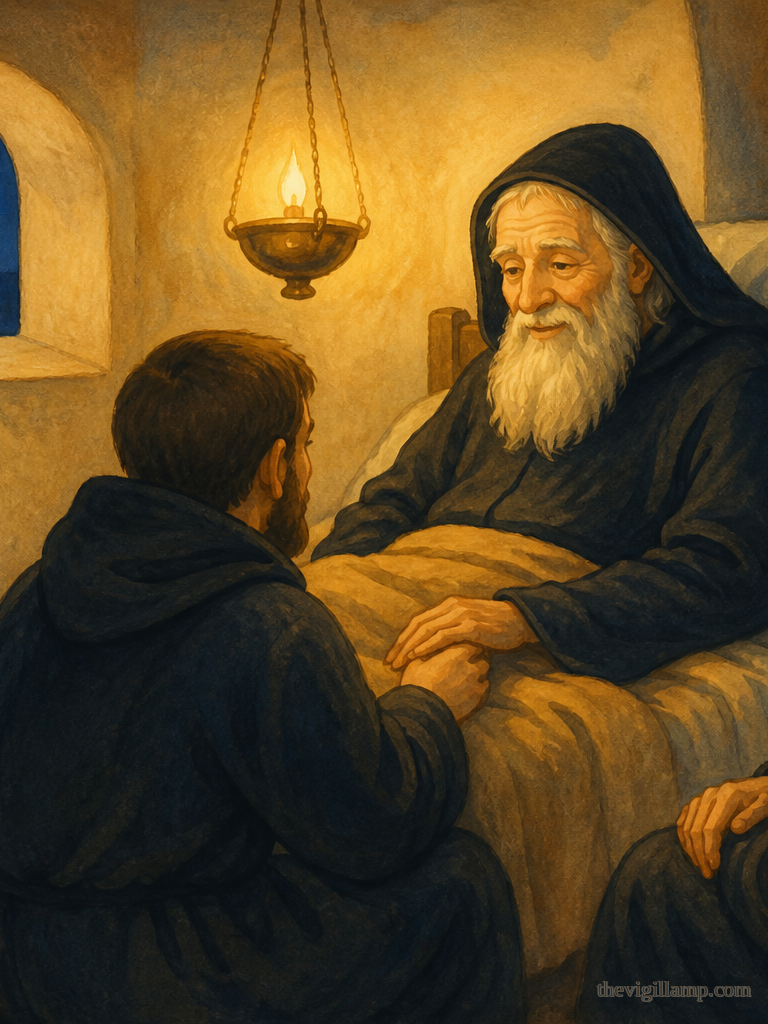
In tranquil solitude he fell asleep in the Lord on September 25, 1392.
On the night before, he summoned the brethren a final time. "Brethren, be attentive to yourselves," he said. "Have first the fear of God, purity of soul and unhypocritical love...."
Those are his last words as the Church kept them. We will not invent the rest of the sentence. Fear of God. Purity of soul. Love with no lie in it. That is what he left in the house.
The word we heard this morning is the saint's own pair. The Church labeled it (Saint).
"But the fruit of the Spirit is love, joy, peace, longsuffering, gentleness, goodness, faith, Meekness, temperance: against such there is no law. … Bear ye one another's burdens, and so fulfil the law of Christ."
That fruit is what the brethren saw when a man chopped their wood and would not wear a gold cross. That burden is what he carried when a prince asked a blessing, and when a hungry animal stood at the door.
And the Gospel says, "Blessed be ye poor: for yours is the kingdom of God. Blessed are ye that hunger now: for ye shall be filled."
He was poor on purpose. He was hungry on purpose. The kingdom was already in that little church in the trees.
The psalm we held in the hand is not a lectionary appointment. It is a word this morning already knows: "Come, ye children, hear me: I will teach you the fear of the Lord."
Come, ye children. The Church still says that on his morning. Have first the fear of God.
That is why the Church will not let this Friday stand without this monk. While she is naming two Euphrosynes, and a translation, and an earthquake, she also names the boy who could not read, whom God taught under an oak, who stayed in the forest when his brother left, who built a house for the Trinity, who fed what was hungry, who would not wear gold, who blessed a prince and then went back to prayer, and who is praying still.
And today, so many hundreds of years later, we say his name once more, out loud, together — Venerable Sergius the Wonderworker, Abbot of Radonezh — and he is praying for us still.
true warrior of Christ God,
you struggled mightily against the passions in this temporal life;
in psalmody, vigils, and fasting, you were an example to your disciples;
therefore, the most Holy Spirit dwelt in you,
and you were radiantly adorned by His activity.
Since you possess boldness before the Holy Trinity,
remember the flock which you gathered wisely,
and do not forget to visit your children as you promised, O Venerable Sergius our Father.
thereby exuding a spiritual font, O Venerable Sergius,
in which you wash the spiritual and bodily impurity of all those who lovingly revere your memory.
Therefore, we your children cry out to you: "O Father, pray to the Holy Trinity for our souls."
you despised all carnal pleasures, and as the sun, you shone upon the land of your birth.
Therefore, Christ has enriched you with the gift of working miracles.
Remember us who honor your most illustrious memory,
that we may call to you: "Rejoice, O divinely-wise Sergius."
The two troparia and the kontakion appointed by the Orthodox Church in America on the September 25 hymn page for the Repose of Venerable Sergius. Wording is exact; slash marks were converted to line breaks only. Hymns for Euphrosyne of Alexandria, Euphrosyne of Suzdal, Herman of Kazan, Paphnutius, Arsenius, and the icons of the day are not printed here.
- Sit near the family lamp. Today the Church remembers a boy who waited under an oak until the Elder finished praying, and an old abbot who left his house three words: fear of God, purity of soul, love with no lie in it.
- Sit still together for a slow count of ten. No talking. Bartholomew did not interrupt the prayer. The hard part is not the words. The hard part is remaining.
- Then one child says, slowly, the Church's own line: "Have first the fear of God, purity of soul and unhypocritical love."
- That child does one small, real good work right away: clear a plate, help a little brother, carry water to the table, say something kind. Sergius did the humble work with his own hands. We can do one piece of it in this room.
- Take turns. When everyone has had a turn, sit together and share a piece of bread around the table — ordinary bread, broken and given. He shared his bread with whoever was hungry. No one plays the bear. The bread is enough. Write one kindness you mean to give this week on a scrap of paper and keep it under the lamp until next Sunday.


pray to God for us.”
on earth as it is in heaven. Give us this day our daily bread,
and forgive us our trespasses, as we forgive those who trespass against us; and lead us not into temptation,
but deliver us from the evil one. Amen.