
September 26 · John the Theologian
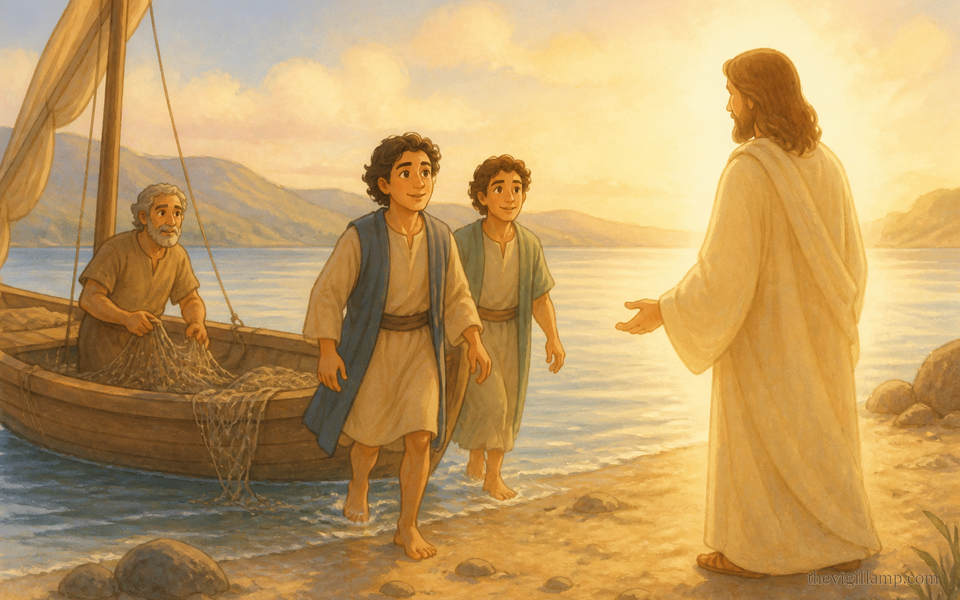
Repose of the Holy Apostle and Evangelist John the Theologian
O Lord Jesus Christ our God, have mercy on us.”
Today the Church remembers more than one holy name.
She remembers Venerable Ephraim, Abbot of Perekop, Wonderworker of Novgorod. She remembers the Arrival of the Iveron Icon of the Mother of God in Georgia. Those are true days. We will not tell those whole lives this morning.
This morning she asks us to look at John.
His name is John. The Church calls him the Theologian, and the Apostle of Love, and the virgin disciple, and the friend of Christ. On this page those names are one man: the Holy, Glorious, All-laudable Apostle and Evangelist John the Theologian.
Do you hear what she is already singing for him? "O Apostle beloved of Christ God." "Who can tell of your greatness, O virgin disciple? … you intercede for our souls as a Theologian and the friend of Christ."
That is today's word. Not a man who ran from the Cross. The friend who stayed. The one who leaned on the Lord's breast. The one who wrote, In the beginning was the Word.
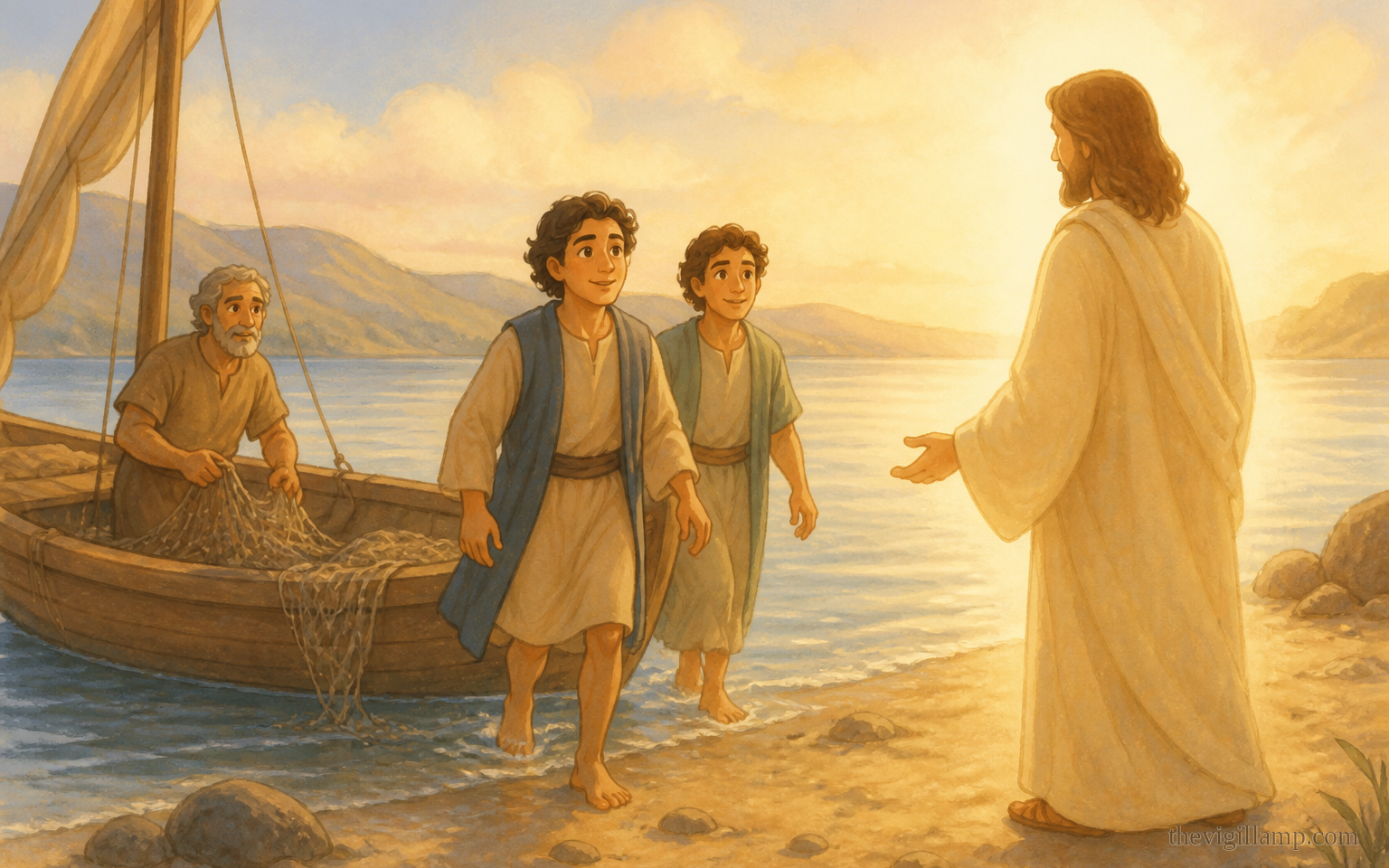
Long ago, by the Sea of Galilee — the Church also calls it Lake Gennesareth — there were two brothers in a boat with their father. The father's name was Zebedee. The mother's name was Salome. The older brother was James. The younger was John.
The Lord Jesus was walking there, calling. He had already called two other brothers, Peter and Andrew. Then He saw James and John, mending their nets.
He called them.
They left the boat. They left their father. They followed Him.
Those are the Gospel's own words. We will not invent others.
The Lord named those two brothers Boanerges — Sons of Thunder. The Church says He was pointing to the flaming, fiery, sacrificial character of Christian love. John would become the preacher of that love.
After that calling, John did not part from the Lord. He was one of the three who were particularly close to Him. He was there when the Lord restored the daughter of Jairus to life. He was there on Mount Tabor, when the Lord's face shone.
At the Last Supper he reclined next to the Lord, and laid his head upon His breast. When the Lord spoke of the one who would betray Him, Peter signed to John to ask. John asked. The Gospel kept that hour. We will not invent a longer speech.
Then they led the Lord away.
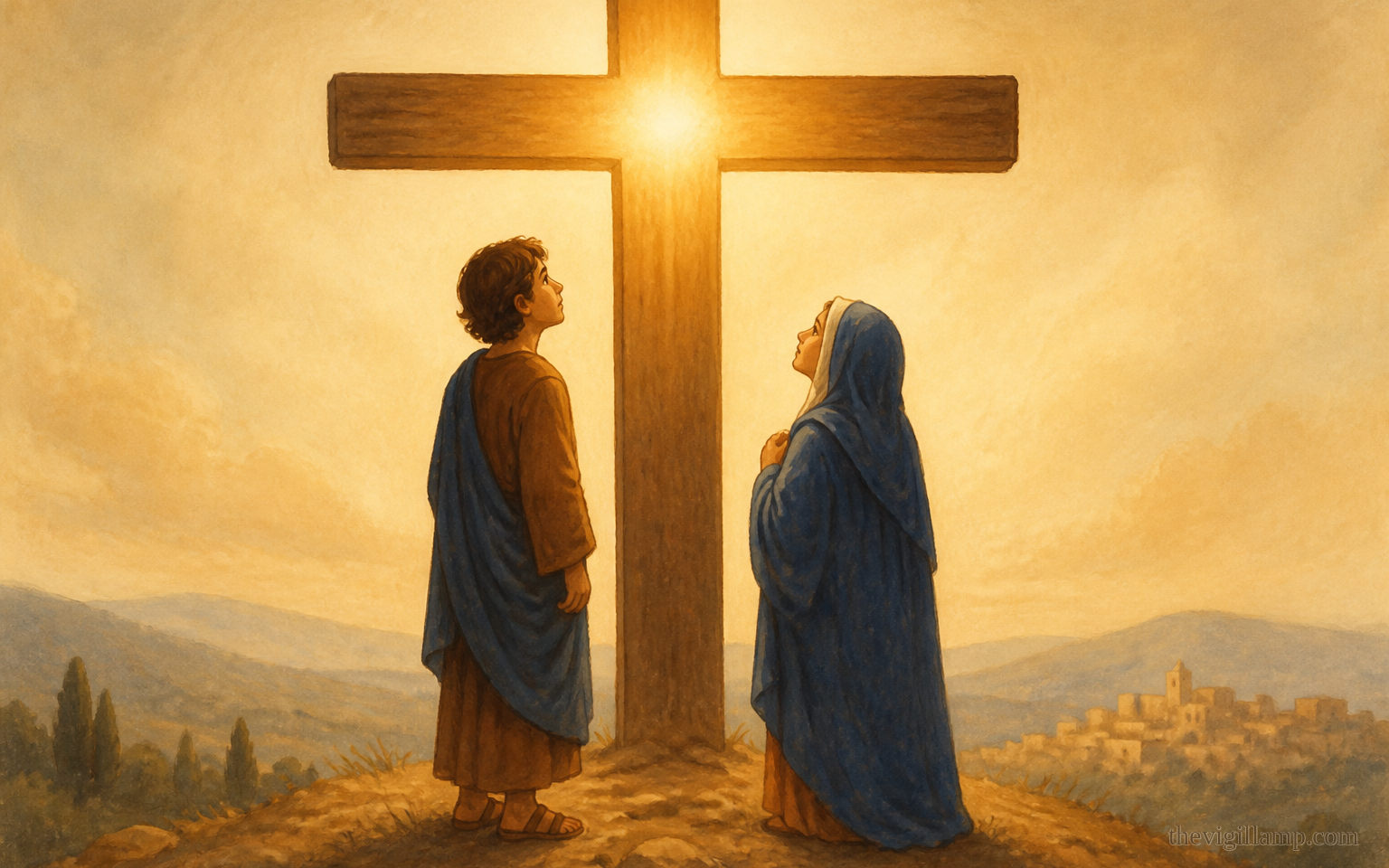
John followed. He was there in the courtyard. He went on, to the place called Golgotha.
We will not make a picture of hurt for children. We say what the Gospel says: he stood there.
The Mother of God stood there too.
When Jesus therefore saw His mother, and the disciple standing by, whom He loved, He said to His mother, "Woman, behold thy son!" Then He said to the disciple, "Behold thy mother!"
And from that hour that disciple took her unto his own home.
Those are the Gospel's own words. They are today's Gospel. We will not invent others. From that hour John concerned himself over the Most Holy Virgin Mary, like a loving son, and he served Her until Her Dormition.
On the first day of the week, while it was still early, Mary Magdalene came running. She had been to the tomb. The stone was taken away. Peter and the other disciple — the one whom Jesus loved — ran. The other disciple did outrun Peter, and came first to the sepulchre. He stooping down, and looking in, saw the linen clothes lying; yet went he not in. Then Peter came, and went in. Then went in also that other disciple. He saw, and believed.
Those are the Gospel's own words. We will not invent others. The tomb was empty. The Lord was not there as a dead man. He was risen.
Later, by the sea again, the risen Lord asked Peter three times, "Lovest thou me?" and said, "Feed my lambs." "Feed my sheep." John was there. He wrote it down. He wrote that this is the disciple which testifieth of these things, and wrote these things: and we know that his testimony is true.
That is the rest of today's Gospel. Not a story about John becoming great. A story about a man who saw, and stayed, and told the truth.
After the Dormition of the Mother of God, the Apostle John went to Ephesus and the other cities of Asia Minor to preach the Gospel, taking with him his own disciple Prochorus.
They boarded a ship. The ship floundered in a terrible tempest. The travellers were cast up on dry ground. Only the Apostle John remained in the depths of the sea.
Prochorus wept. He went on toward Ephesus alone.
On the fourteenth day of his journey he stood at the shore and saw that the waves had cast a man ashore. Going up to him, he recognized the Apostle John, whom the Lord had preserved alive for fourteen days in the sea.
Teacher and disciple went to Ephesus. John preached to the pagans about Christ. The Church says his preaching was accompanied by such numerous and great miracles that the number of believers increased with each day. We will not invent those miracles one by one. The Church has told us they were many, and that is enough.
In those days a persecution of Christians began under the emperor Nero. They took the Apostle John for trial at Rome. He was sentenced to death for his confession of faith in the Lord Jesus Christ, but the Lord preserved His chosen one. He drank a cup of deadly poison, and he remained alive. Later he emerged unharmed from a cauldron of boiling oil into which he had been thrown.
Those are the Church's words. We will not invent others. We will not make a picture of the oil. We say what the Church says: they meant him to die. He lived. John is not a bloody martyr. The Lord kept him.
Then they sent him to imprisonment on the island of Patmos, where he spent many years. On that island his preaching and his mercies attracted the inhabitants, and he enlightened them with the light of the Gospel.
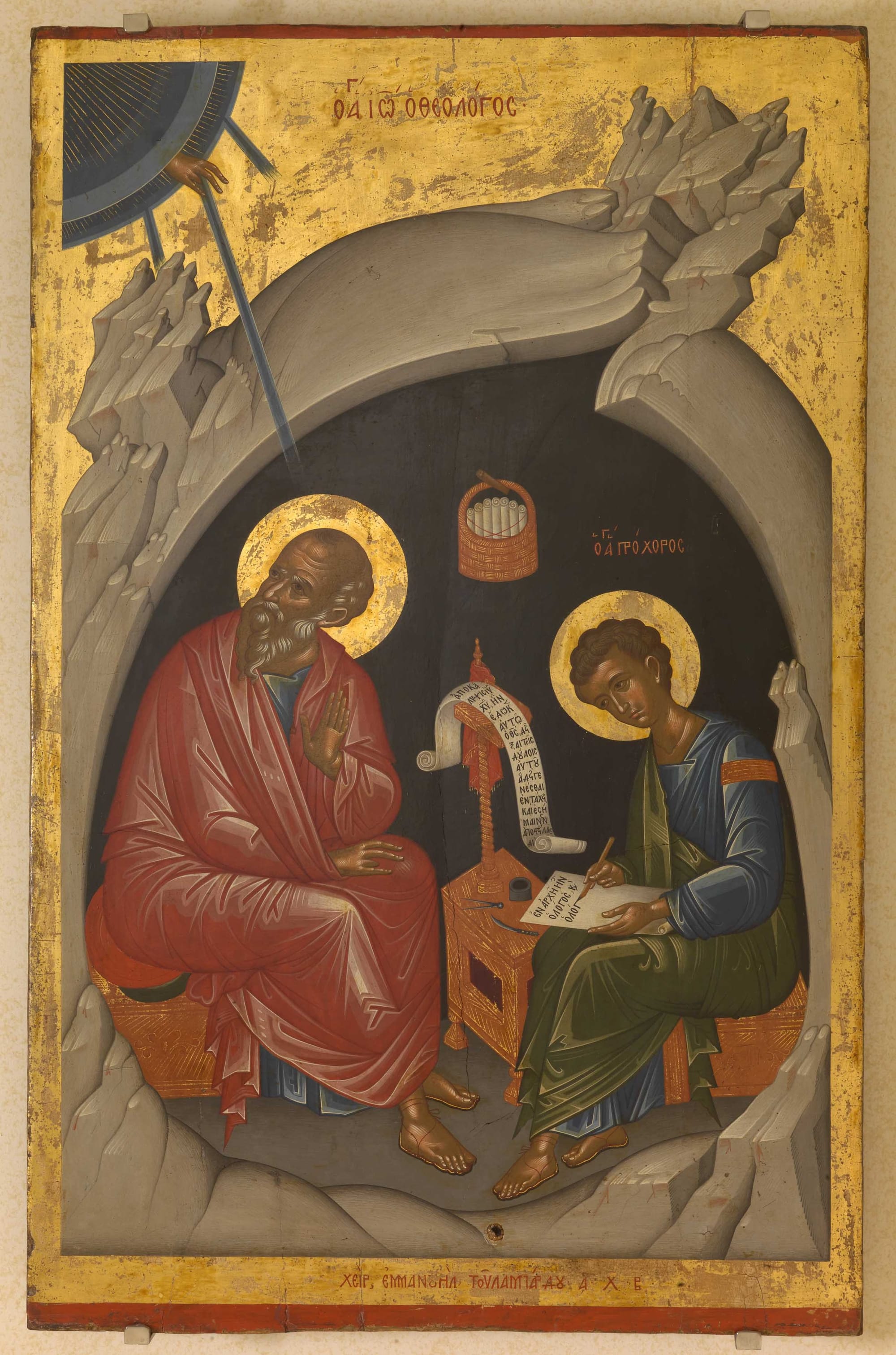
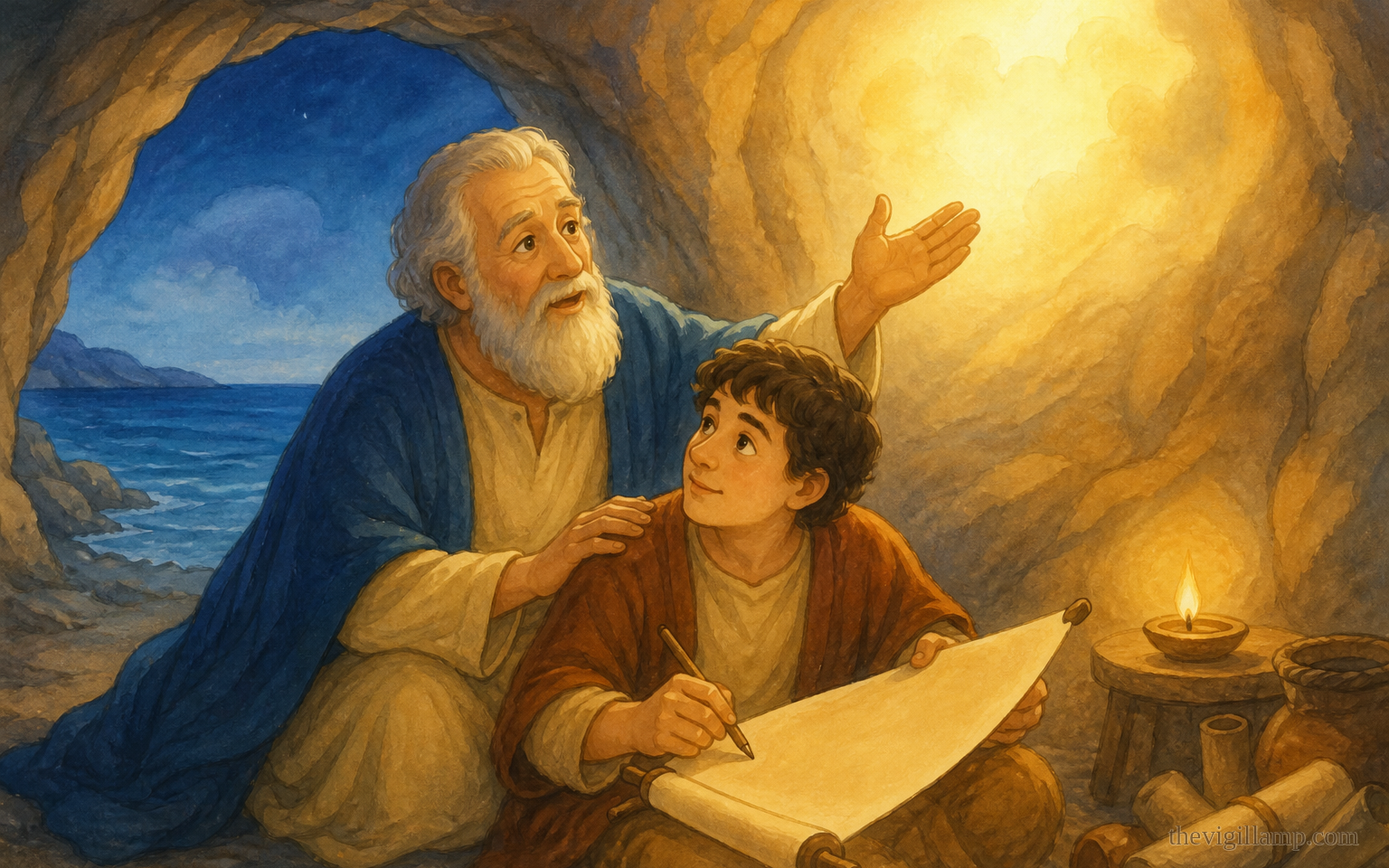
The Apostle John withdrew with his disciple Prochorus to a desolate height, and he imposed upon himself a three-day fast. As Saint John prayed, the earth quaked and thunder rumbled. Prochorus fell to the ground in fright. The Apostle John lifted him up and told him to write down what he was about to say.
"I am the Alpha and the Omega, the beginning and the end, saith the Lord, Who is and Who was and Who is to come, the Almighty."
Those are the words of the Revelation, as the Church keeps them. We will not invent others.
Thus, about the year 67, the Book of Revelation was written — the Apocalypse of the holy Apostle John the Theologian.
After his prolonged exile he received his freedom and returned to Ephesus. In the year 95, the Apostle John wrote his Gospel there. He called for all Christians to love the Lord and one another, and by this to fulfill the commands of Christ. The Church calls him the Apostle of Love, since he constantly taught that without love man cannot come near to God.
In his three Epistles he speaks of the significance of love for God and for neighbor.
Already in his old age, he learned of a youth who had strayed from the true path to follow the leader of a band of robbers. Saint John went out into the wilderness to seek him. Seeing the holy Elder, the guilty one tried to hide himself. The Apostle John ran after him and besought him to stop. He promised to take the sins of the youth upon himself, if only he would repent and not bring ruin upon his soul. Shaken by the intense love of the holy Elder, the youth actually did repent and turn his life around.
Those are the Church's words. We will not invent a longer chase. An old man ran. A lost youth stopped. Love was stronger than shame.
Saint John reposed when he was more than a hundred years old. He far outlived the other eyewitnesses of the Lord, and for a long time he remained the only remaining eyewitness of the earthly life of the Savior.
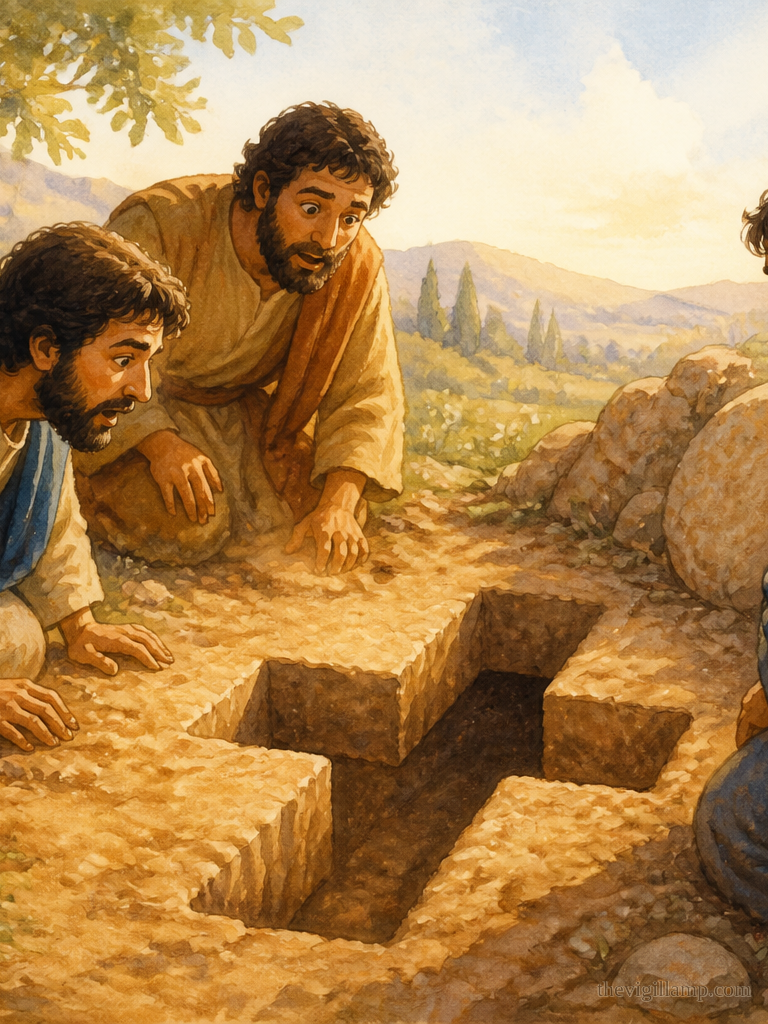
When it was time for his departure, he went out beyond the city limits of Ephesus with the families of his disciples. He bade them prepare for him a cross-shaped grave, in which he lay, telling his disciples that they should cover him over with the soil. The disciples tearfully kissed their beloved teacher, but not wanting to be disobedient, they fulfilled his bidding. They covered the face of the saint with a cloth and filled in the grave.
Learning of this, other disciples of Saint John came to the place of his burial. When they opened the grave, they found it empty.
Those are the Church's words. We will not invent a moving of the earth at the grave. The grave was empty. That is what they found.
Each year from that grave, on the eighth of May, there came forth a fine dust, which believers gathered up and were healed of sicknesses by it. Therefore the Church also celebrates the memory of the holy Apostle John the Theologian on May 8.
The Church also keeps a word blessed Jerome told of those last years. When the holy Apostle had grown so weak that his disciples could only carry him to church, and he could no longer preach a long sermon, he said only, "Little children, love one another." When they asked why he kept saying it, he answered, "This is the Lord's commandment, and if you keep it, it is enough."
Those are Jerome's words as the traditional life kept them. We will not invent others.
The word we heard this morning is the feast's own pair. The Church labeled it (St. John).
"No man hath seen God at any time. If we love one another, God dwelleth in us, and his love is perfected in us. … God is love; and he that dwelleth in love dwelleth in God, and God in him. … We love him, because he first loved us."
That is the Apostle of Love, still teaching. He is not asking us to see God with our eyes. He is asking us to love the person in the room.
And the Gospel says, "Woman, behold thy son." "Behold thy mother." Then it says: this is the disciple who testifies, and wrote these things, and his testimony is true. And there are also many other things which Jesus did, the which, if they should be written every one, the world itself could not contain the books.
John stood. John took her home. John wrote. The books we have are already enough to live by. The love is the rest of the library.
The psalm we held in the hand is not a lectionary appointment. It is a word this morning already knows: "By the word of the Lord the heavens were established; and all the host of them by the breath of his mouth."
In the beginning was the Word. The heavens were established by that Word. An old man in a cave on Patmos wrote it down, and a young disciple held the pen.
The Church bestows the name Theologian among the immediate disciples only on John, as being the seer of the mysterious judgments of God. The eagle is his sign: the lofty height of that thought. This morning we do not need the eagle. We need the friend who stayed.
That is why the Church will not let this Saturday stand without this apostle. While she is naming Ephraim of Perekop, and the Iveron Icon's arrival in Georgia, she also names the boy from the boat, whom the Lord called, who leaned on His breast, who stood at the Cross and received the Mother, who ran to the empty tomb, who heard "Feed my sheep," who preached at Ephesus, who wrote on Patmos, who ran after a lost youth, who lay down in a cross-shaped grave, and who is praying still.
And today, so many hundreds of years later, we say his name once more, out loud, together — Holy Apostle and Evangelist John the Theologian — and he is praying for us still.
hasten to deliver a defenseless people.
He Who permitted you to recline on His breast
receives you as you bow before Him;
entreat Him, O Theologian,
to dispel the persistence of the heathen, and to grant us peace and great mercy.
O virgin disciple?
You pour forth miracles, and are a fountain of healing,
and you intercede for our souls as a Theologian and the friend of Christ.
- Sit near the family lamp. Today the Church remembers the disciple who leaned on the Lord's breast, who stood at the Cross, and who wrote, "In the beginning was the Word."
- Sit still together for a slow count of ten. No talking. John listened before he wrote. The hard part is not the words. The hard part is remaining.
- Then one child says, slowly, the Church's own line: "We love him, because he first loved us."
- That child does one small, real good work right away: clear a plate, help a little brother, give up the first turn, say something kind. John ran after a lost youth. We can go after one kindness in this room.
- Take turns. When everyone has had a turn, sit together and each name one person God has given this family to love — a person in the house, a person far off, a person it would be easy to forget. Write those names on a scrap of paper and keep the papers under the lamp until next Sunday.


Holy Apostle and Evangelist John the Theologian,
pray to God for us.”
on earth as it is in heaven. Give us this day our daily bread,
and forgive us our trespasses, as we forgive those who trespass against us; and lead us not into temptation,
but deliver us from the evil one. Amen.