
September 27 · Callistratus

The Seventeenth Sunday after Pentecost
O Lord Jesus Christ our God, have mercy on us.”
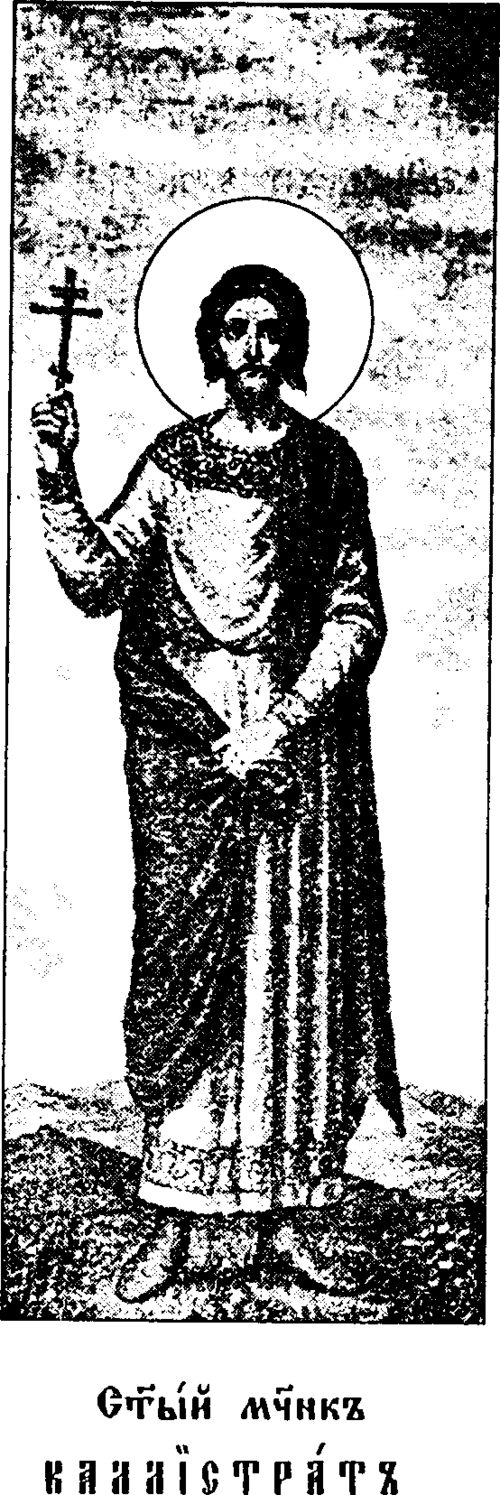
Yesterday the Church remembered the friend of Christ.
She named John the Theologian, the disciple who leaned on the Lord's breast, who stood at the Cross, who wrote, In the beginning was the Word.
Today is not that day again.
Today is a Sunday. The Church has a number for this Sunday: the seventeenth Sunday after Pentecost. She sings in Tone 8. And on the Lord's Day she does another thing she loves to do.
She remembers a soldier who would not put the Name down.
The Church remembers more than one name on the twenty-seventh of September. She remembers Venerable Sabbatius, Wonderworker of Solovki. She remembers Apostles Mark, Aristarchus, and Zenas of the Seventy. And she remembers others. Those are true days. We will not tell those whole lives this morning.
This morning she asks us to look at Callistratus.
His name is Callistratus. The Church also writes Kallistratos, and Kallistrat. Families may hear Callistratus of Carthage. All those names are one man on this page. The Church remembers him as a martyr, and as the leader of a company of forty-nine.
Do you hear what she is already singing for him? "In contest you were strengthened by the Holy Spirit, Martyr Callistratus, and were glorious in casting down the Enemy. You offered a noble army of athletes as sweet-smelling incense to Christ."
That is today's word. Not a man who kept the Name in a locked room. A soldier whose quiet prayer became a company.
He was a native of Carthage.
An ancestor of his — the Church names him Neochorus — had served under the emperor Tiberius in Palestine, under the command of Pontius Pilate, the procurator of Judea. Neochorus was a witness to the suffering on the Cross of our Lord Jesus Christ, His voluntary death, and His glorious Resurrection.
Do you hear that? The Cross was not a story someone told this house later. An ancestor had stood there. He had seen.
The saint's father was a Christian, and he raised his son in faith and piety. Also like his father, Saint Callistratus became a soldier. He excelled among his pagan military comrades by his good conduct and gentle disposition.
He was not loud. He was good. He was gentle. In a camp full of men who did not know the Name, that was already a kind of light.
At night, when everyone slept, he usually stayed up at prayer.
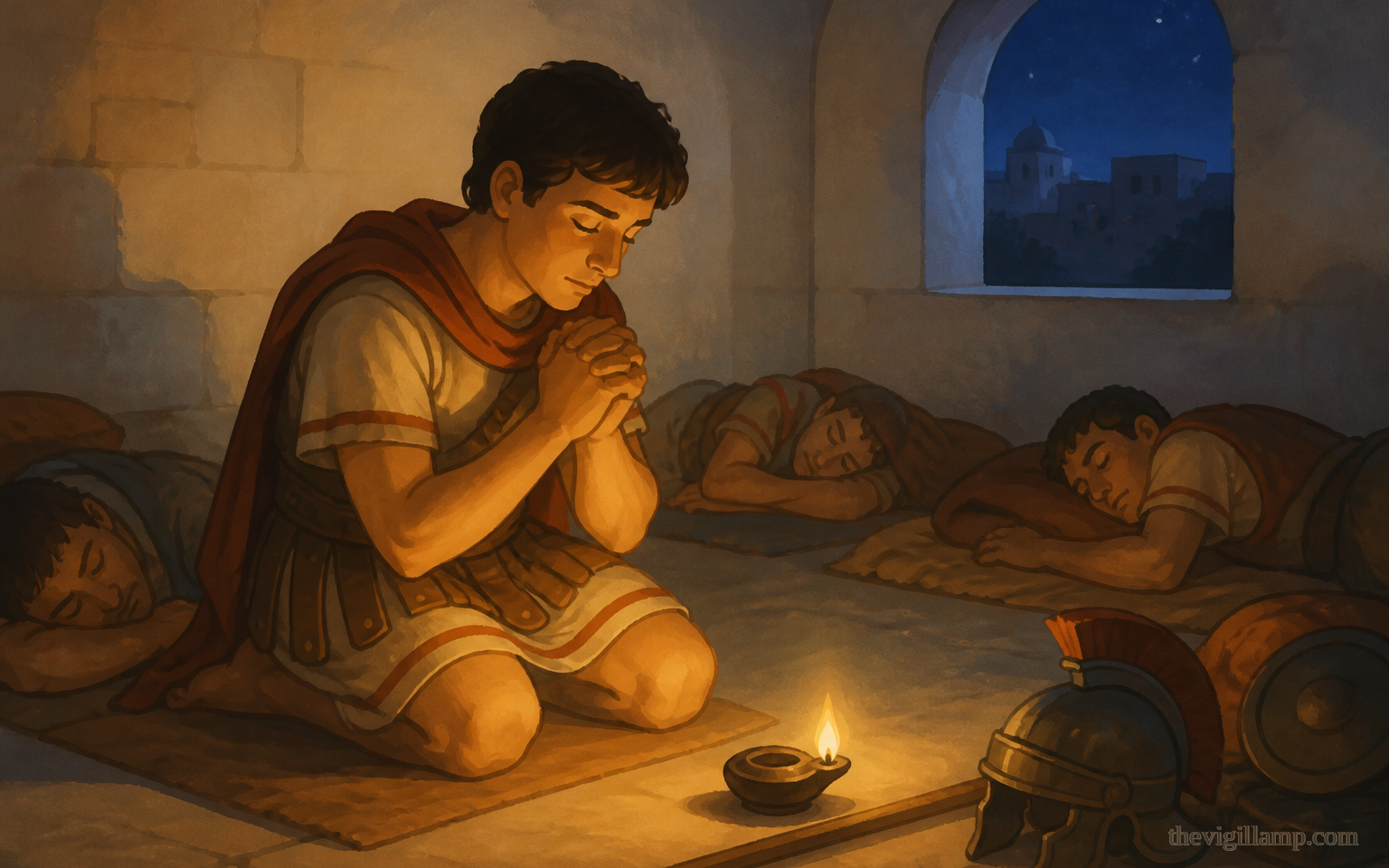
Once, a soldier sleeping nearby heard Saint Callistratus invoking the Name of the Lord Jesus Christ.
He reported this to the military commander.
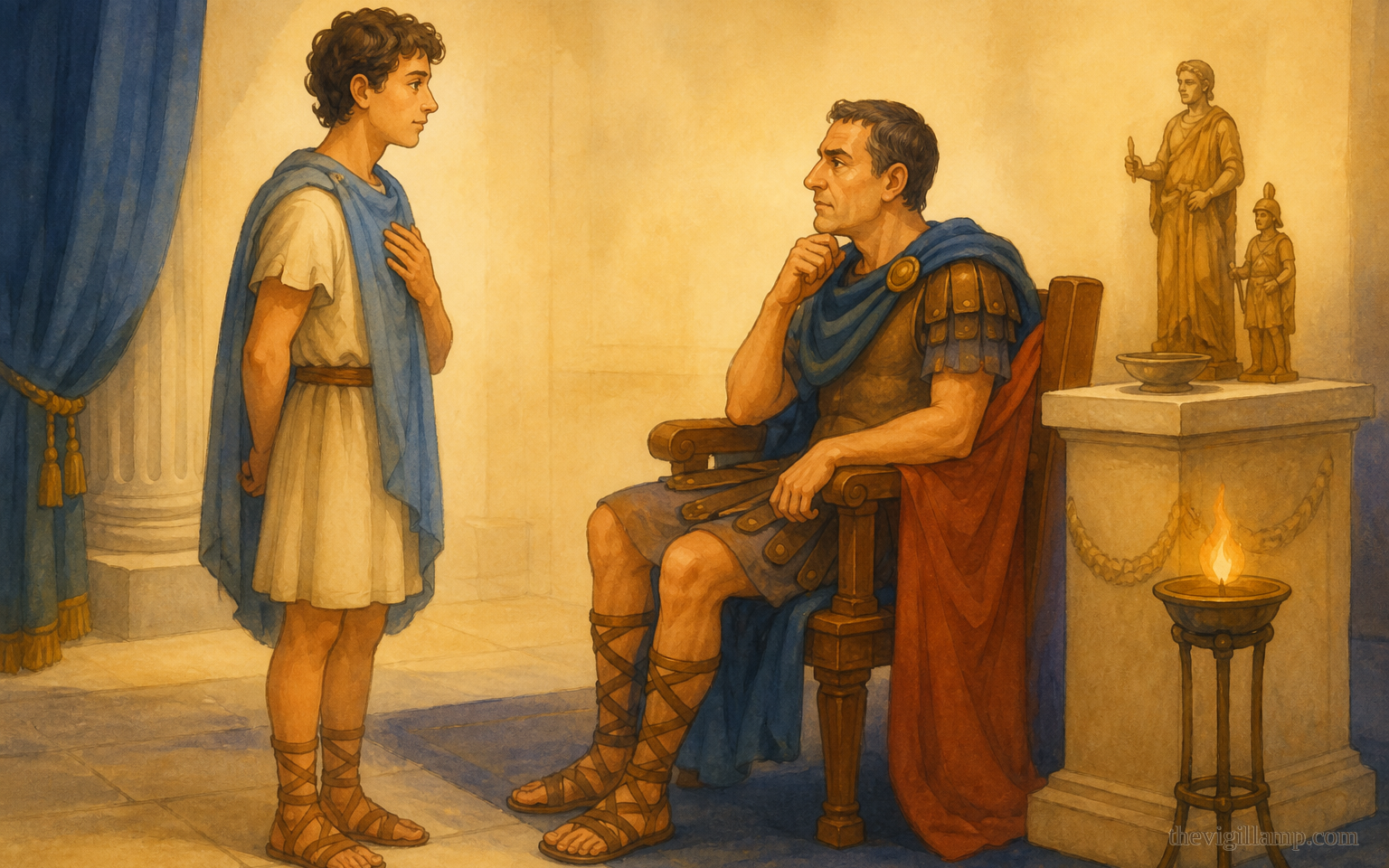
The commander summoned Callistratus. He interrogated him. He wanted to make him offer sacrifice to idols.
The saint resolutely refused.
Those are the Church's words. We will not invent others. We will not turn the refusal into a speech no one wrote down. He was asked for a sacrifice that was not his to give. He would not give it.
So the military commander ordered that the saint be beaten. Then he was dragged over sharp stones. The beating and the torments did not sway the firm will and brave endurance of the sufferer.
We will not linger on the stones. The Church knows them, and that is enough for us this morning. He was not turned.
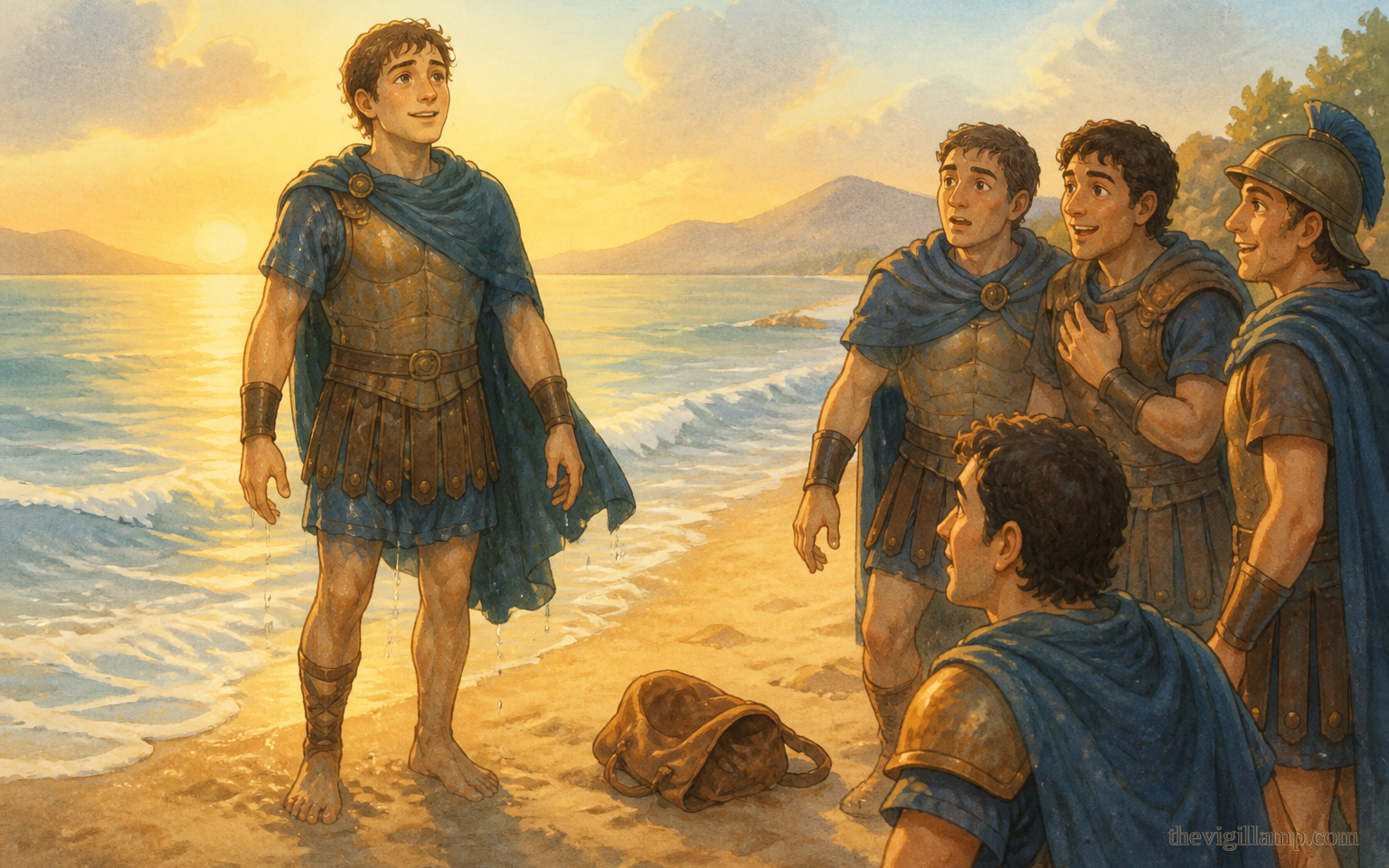
Then the saint was sewn up in a leather sack and drowned in the sea.
By God's mercy, however, the sack struck a sharp rock and was torn open. Saint Callistratus came to dry land unharmed, carried by dolphins.
He was thrown in, and the Lord kept him.
Those are the Church's words. We will not invent a cleaner story, and we will not invent a longer one. The sack went down. The rock tore it. The Lord brought him to land.
Viewing such a miracle, forty-nine soldiers came to believe in Christ.
Do you hear that? Forty-nine. Not because someone argued them into it. Because they saw a man the sea could not keep.
Then the military commander threw Saint Callistratus and the believing soldiers into prison. Before this, all of them were subjected to innumerable floggings.
We will not linger there either. In jail Saint Callistratus continued to preach the Word of God to the soldiers, and he bolstered their spirits for martyrdom.
Summoned again before the military commander, the sufferers firmly confessed their faith in Christ.
After that they were bound hand and foot and thrown into the depths of a great lake behind a dam.
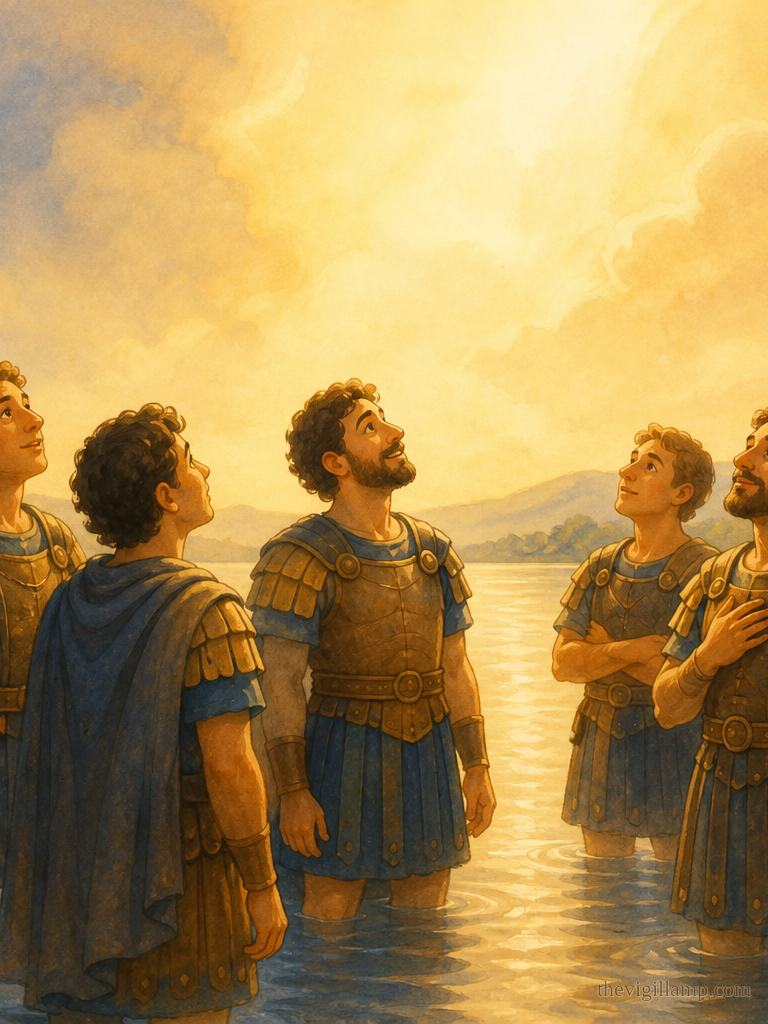
But there their bonds broke, and with bright faces the holy martyrs stood in the water, rejoicing in their Baptism, which coincided with the act of martyrdom.
Beautiful bright crowns appeared over their heads, and all heard a voice: "Be brave, Callistratus, with your company, and come rest in the eternal habitations."
Those are the Church's words. We will not invent others. The voice is not ours. The Church kept it.
At the same time, the earth shuddered, and an idol standing nearby fell down and smashed. Seeing this, another one hundred thirty-five soldiers also believed in the Lord Jesus Christ.
The military commander, fearing a mutiny in the army, did not put those one hundred thirty-five on trial. He again imprisoned Saint Callistratus with his forty-nine companions. There they fervently prayed and gave thanks to the Creator for giving them power to endure such sufferings.
At night, by the commander's order, they gave their lives for Christ.
We will not linger on the manner of their death. The Church knows the end, and that is enough for us this morning. We say what the Church says: they were not turned. The Lord received Callistratus, and the forty-nine with him.
Their holy relics were buried by the one hundred thirty-five soldiers who remained alive. Later, a church was built on the spot of their sufferings, as Saint Callistratus had foretold.
The Church will not let us tell the end as if the company were forgotten. Friends remained. A church was raised. The Name went on.
The Church remembers that they suffered about the year 304.
Do you hear what the Church is singing now? Not only that they died. She is singing that they shone.
"Like stars you have shone upon the world, shedding the light of your contests and miracles upon all who cry to you: Rejoice, Martyr Callistratus and fellow company of martyrs."
Stars. A company. A rejoicing that does not sound like a camp.
The word we heard this morning is the ordinary Sunday word. It is not a saint pair. The Church appointed it anyway, on this seventeenth Sunday, and it already knows his refusal.
"And what agreement hath the temple of God with idols? for ye are the temple of the living God."
Callistratus would not offer that sacrifice. He was already a temple. The living God was already walking in him. Forty-nine more became temples too.
And the Gospel says the Lord spoke from a boat on the lake, and the nets that had been empty all night were suddenly full, and He said to Simon, "Fear not; from henceforth thou shalt catch men."
Do you hear that? Fear not. From henceforth thou shalt catch men. A soldier prayed when the camp was asleep. Forty-nine were caught. Then one hundred thirty-five. The nets were not empty.
The same reading has another word, close beside it: they forsook all, and followed Him. Callistratus had already left the old sacrifice behind. The company left it with him.
The psalm we held in the hand is not a lectionary appointment. It is a word that already knows a sack in the sea: "He sent from on high and took me, he drew me to himself out of many waters."
He was thrown in. The Lord kept him. The rock tore the sack. The land received him. The company saw, and believed.
That is why the Church will not let this Sunday stand without this soldier. While she is still saying that we are the temple of the living God, she names a man who would not bow to an idol. While she is still saying, "Fear not; from henceforth thou shalt catch men," she names forty-nine who were caught by a mercy they had seen with their own eyes.
And today, so many hundreds of years later, on the Lord's Day, we say his name once more, out loud, together — Holy Martyr Callistratus, and you forty-nine companions — and they are praying for us still.
and were glorious in casting down the Enemy.
You offered a noble army of athletes
as sweet-smelling incense to Christ.
With them pray for us who praise you with hymns.
Like stars you have shone upon the world
shedding the light of your contests and miracles upon all who cry to you:
"Rejoice, Martyr Callistratus and fellow company of martyrs."
- Sit near the family lamp, as if the house were asleep. Today the Church remembers a soldier who stayed up at prayer when everyone else was sleeping, and who would not offer sacrifice to idols. This is not yesterday's apostle at the desk. It is a quiet watch.
- Sit still together for a slow count of ten. No talking. Callistratus kept the Name in the dark. The hard part is not the words. The hard part is remaining.
- Then one child says, slowly, the day's own psalm: "He sent from on high and took me, he drew me to himself out of many waters."
- That child does one small, real good work right away: clear a plate, help a little brother, give up the first turn, say something kind. He prayed so the Name could be heard. We can keep one true word in this room.
- Take turns. When everyone has had a turn, sit together and each name one quiet prayer you want to keep this week — a person, a thank-You, a hard true thing you will not put down. Write those words on scraps of paper and keep them under the lamp until next Sunday.


and you forty-nine companions,
pray to God for us.”
on earth as it is in heaven. Give us this day our daily bread,
and forgive us our trespasses, as we forgive those who trespass against us; and lead us not into temptation,
but deliver us from the evil one. Amen.