
September 28 · Chariton
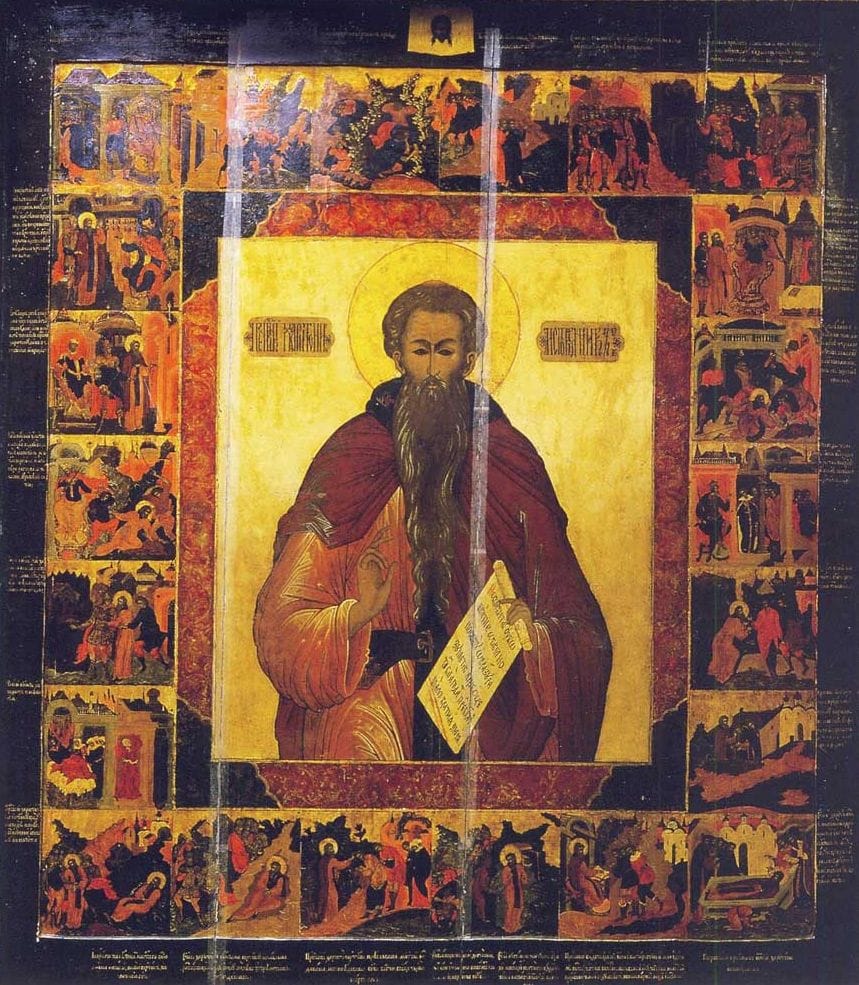
Venerable Chariton the Confessor, Abbot of Palestine
O Lord Jesus Christ our God, have mercy on us.”
Yesterday the Church kept the Lord's Day.
She remembered a soldier who would not put the Name down. She named Callistratus, and the forty-nine who believed because they had seen.
Today is not that day again.
Today is Monday. And on this Monday she does another thing she loves to do.
She remembers a man who kept the Name and lived.
The Church remembers more than one holy name on the twenty-eighth of September. She remembers the Synaxis of the Fathers of the Kiev Near Caves. She remembers the Prophet Baruch. She remembers the Martyr Wenceslaus, prince of the Czechs. She remembers Schema-monk Cyril and Schema-nun Maria, the parents of Saint Sergius, whose repose we kept three days ago. Those are true days. We will not tell those whole lives this morning.
This morning she asks us to look at Chariton.
His name is Chariton. The Church also writes Khariton, and Hariton. Families may hear Chariton the Confessor, or Chariton of Palestine, or Chariton of Iconium. All those names are one man on this page. The Church remembers him as a confessor, and as an abbot of the desert.
Do you hear what she is already singing for him? "By a flood of tears you made the desert fertile, and your longing for God brought forth fruits in abundance."
That is today's word. Not a man who hid the Name in a locked room. A man whose tears became a garden. Three houses of prayer grew where there had been only rock.
He was born at Iconium, in the province of Lycaonia.
Do you know that city? Four days ago the Church named another child of Iconium. Her name is Thekla. The Church calls her Protomartyr — the first among women to suffer for Christ. She is of his city. He had a great devotion to her. The Church says her example encouraged him to confess Christ.
We will not tell her whole day again. We say her name, the way he held it, and we go on.
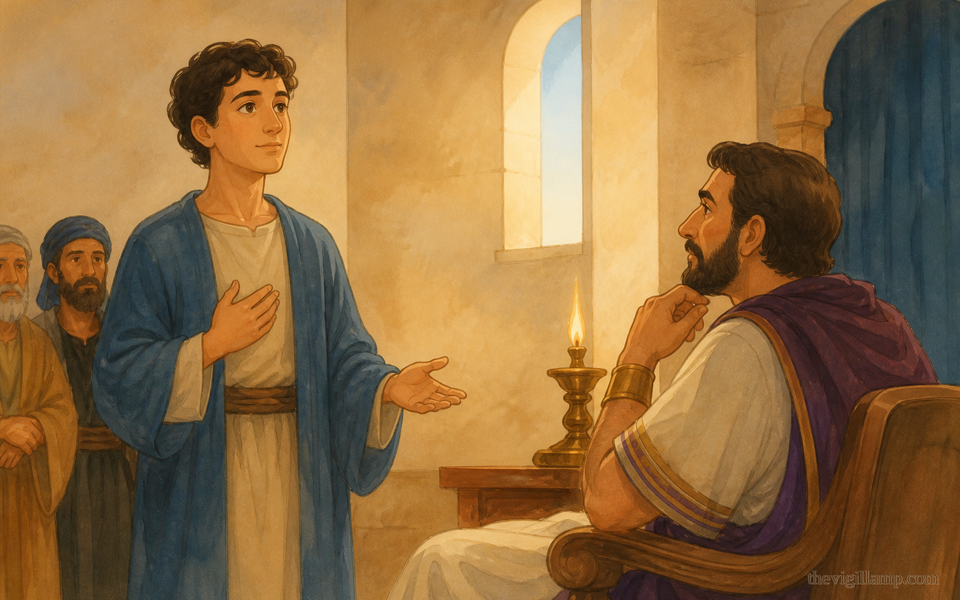
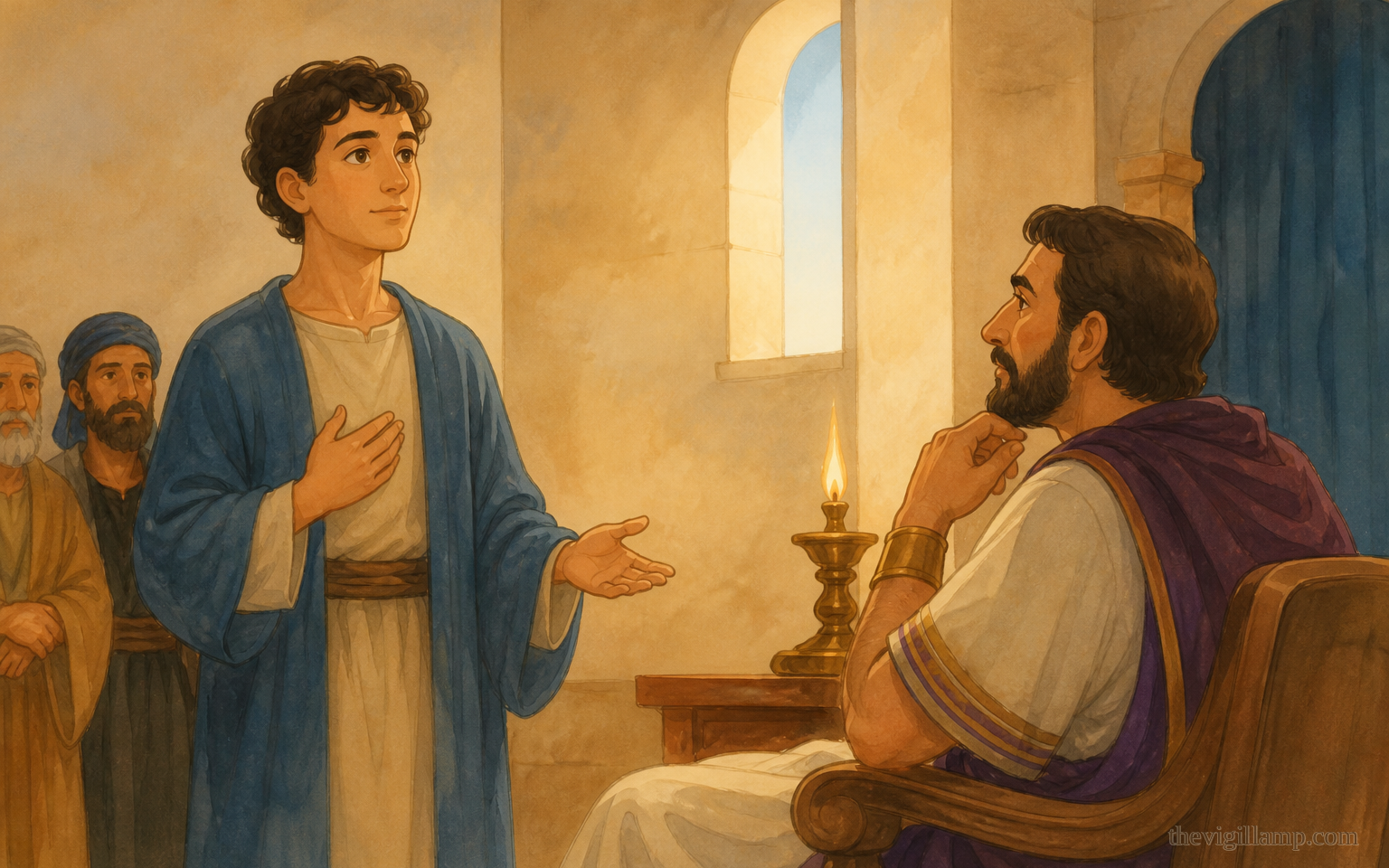
In the reign of the emperor Aurelian — the Church keeps the years 270 to 275 — a persecution rose against the Christians. Chariton was taken there, in Iconium.
Saint Chariton bravely denounced the pagan gods. He staunchly confessed faith in the one True God, Christ the Savior.
Those are the Church's words. We will not invent others. We will not turn the confession into a speech no one wrote down for this page. He was asked for a worship that was not his to give. He would not give it.
The holy Confessor underwent fierce tortures.
We will not linger on the wounds. The Church knows them, and that is enough for us this morning. By God's Providence, he survived.
Do you hear that word? Confessor. The Church has a name for a man who keeps the Name under the lash and is not killed. He lived. He kept it.
The persecution ended after Aurelian's death in 275. Saint Chariton was among the many Christians who were released from prison.
He resolved to dedicate his entire life to the service of the Lord.
Although he escaped death, he grieved because he had not received the crown of martyrdom.
Do you hear that? He was free, and he was sad. Not because the prison had been home. Because he had wanted to finish the offering. The Church will not let us pretend that grief was small. And she will not let us pretend the Lord wasted it. The Lord kept him for a longer work.
He went up to Jerusalem on a pilgrimage to the holy places.
On the way he fell into the hands of thieves.
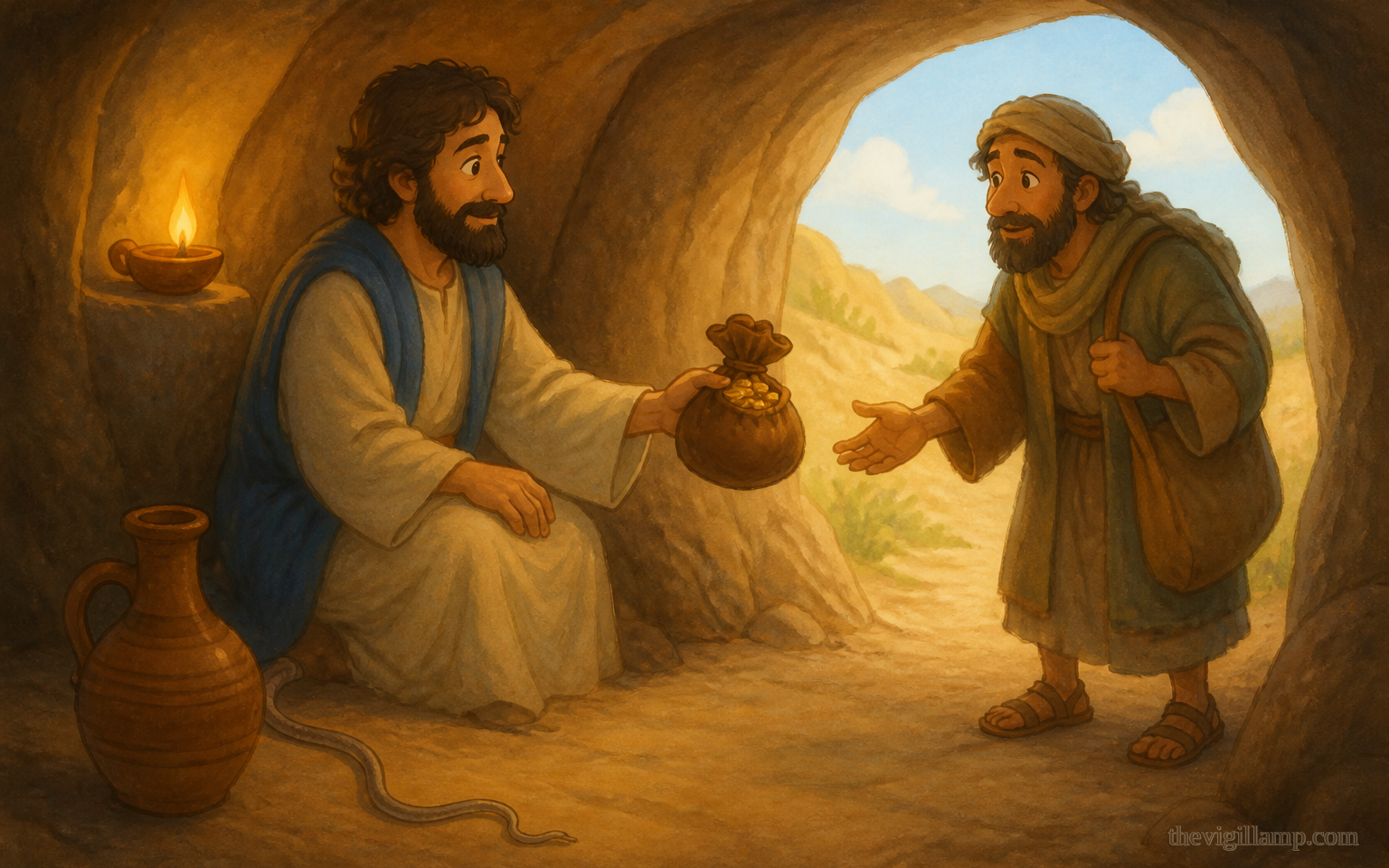
They tied him up. They threw him in a cave. They meant to kill him later. Then they left, to find other people to rob.
Saint Chariton prayed fervently to God, expecting to be put to death. He did not ask God to deliver him. He entreated Him to do with him as He wished.
Those are the Church's words. We will not invent a longer prayer. He was bound. He did not bargain. He asked for the Lord's own will.
At this time a snake crawled into the cave and began to drink wine from a vessel sitting there. Later it vomited forth its deadly venom, poisoning the wine.
When the thieves came back, they drank the poisoned wine, and they all perished.
We will not linger on that end. The Church knows it, and that is enough for us this morning. The men who had meant to kill him were gone. The Lord kept Chariton.
Saint Chariton gave thanks to God.
Then he gave away the gold which the thieves had stolen, distributing it to the poor, to churches, and to monasteries.
He did not keep the cave's treasure. He spent it the way a man spends a gift he knows is not his.
He began his ascetic struggles in the place of his miraculous rescue, and there he built a church.
In time a monastery was established: the renowned Pharan Lavra in Palestine.
A lavra is a desert house of prayer — not one great hall only, but cells, and a church, and men who come to learn how to be quiet before God.
Saint Chariton's fame drew many disciples to him. He governed them with paternal affection, and he elevated them to the highest degrees of virtue.
He compiled a strict Rule for his monastery.
We will not turn that Rule into a list for this house. The Church kept it for monks. What we need this morning is simpler: he taught them how to stay.
Yearning for solitude, the monk withdrew farther into the desert in order to avoid the praise of men.
He was not hiding from God. He was hiding from praise.
But he never rejected anyone who sought his spiritual guidance.
Do you hear that? He went farther. And he still opened the door.
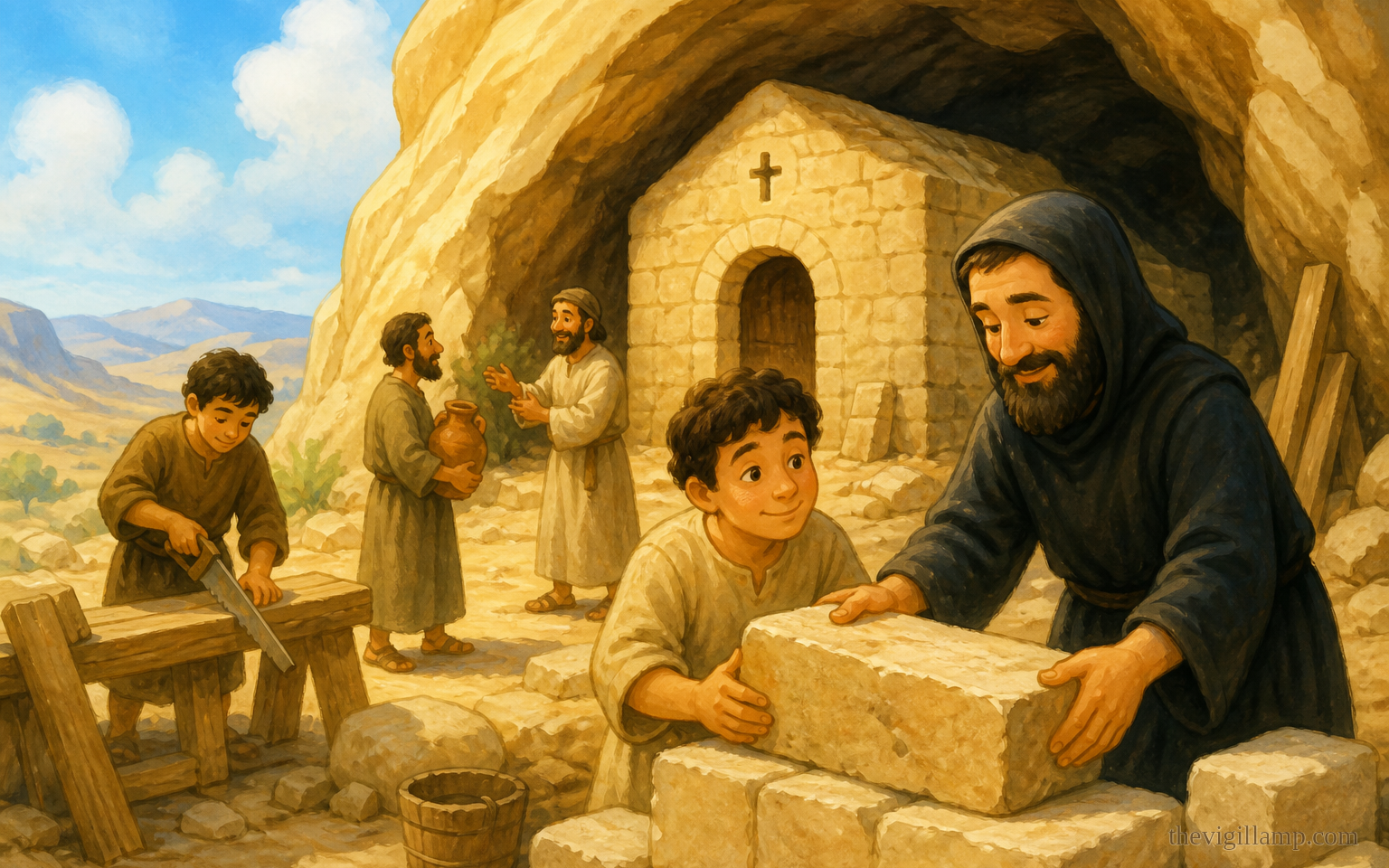
He founded two more monasteries.
One was near Jericho. The Church calls it the Monastery of Saint Chariton. The old books also name this lavra Douka.
The third was Souka, which was called the old Lavra.
Pharan. Douka. Souka. Three houses of prayer where there had been only rock, and a cave, and a man who would not put the Name down.
He also brought many Jews and pagans to the Faith.
At the end of his life, Saint Chariton struggled in a cave atop a hill near the Souka monastery, but he did not cease to provide guidance for all three of the monasteries which he founded.
He had wanted to be alone. The Lord made him a father anyway. From the hill he still kept the three houses. The Church will not let us tell the end as if the desert had forgotten him.
He fell asleep in the Lord peacefully and at an advanced age on September 28, 350.
According to Tradition, Saint Chariton compiled the Office of the Monastic Tonsure — the prayers the Church still uses when a man or a woman is given the new clothes and the new name of a monk.
Saint Chariton was buried at the Pharan monastery, in accordance with his last wishes. His grace-filled relics were enshrined in the church that had been built on the site of the robbers' cave.
The cave that was meant for death became a church. The man who was meant to be forgotten became a father of the desert. The tears became a garden.
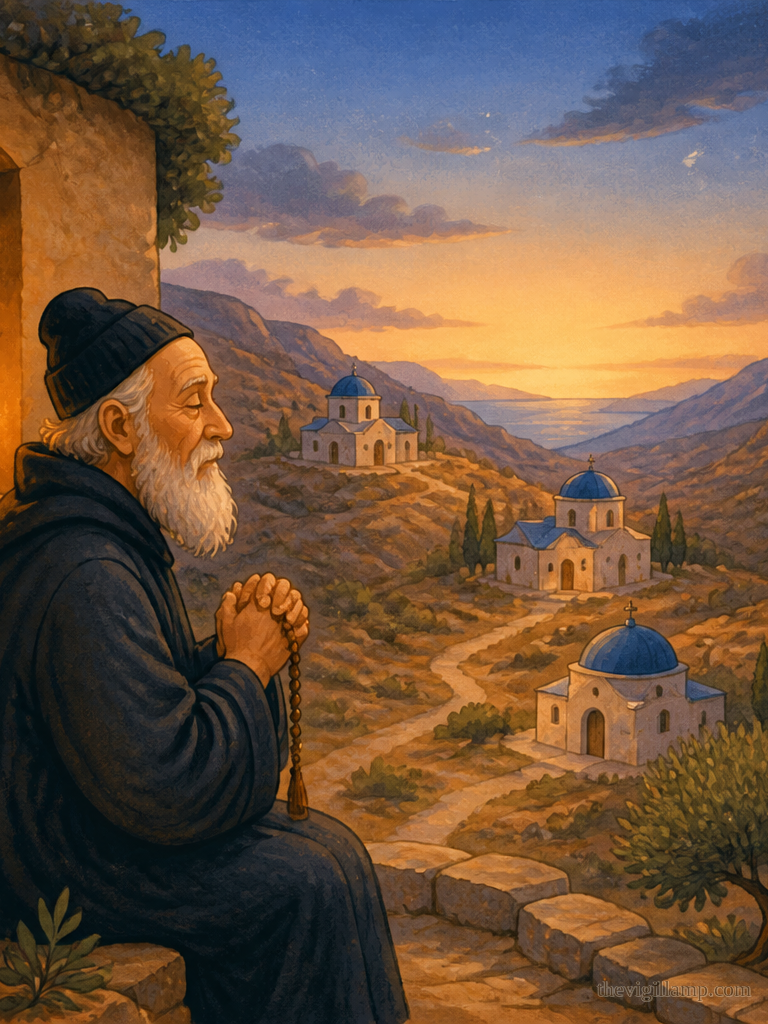
Do you hear what the Church is singing now? Not only that he suffered. She is singing that he blossomed.
"You delighted in the monastic life, divinely-wise one, and conquered the bodily passions; you increased in faith, blossoming as the tree of life in the midst of Paradise, most blessed and holy Chariton."
A tree. In Paradise. In the middle.
The word we heard this morning is the saint word. The Church appointed it for him, on this Monday, and it already knows his survival.
"We are troubled on every side, yet not distressed; we are perplexed, but not in despair; Persecuted, but not forsaken; cast down, but not destroyed."
Chariton was troubled. He was not destroyed. The prison did not keep him. The cave did not keep him. The Lord kept him.
And the same reading has another word, close beside it: God, who commanded the light to shine out of darkness, hath shined in our hearts. The cave was dark. The gold was not his to keep. The light was.
And the Gospel says the Lord came down and stood on a level place, and a great multitude came to hear Him and be healed, and He lifted up His eyes toward His disciples and said, "Blessed be ye poor: for yours is the kingdom of God. Blessed are ye that hunger now: for ye shall be filled. Blessed are ye that weep now: for ye shall laugh."
Do you hear that? Blessed are ye that weep now. A flood of tears. A desert made fertile. Fruits in abundance.
The psalm we held in the hand is not a lectionary appointment. It is a word that already knows his hymn: "They that sow in tears shall reap in joy."
He sowed in Iconium, under Aurelian. He sowed in the cave, bound, asking only for the Lord's will. He sowed three lavras in the rock. The Church is still reaping.
That is why the Church will not let this Monday stand without this confessor. While she is still saying, "Persecuted, but not forsaken," she names a man who lived. While she is still saying, "Blessed are ye that weep now," she names a desert that became a garden.
And today, so many hundreds of years later, on this twenty-eighth of September, we say his name once more, out loud, together — Holy Venerable Father Chariton — and he is praying for us still.
and your longing for God brought forth fruits in abundance.
By the radiance of miracles you illumined the whole universe!
Our Father Chariton, pray to Christ God to save our souls!
and conquered the bodily passions;
you increased in faith, blossoming as the tree of life in the midst of Paradise,
most blessed and holy Chariton!
- Set three small places in the room — three books, three corners, three little houses. Today the Church remembers a confessor who kept the Name and then kept three houses of prayer in the desert. Name them, slowly: Pharan. Douka. Souka. This is not yesterday's soldier at the sea. It is a quiet founding.
- Sit still together for a slow count of ten. No talking. Chariton went farther into the desert so the praise would not find him. The hard part is not the words. The hard part is remaining.
- Then one child says, slowly, the day's own psalm: "They that sow in tears shall reap in joy."
- That child does one small, real good work right away: clear a plate, help a little brother, give up the first turn, say something kind. He gave the stolen gold away. We can give one true thing in this room.
- Take turns. When everyone has had a turn, sit together and each name one person you want to keep in prayer this week — a house of prayer is not a pile of stones. Write those names on scraps of paper and keep them under the lamp until next Sunday.


pray to God for us.”
on earth as it is in heaven. Give us this day our daily bread,
and forgive us our trespasses, as we forgive those who trespass against us; and lead us not into temptation,
but deliver us from the evil one. Amen.