
September 30 · Gregory the Illuminator

Hieromartyr Gregory, Bishop of Greater Armenia, Equal of the Apostles, Enlightener of Armenia
O Lord Jesus Christ our God, have mercy on us.”
Yesterday the Church remembered an anchorite.
She named Kyriakos, who heard Follow Me, and kept walking farther into the quiet.
Today is not that day again.
Today is Wednesday. And on this Wednesday she does another thing she loves to do.
She remembers a man who would not bow, and a country that came into the light.
The Church remembers more than one holy name on the thirtieth of September. She remembers Venerable Gregory, Abbot of Pelsheme and Wonderworker of Vologda. She remembers Saint Michael, first Metropolitan of Kiev. And she remembers the holy virgins Rhipsime and Gaiane, who belong inside today's story. Those are true days. We will not tell the whole lives of the abbot or the metropolitan this morning.
This morning she asks us to look at Gregory.
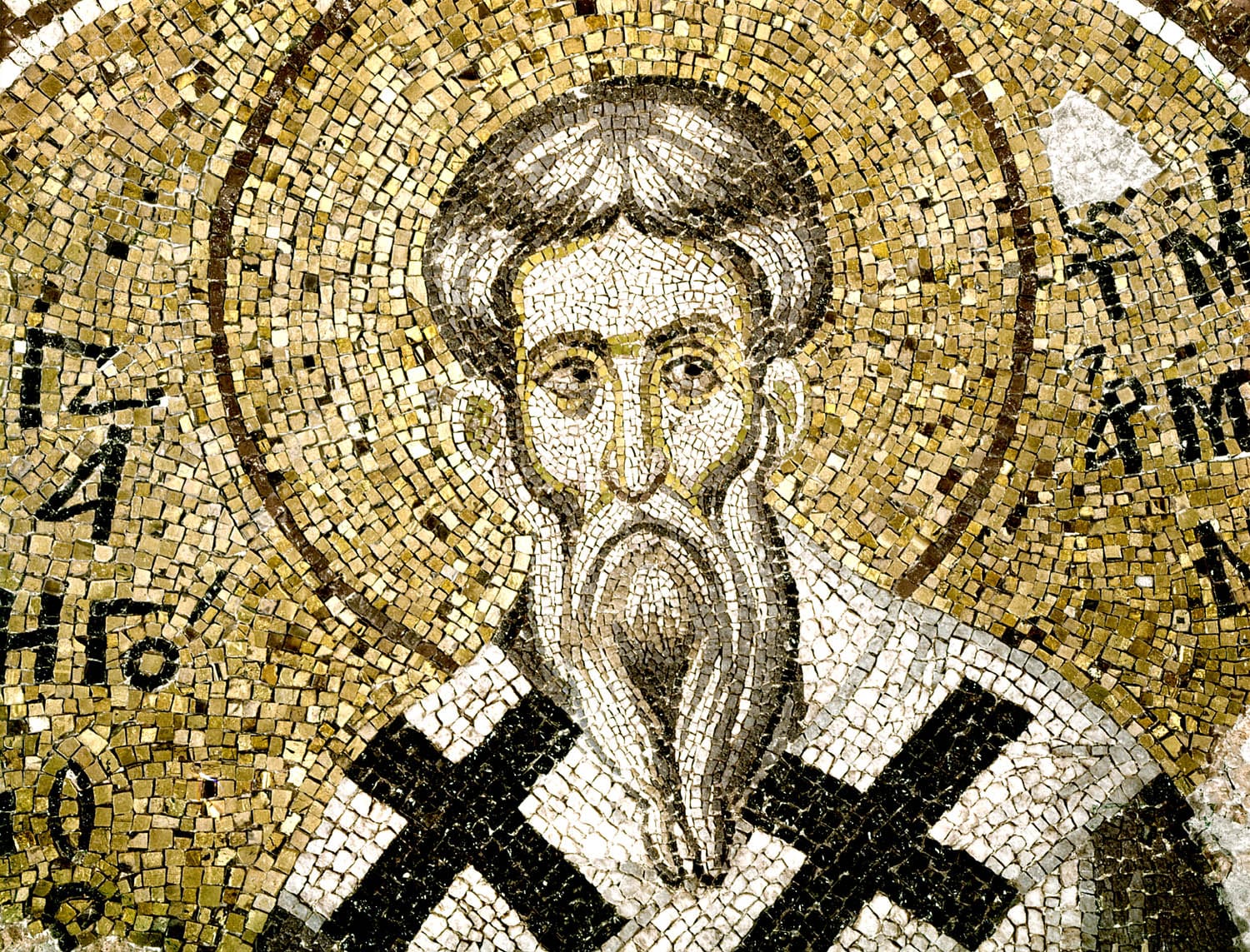
His name is Gregory. The Church also writes Grigor. Families may hear Gregory the Illuminator, or Gregory the Enlightener, or Grigor Lusavorich. All those names are one man on this page. The Church remembers him as Hieromartyr, Bishop of Greater Armenia, Equal of the Apostles, Enlightener of Armenia.
Do you hear what she is already singing for him? "By sharing in the ways of the Apostles, you became a successor to their throne."
And again: "a light for the whole world."
That is today's word. Not a man who kept the light in one room. A light for a whole country. A successor to the Apostles' throne.
He was born in the year 257. He was descended from a line of Parthian Arsakid kings. Anak, the father of Saint Gregory, was a Parthian by birth.
Do you hear those names? A Parthian house. An Arsakid line. A boy born into a story that was already old, and already dark.
Anak wanted a throne. He and his brother attacked their kinsman, King Kursar, and left him mortally wounded. Before he died, the king ordered that Anak's house be ended. The murderers were caught by a river.
One of Anak's relatives saved Gregory and his brother, who were still infants, and hid them. There was a revolt in Armenia. One of the boys was taken to Persia. Gregory was sent into the Roman Empire.
When he reached adulthood, Gregory lived in Caesarea in Cappadocia, where he was converted to the Christian Faith.
Do you hear that? Not in the house where he was born. In Cappadocia. He learned Christ there. He became a Christian there.
Gregory married, and had two sons, but soon was left a widower. He raised his sons in piety. One of them, Orthanes, later became a priest. The other, Arostanes, was tonsured as a monk and went into the wilderness to live in solitude.
In order to atone for the sin of his father, who had murdered the father of Tiridates, Gregory entered into the latter's service, and was a faithful servant to him.
Tiridates, who was serving in the Roman army, loved Gregory like a friend, but when he learned that Gregory was a Christian, he became angry. Saint Gregory, however, ignored his master's unjust wrath.
He did not leave. He did not hide the Name. He stayed, and he served, and he kept Christ.
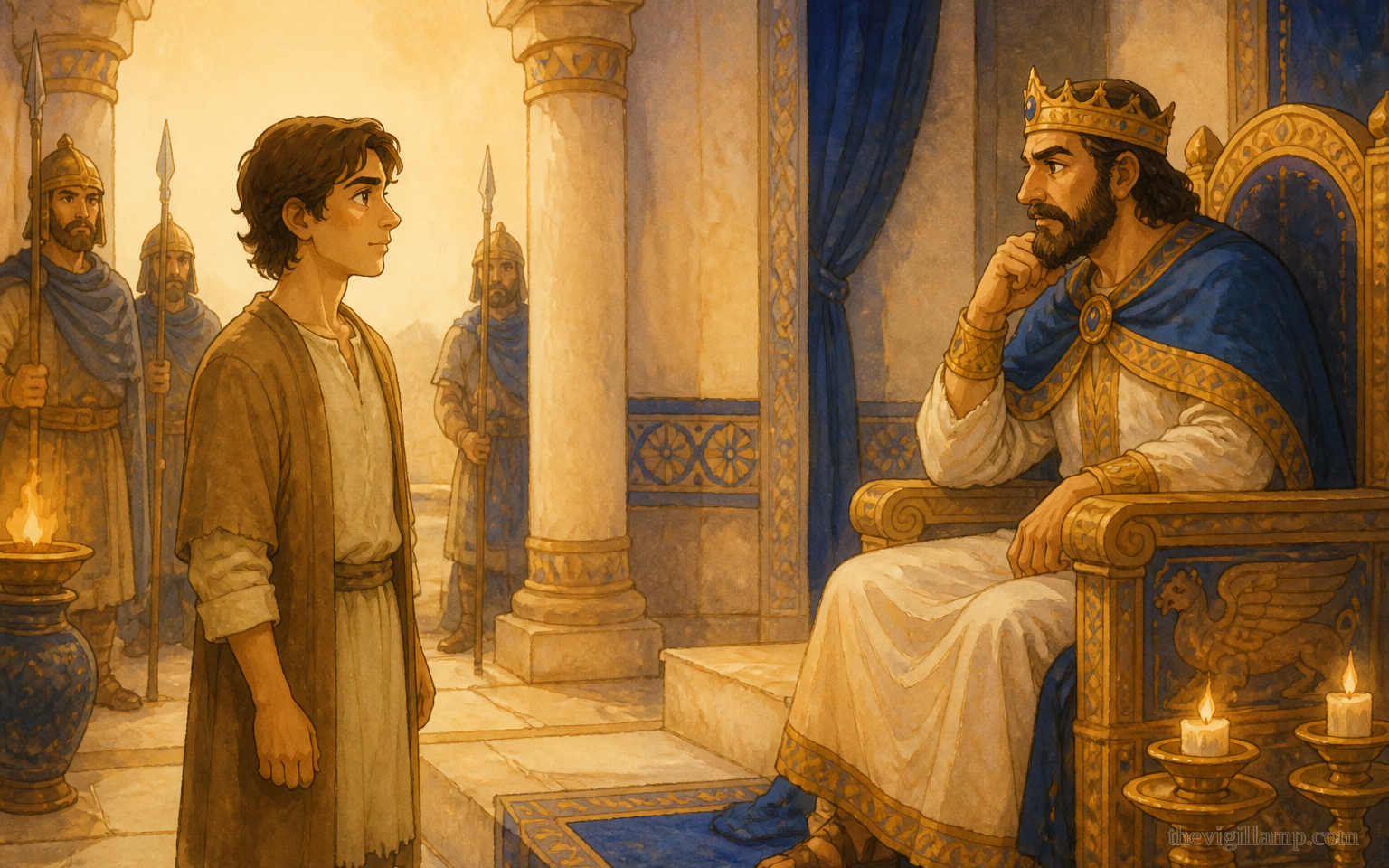
When the Goths attacked the Roman Empire, the Prince of the Goths challenged the Emperor to single combat. The Emperor was afraid to fight the Prince, so he had Tiridates put on his armor and take his place. Tiridates defeated his adversary without using his sword, and led him as a captive to the Emperor. Then the entire Gothic army was defeated. In gratitude, the Emperor made Tiridates King of Armenia.
When Tiridates offered sacrifice to his "gods" for his new position, he wanted Gregory to sacrifice with him.
Gregory refused.
Do you hear that? One word. Not a speech we made up. The Church kept the refusal. The new king wanted him to bow. Gregory would not.
So Tiridates ordered that he be hurt.
The Church tells how. We will not linger on the hurting. During those torments, Saint Gregory sang Psalms. In prison the Lord healed all his wounds. When Gregory stood before the King cheerful and unharmed, the king was astonished, and ordered that the torments be repeated. Saint Gregory endured them, not wavering. They threw him into a deep pit. The Lord, however, spared His chosen one, and he was left unharmed.
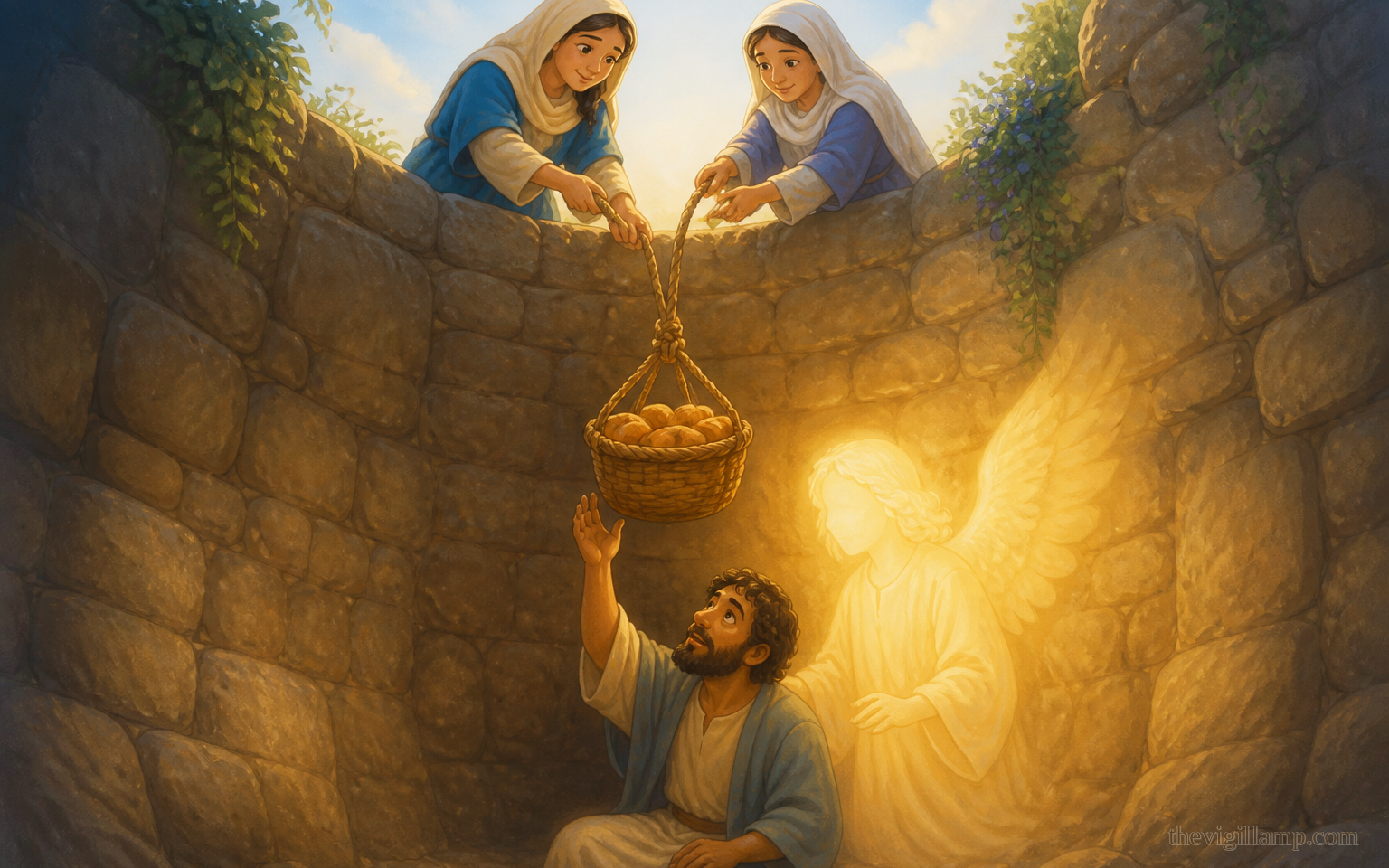
Some pious women kept him alive for fourteen years by feeding him with bread, secretly lowering it into the pit. A holy angel appeared to the martyr, strengthening and encouraging him.
Fourteen years. A pit. Bread lowered down. And an angel in the dark.
He was not forgotten. The Lord does not lose a man in a hole.
During this time King Tiridates killed the holy virgin Saint Rhipsime, the Eldress Gaiane, and thirty-two other Virgin Martyrs from Asia Minor.
Do you hear those names? They belong to this day. They belong inside this story. We will not tell a second whole life. We will tell what the Church tells, and we will stop where a child should stop.
Saint Rhipsime would not marry the emperor. She had given her life to Christ. She fled, with the Eldress Gaiane and the sisters, all the way to Armenia. The king found them. They suffered. They died for Christ.
We will not linger on how. The Church keeps their names. That is enough.
Tiridates, who seemed to have lost his mind after this, recovered six days later. Then the wrath of God struck King Tiridates, his associates, and the soldiers who had participated in the execution of the virgins. Beset by demons, their appearance resembled wild boars, as once happened to Nebuchadnezzar.
The Church says that. We will say it once, the way she said it, and we will not dwell on the horror. The king who would not hear the Name could not keep even his own face.
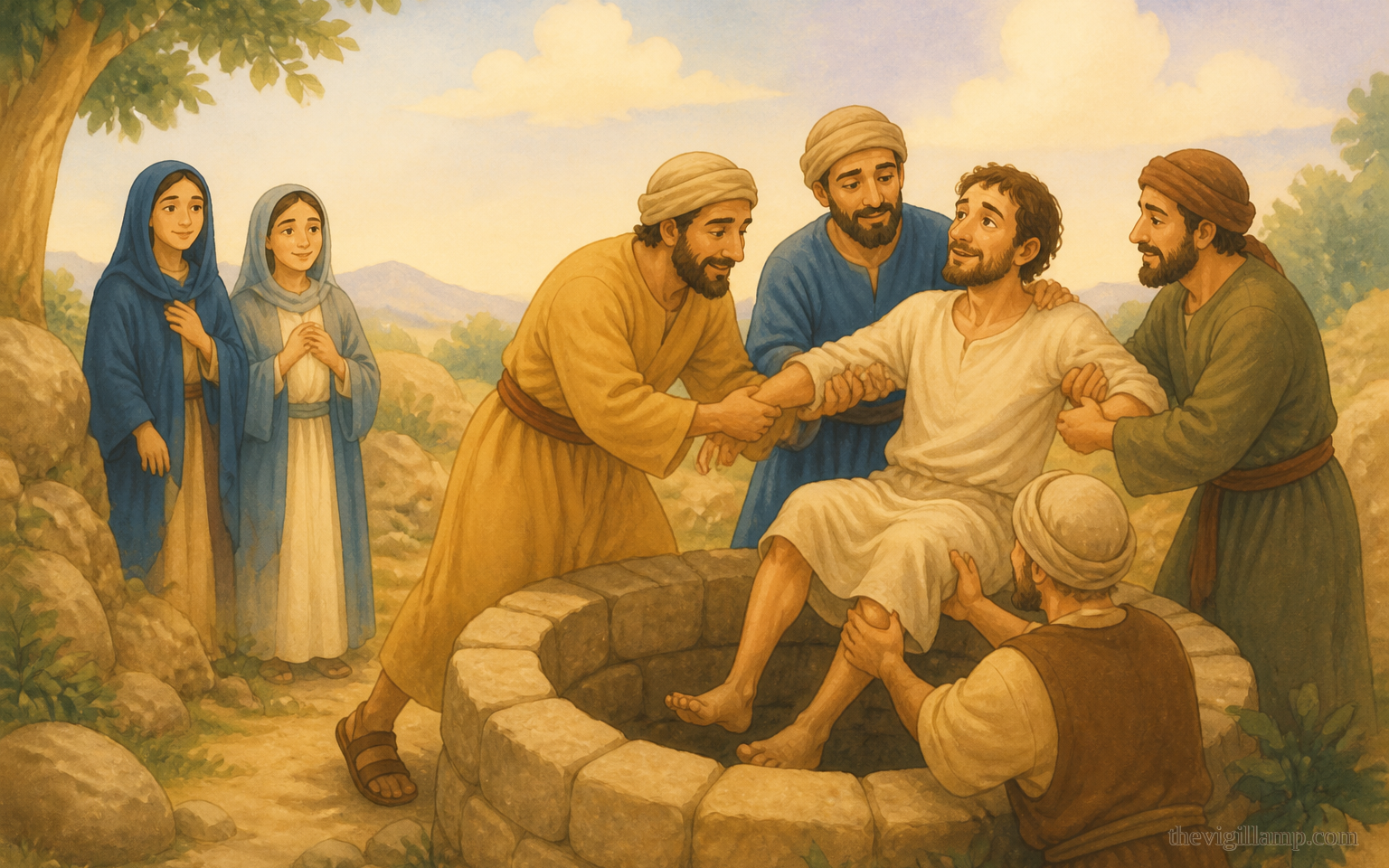
Saint Gregory was taken from the pit. He was washed, dressed in clean clothes, and fed. Then he was led to the King. Everyone bowed before him, begging him to ask God to heal the King as well as the others responsible for killing the Holy Virgin Martyrs.
First, the Saint asked about their relics, which remained unburied for nine days. Saint Gregory buried the bodies, and then began preaching to the people, urging them to turn away from the darkness of idolatry and toward Christ.
Do you hear that? He did not heal first. He buried first. He would not let the holy women lie unburied. Then he opened his mouth, and the light went out.
The people came to believe in Christ, and wanted to build a large church. When it was completed, Saint Gregory had the relics of the holy nuns brought into it. Then he led King Tiridates to the church before the bodies of the Saints whom he had slain, so that they might pray to Christ for him. He repented, and at once his face was restored to its original appearance once more.
Soon all of Armenia was converted to Christ. The temples of the idols were destroyed, and churches for the worship of the only true God were built. Saint Gregory ordained priests, established schools, founded monasteries, and provided for the good order of the Church.
Do you hear that? Not one man in a pit anymore. A whole country. Priests. Schools. Monasteries. The Church does not make us argue the year. She makes us say the Name.
After this, Saint Gregory went into the wilderness, where he ended his earthly life in a manner pleasing to the Lord. His son Aristanes was made a bishop in Cappadocia, and was one of the 318 Holy Fathers of the Council of Nicea.
The Church keeps the year about 335.
A boy hidden from a dark house. A Christian of Cappadocia. A servant who would not sacrifice. Fourteen years of bread in the dark. A king who got his face back. A country that came into the light. And at the end, the wilderness again.
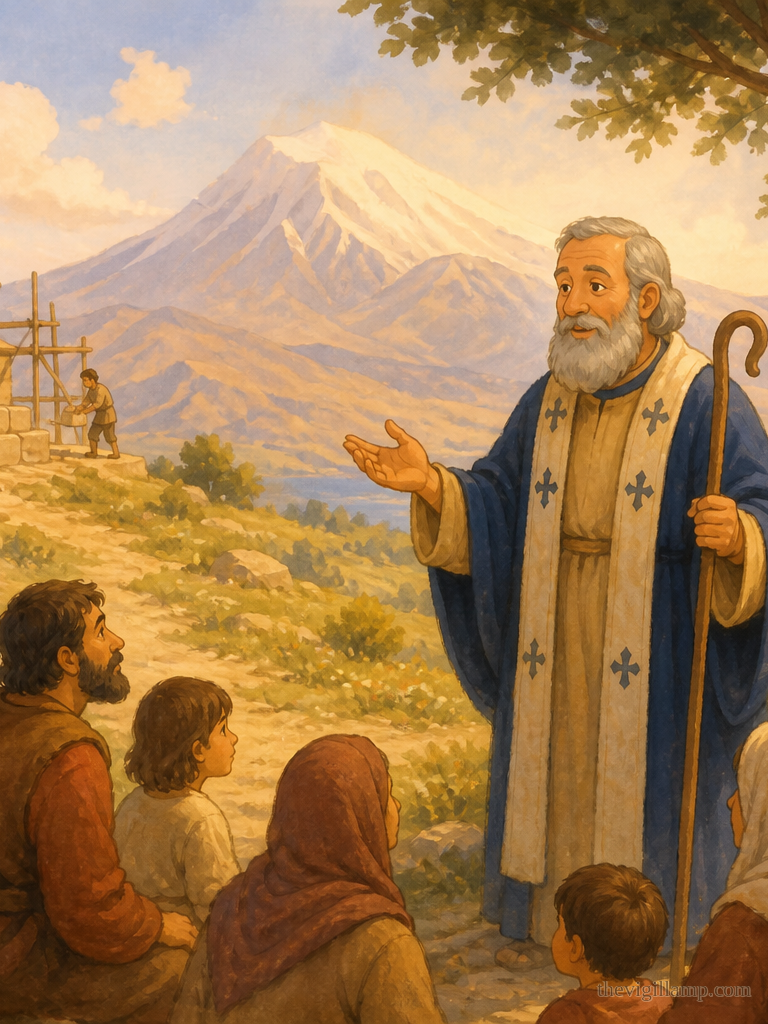
Do you hear what the Church is singing now? Not only that he suffered. She is singing that he is a light.
"Today, let us the faithful, praise with songs and hymns the admirable hierarch Gregory as an initiate in the sacred mysteries. He was a contender for the truth, a vigilant pastor and teacher, a light for the whole world, interceding with Christ that our souls may be saved."
A hierarch. A pastor. A light for the whole world.
The word we heard this morning is the weekday word. The Church appointed it for this Wednesday, and it already knows his life.
"Christ also loved the church, and gave himself for it."
Gregory gave years in a pit, and then he gave the rest of his life to a people who had not yet learned the Name. He did not keep the light for himself.
And the Gospel says they asked why the Lord's disciples did not fast, and He said the friends of the bridegroom cannot fast while the bridegroom is with them. Then He said, "No man putteth new wine into old bottles; else the new wine will burst the bottles, and be spilled. But new wine must be put into new bottles; and both are preserved."
Do you hear that? Old skins cannot hold what God is pouring. Armenia had old gods, and old temples, and an old king's face. The Church does not patch a little Christ onto an old idol. She makes all things new. Gregory would not put the new wine into the old sacrifice. He refused. And when the king came home, the country could hold the new wine.
The psalm we held in the hand is not a lectionary appointment. It is a word that already knows his life: "And he brought me up out of a pit of misery, and from miry clay: and he set my feet on a rock, and ordered my goings aright."
He was brought up. His feet were set. A whole people found the rock under them.
That is why the Church will not let this Wednesday stand without this enlightener. While she is still saying, "Christ also loved the church, and gave himself for it," she names a man who stayed in the dark until a country could come up with him. While she is still saying, "new wine must be put into new bottles," she names Armenia, made new.
And today, so many hundreds of years later, on this thirtieth of September, we say his name once more, out loud, together — Holy Hieromartyr Gregory — and he is praying for us still.
you became a successor to their throne.
Through the practice of virtue, you found the way to divine contemplation,
O inspired one of God;
by teaching the word of truth without error,
you defended the Faith, even to the shedding of your blood.
Hieromartyr Gregory entreat Christ God to save our souls.
the admirable hierarch Gregory as an initiate in the sacred mysteries.
He was a contender for the truth, a vigilant pastor and teacher,
a light for the whole world,
interceding with Christ that our souls may be saved!
- Set a basket or a box on the floor — a "pit." No one climbs in. Today the Church remembers a man the Lord kept in the dark, and the women who would not let him starve.
- One child sits beside the basket. Another child lowers a piece of bread (or a roll, or a napkin standing for bread) down to it, slowly, the way the women fed Gregory for fourteen years.
- The child who receives it says, slowly, the day's own psalm: "And he brought me up out of a pit of misery, and from miry clay."
- That child does one small, real good work right away: clear a plate, help a little brother, give up the first turn, say something kind. Gregory did not keep the light in the hole. When he came up, he opened his hands.
- Take turns. When everyone has had a turn, sit together and each name one person you want to keep in prayer this week — someone who feels stuck, or far, or hard to reach. Write those names on scraps of paper and keep them under the lamp until next Sunday.


pray to God for us.”
on earth as it is in heaven. Give us this day our daily bread,
and forgive us our trespasses, as we forgive those who trespass against us; and lead us not into temptation,
but deliver us from the evil one. Amen.