
August 26 · Adrian and Natalia

The Holy Martyrs Adrian and Natalia
O Lord Jesus Christ our God, have mercy on us.”
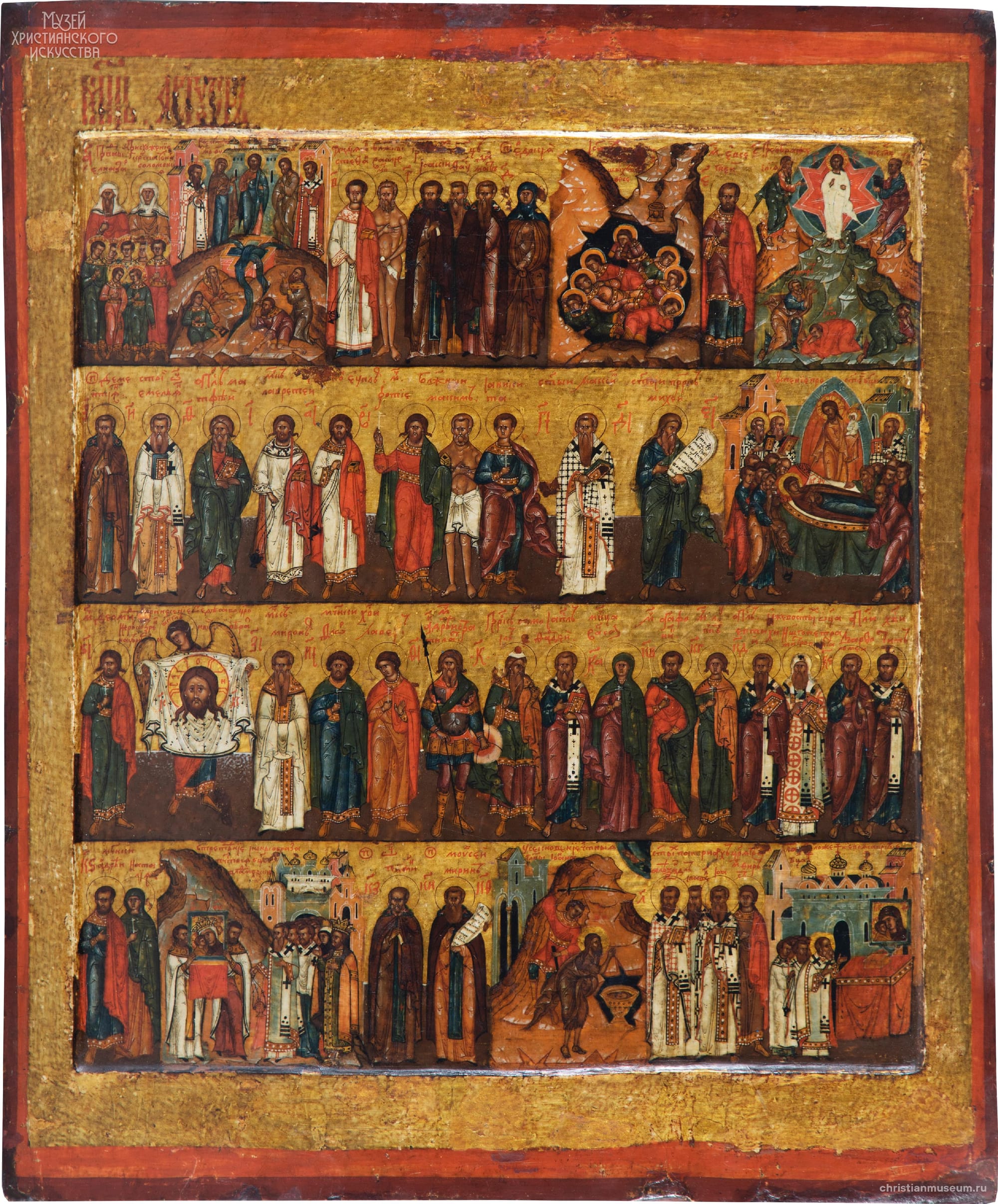
There were twenty-three of them in the cave outside Nicomedia.
Twenty-three Christians had hidden there while the emperor Maximian's officers searched for believers. A reward had been promised to anyone who informed against a Christian. Neighbors could whisper names. Officers could open doors. Fear moved through the city.
Then someone reported the cave.
The Christians were seized and brought into Nicomedia. They were commanded to worship idols. They refused. They were tortured, but they would not deny Christ. At last they were brought before the Praetor's officials so that their names and answers could be written down.
One of the men in charge of that office was Adrian. He was twenty-eight years old. He had been married to Natalia for only about a year, and he did not yet call himself a Christian.
He watched the prisoners.
The prisoners before him had been hurt and threatened. They knew what refusing the emperor could cost. Yet they confessed Christ firmly, without being shaken away from Him.
Adrian asked them a question:
"What rewards do you expect from your God for your suffering?"
They answered:
"Such rewards as we are not able to describe, nor can your mind comprehend."
No promise of an easy escape. No bargain. They spoke of a gift too great for words.
And there, in the place where other people's names were being recorded for punishment, Adrian turned toward Christ.
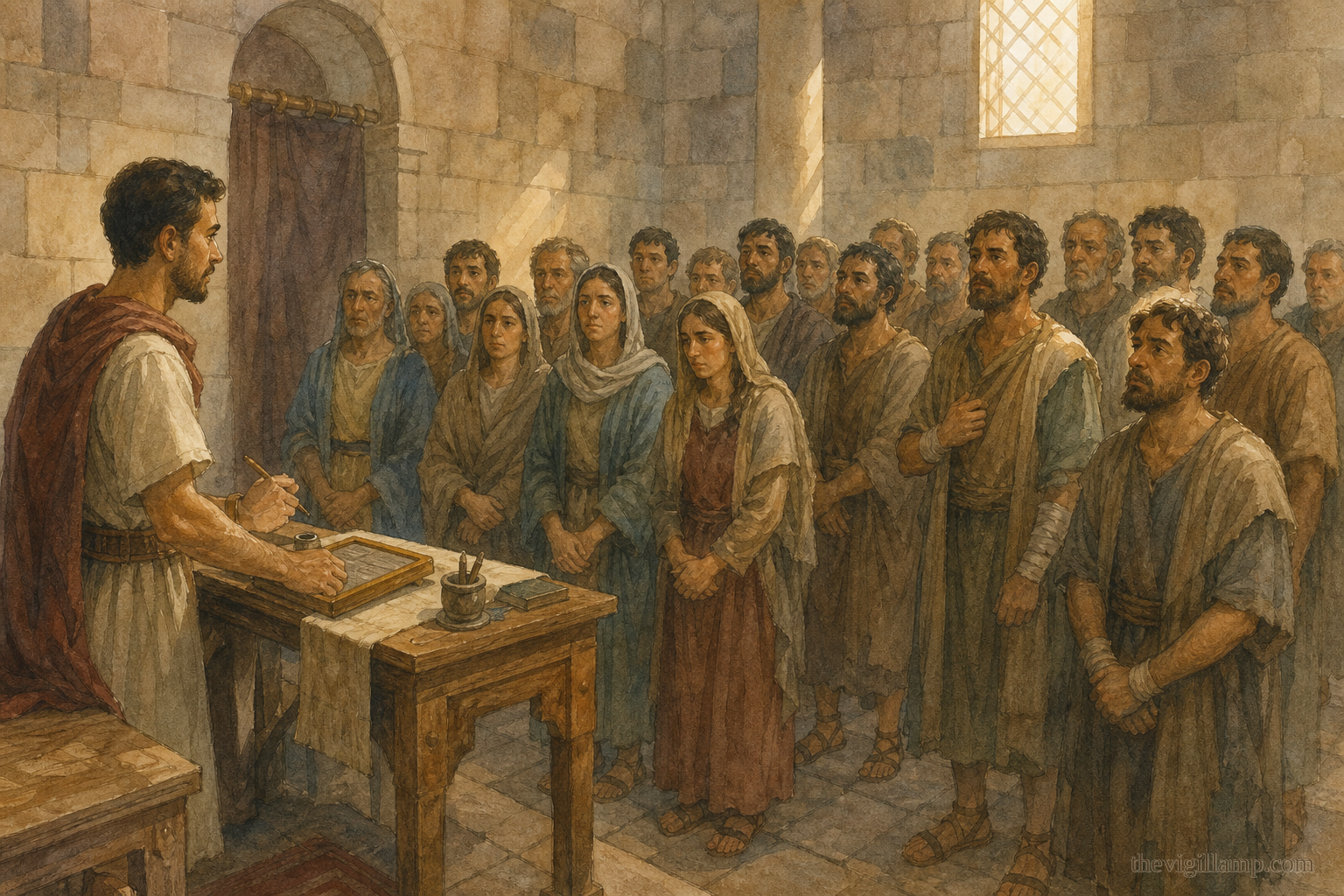
"Write my name down also," he told the scribes, "for I am a Christian and I die gladly for Christ God."
The officials reported him to Maximian. The emperor summoned Adrian and asked whether he had gone mad. He ordered him to cross out his name and sacrifice to the gods.
Adrian answered with words the Church still remembers:
"I have not lost my mind, but rather have I found it."
His name stayed on the list. Adrian was taken to prison with the men whose courage had helped awaken his faith.
Now the news reached Natalia.
She was a Christian already, though she had kept her faith hidden. Imagine what she learned all at once: her young husband had confessed Christ openly; he had been arrested; he was going to suffer with the twenty-three.
She did not rejoice because pain is good. Pain is not good, and death is an enemy. She rejoiced because Adrian had found the living Christ and had not turned away when confession became costly.
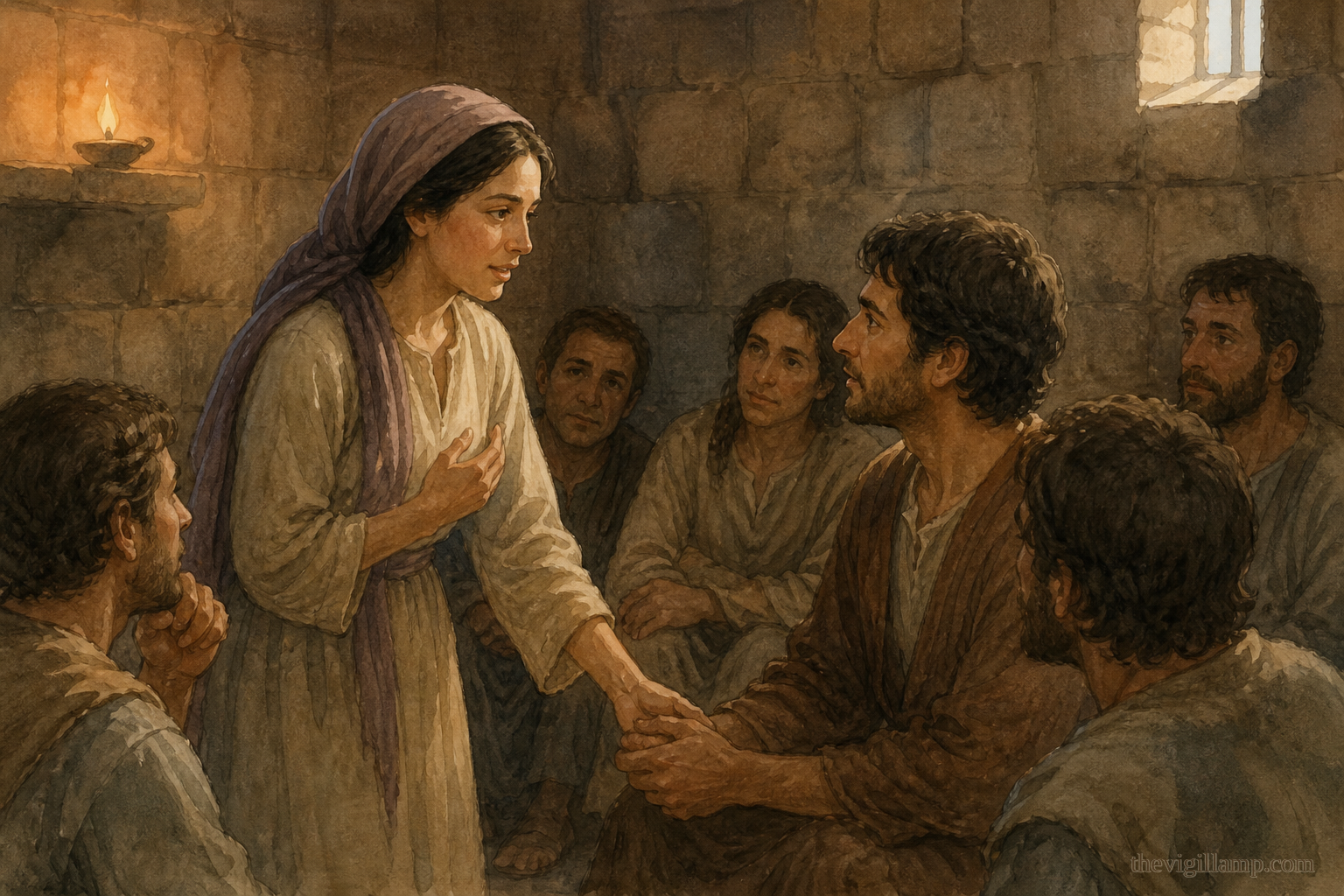
Natalia hurried to the prison. She went to strengthen him, not to persuade him to save himself by denying the Lord.
"You are blessed, my lord," she said, "because you have believed in Christ. You have obtained a great treasure. Do not regret anything earthly, neither beauty, nor youth, nor riches. Everything worldly is dust and ashes. Only faith and good deeds are pleasing to God."
Look at what happened inside that prison. The new Christian was being steadied by the wife who had believed in secret. The twenty-three companions stood around him. No one was carrying this alone.
Adrian's conversion had come quickly. He had not yet had years to learn. But Natalia reminded him what treasure he had found, and the martyrs received him among them.
The day of execution was set. The other prisoners gave their pledge that Adrian would return, and the authorities allowed him to leave the prison long enough to tell Natalia.
When she saw him coming home, she misunderstood.
She thought he had denied Christ to gain his freedom. She would not let him in. Only when Adrian explained that he had not run away—that he had come to tell her the appointed day—did she understand.
What relief and sorrow must have met in that doorway. Her husband was still faithful. Her husband was still going back.
And Adrian did go back.
The emperor urged him to pity himself and call upon the gods. Adrian answered:
"Let your gods say what blessings they promise me, and then I shall worship them, but if they cannot do this, then why should I worship them?"
Natalia remained near. She encouraged him. She asked Adrian to pray that, after his death, she would not be forced to marry a pagan.
The traditional account tells plainly what followed, and we will tell it plainly without dwelling on it. The ruler ordered Adrian and the other martyrs' hands and legs to be broken upon an anvil. Natalia, fearing that seeing his companions suffer first might make her husband hesitate, asked that Adrian be taken first; she helped place his limbs upon the anvil. Adrian and the companions died under the torture.
This was cruel. The Church does not pretend otherwise. Christ did not make cruelty good. He did something greater: He held His servants so firmly that cruelty could not tear them away from Him. Their persecutors could wound their bodies, but they could not force their hearts to worship a lie. As today's Gospel says, Christ is stronger than the strong man. By His own Cross and Resurrection, He has entered death's house and broken its claim to keep His people forever.
The twenty-three who had first shown Adrian how Christians face death now received him as one more in their company. Natalia too is honored as a martyr—not because an executioner killed her there, but because she shared their suffering, confessed Christ through her courage and fidelity, and spent herself in love.
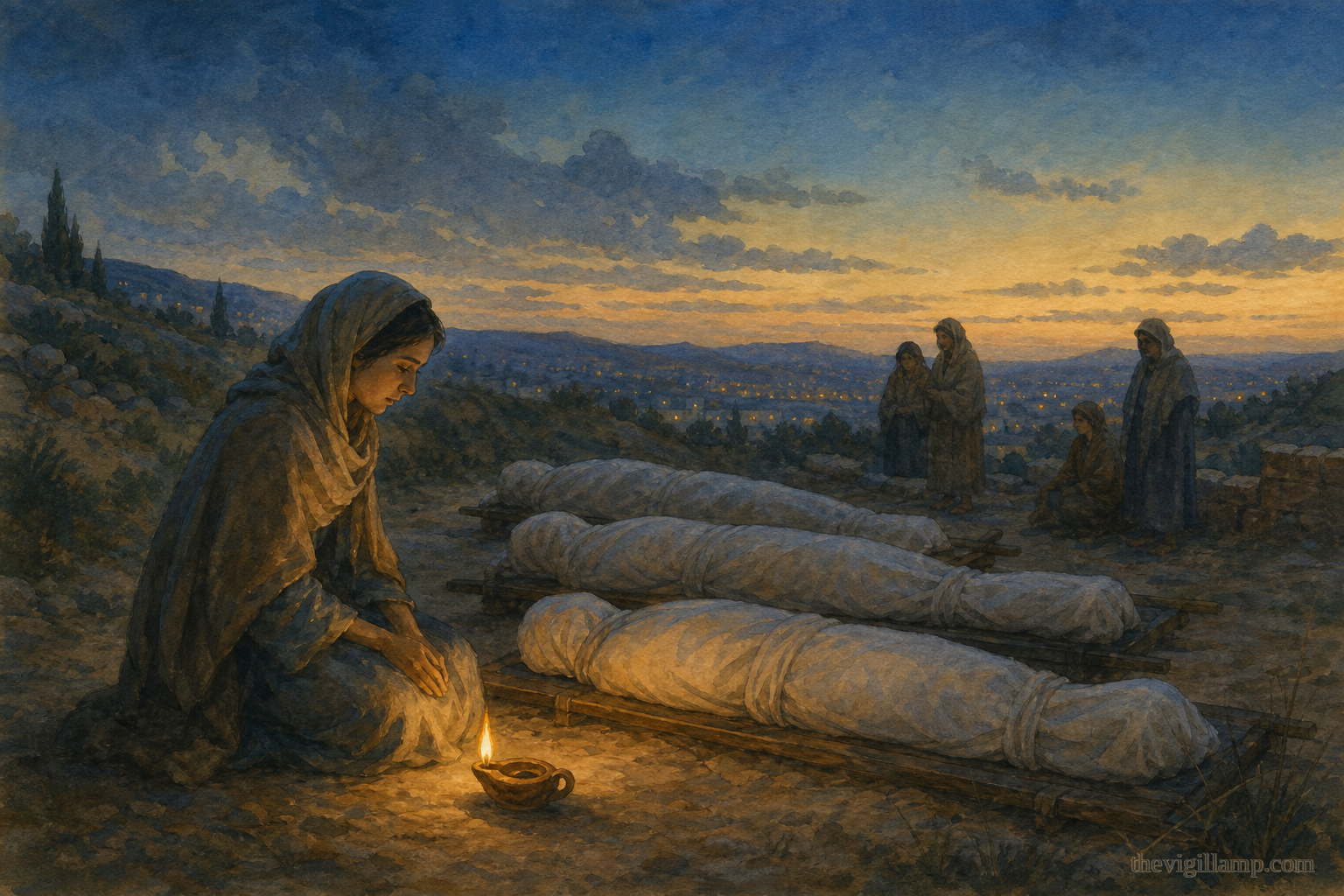
The authorities intended to burn the martyrs' bodies. The OCA's traditional account says that a storm rose, the fire went out, and lightning struck some of the executioners. The bodies were not destroyed.
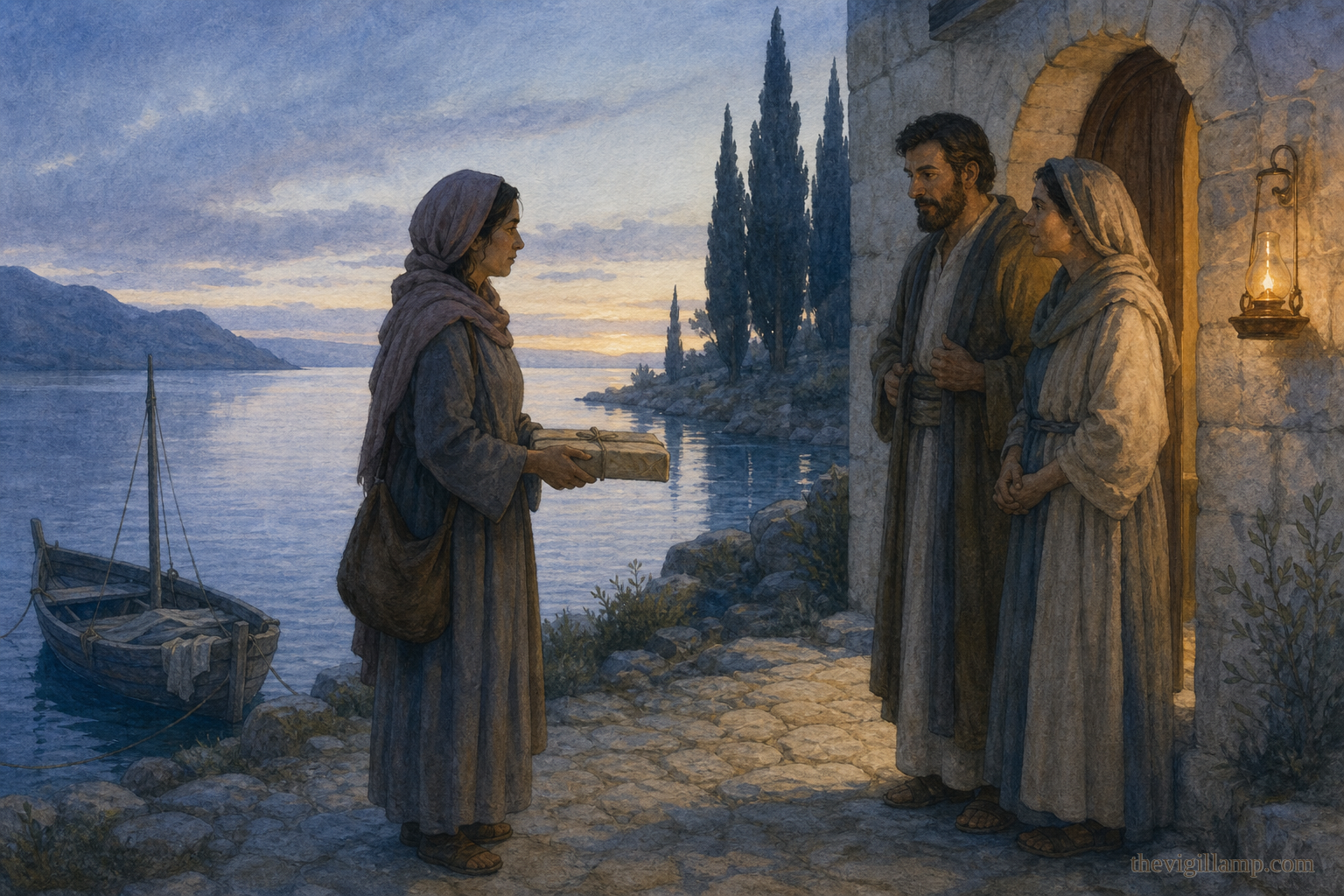
The older Greek martyrdom tradition records that the relics of Adrian and his companions were carried across the water to Argyropolis, opposite Byzantium, and placed in a shrine. Natalia kept one precious relic with her: the hand of Adrian.
Soon an army commander asked the emperor for permission to marry the young and wealthy widow. This was the very danger Natalia had feared. She fled toward Byzantium, carrying Adrian's hand and traveling with other Christians.
The early martyrdom account tells of a difficult crossing. A pursuing boat was turned back by wind and waves. During the night, a false apparition tried to lead Natalia's boat off course; then Adrian appeared and warned the travelers. With a favorable wind, they reached Argyropolis before dawn.
There Natalia came to the shrine. The relic she had guarded was laid with Adrian's body. Husband and wife were separated no longer by an emperor's prison, but only by the little span of Natalia's remaining earthly life.
She was exhausted by all she had endured. In a dream, Adrian appeared to her and said that she would soon be at rest in the Lord. Not long afterward, Natalia fell asleep in peace. Her companions buried her close to the martyrs.
The story began with twenty-three frightened, faithful people found in a cave. It seemed that the emperor held every strong thing: rewards, officers, prison doors, written lists, and the power to kill.
But watch what Christ did.
The prisoners' courage became a door through which Adrian entered the faith. Adrian's confession brought joy and courage to Natalia. Natalia's steadfast love held close to Adrian and all his companions. Their names, written down for death, were carried into the prayers of the Church.
"Write my name down also," Adrian had said.
And today, more than seventeen centuries later, we do.
Adrian. Natalia. And the twenty-three companions whose names this account does not preserve for us, but whom God knows one by one.
Their deaths are precious in His sight. Their bodies await the resurrection. Their marriage was not erased by martyrdom, and their companionship was not swallowed by the grave. Christ is risen, and death does not have the last word.
abandoning the ungodliness of your fathers, and walking in the footsteps of the Master,
you were enriched with divine gifts, O glorious Adrian.
Pray to Christ God for the salvation of our souls.
you kept in your heart the divine words of your godly-minded wife Natalia,
and endured torments; together with your spouse, you have received a crown.
- Cut twenty-four small strips of paper. On one write Adrian. On the other twenty-three, draw a small cross—one for each companion whose name is known to God.
- Place them in a circle around the lamp. Say slowly, "Precious in the sight of the Lord is the death of his saints."
- Add one larger strip with Natalia written on it. Place it beside Adrian's. Remember: she stood with the martyrs in courage, prayer, and faithful love.
- Give each person one more strip. Write the name of someone who needs courage today. Put those names outside the circle, as though the martyrs are surrounding them with prayer.
- Each person chooses one quiet act of encouragement to offer before bedtime: a message, a chore done beside someone, an apology, or a prayer. End together: "Holy Martyrs Adrian, Natalia, and your companions, pray to God for us."


and holy twenty-three companions of Nicomedia,
pray to God for us.”
on earth as it is in heaven. Give us this day our daily bread,
and forgive us our trespasses, as we forgive those who trespass against us; and lead us not into temptation,
but deliver us from the evil one. Amen.