
August 27 · Pimen the Great
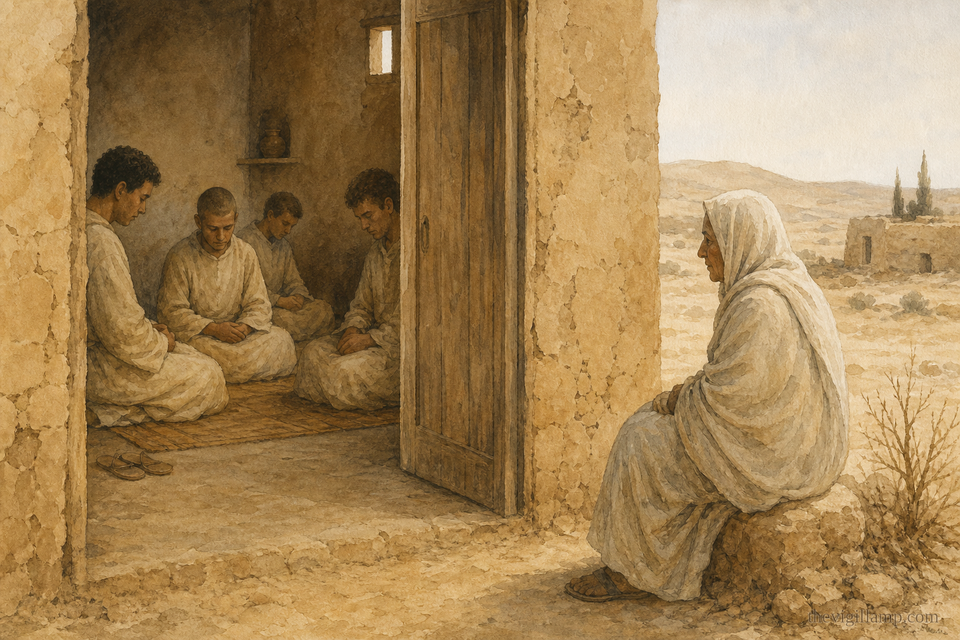
Our Venerable Father Pimen the Great
O Lord Jesus Christ our God, have mercy on us.”
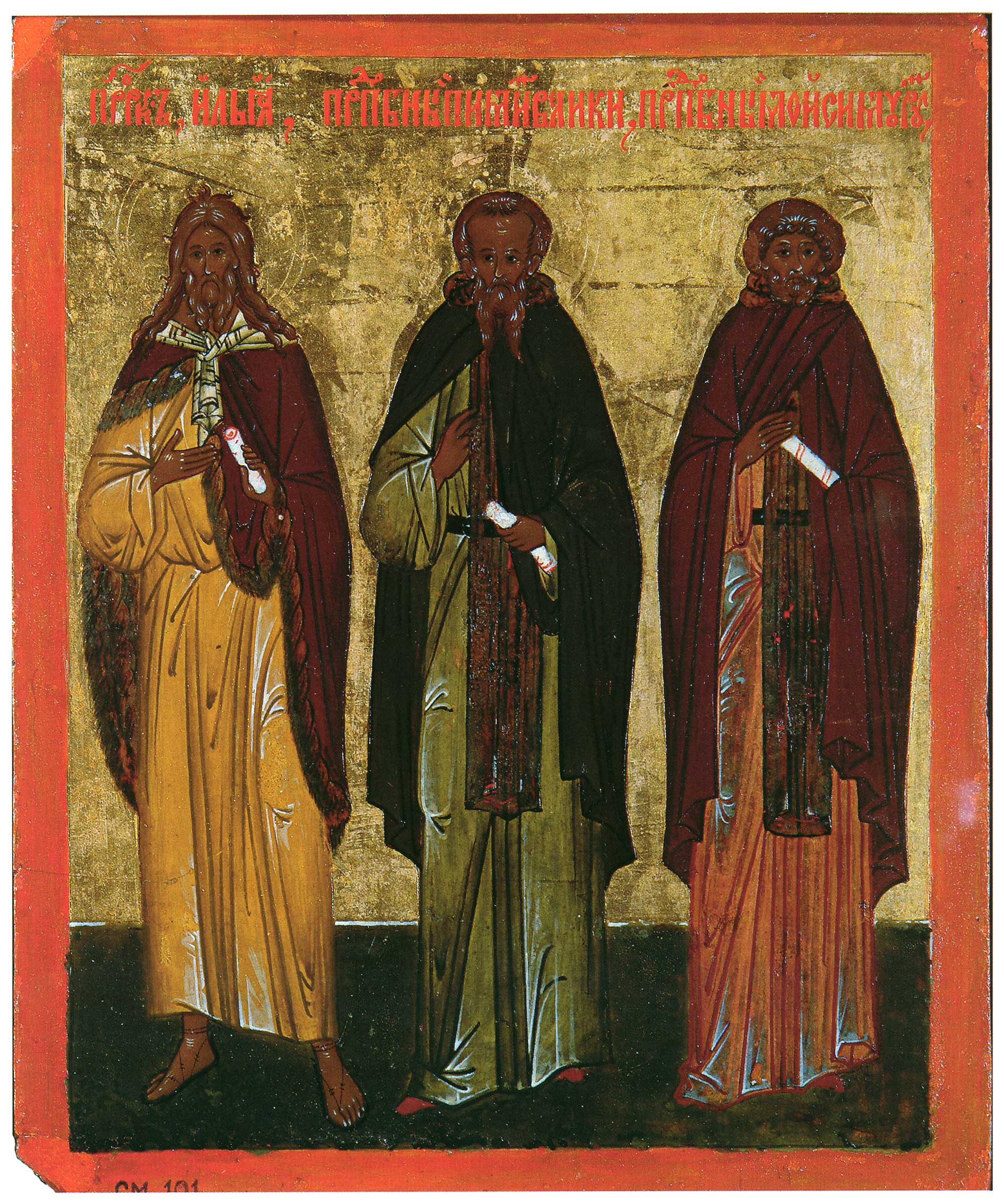
In the Egyptian desert, a question could travel a long way.
A monk would leave his cell, cross the hard ground beneath the sun, and stand at the doorway of an old man. He might have carried his question for days. Perhaps it was about anger. Perhaps it was about a sin he could not forget. Perhaps it was about the brother in the next cell—the brother who ate too much, prayed too little, spoke too sharply, or seemed to be doing everything wrong.
Again and again, the road ended at one door. The traditional request was simple: ask the abba—ask the father—for a word that could be lived.
Pimen is also written Poemen. The two spellings name the same Egyptian Desert Father. Poemen means shepherd, and that is how the Church remembers him: not carrying sheep across a field, but guiding souls toward Christ.
He was born in Egypt about the year 340. He entered monastic life with his brothers Anoub and Paisius, and all three received the monastic tonsure. The ancient Sayings of the Desert Fathers also remembers a larger household of seven brothers gathered around Pimen and Anoub. They wanted to give their whole lives to God—not for a season, not when it was convenient, but completely.
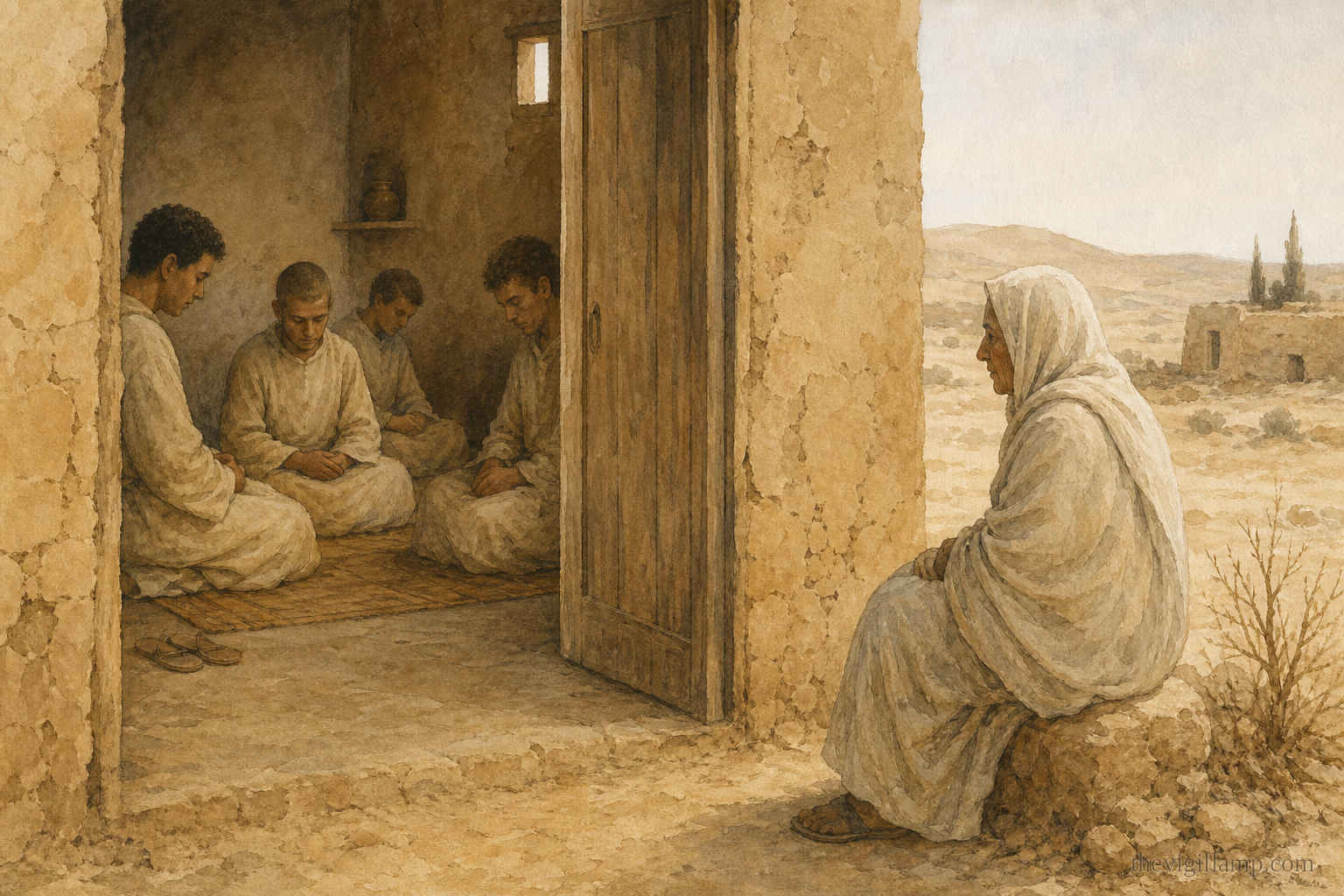
Their mother came to see them.
She stood outside the cells for a long time and wept, but her sons did not come out. At last Pimen spoke to her through the closed door:
“Do you wish to see us now, or in the future life?”
He promised that if she endured this separation now, she would surely see them in the life to come. She accepted his answer and returned home.
That is not an easy scene. The Church does not ask every son to close a door against his mother. Pimen and his brothers had taken up a particular monastic obedience, and their mother finally entrusted the separation to God. Today's Gospel gives words for that costly belonging: whoever does the will of God becomes Christ's brother and sister and mother. In Christ, love is not erased. It is carried toward the life that does not end.
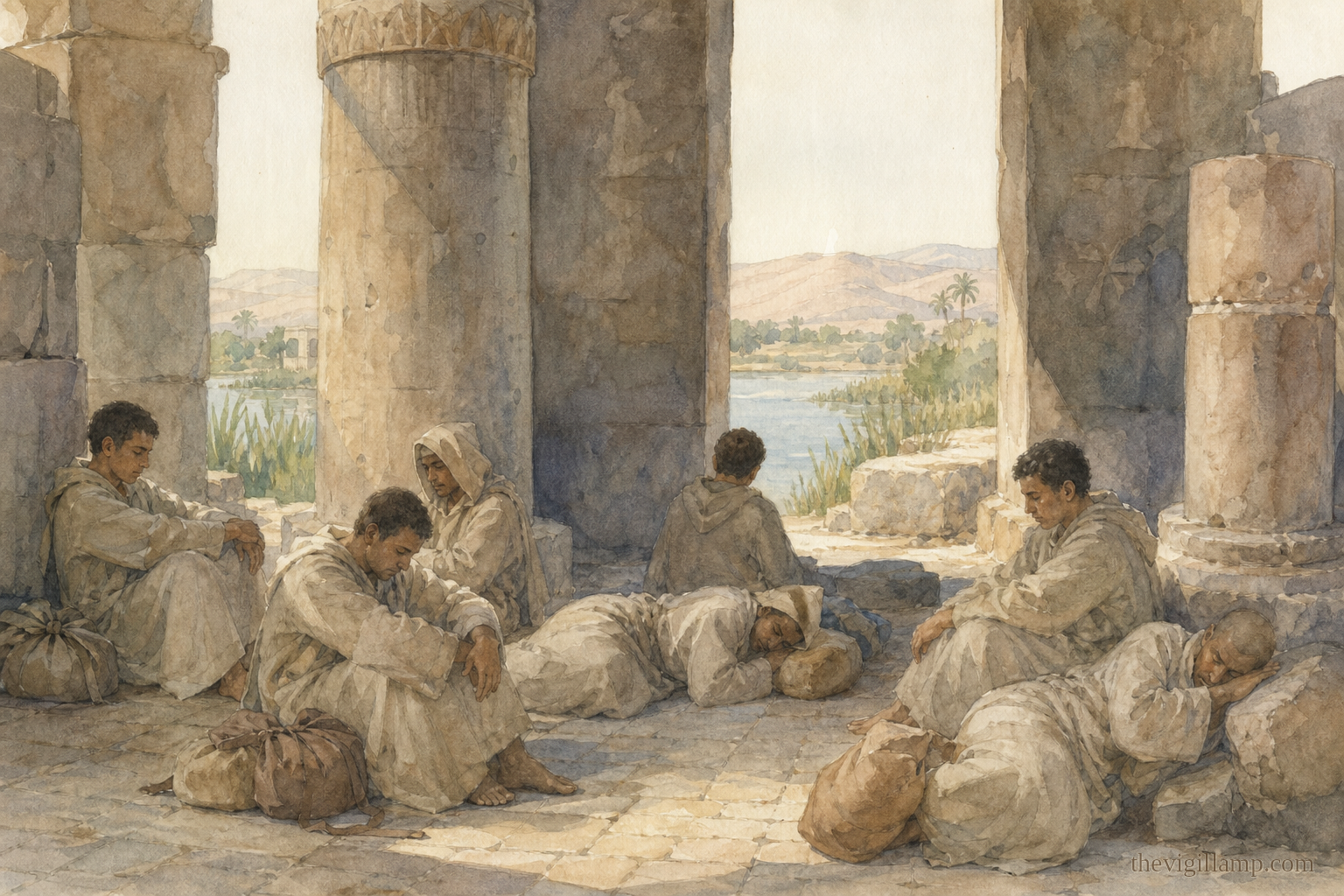
The brothers lived at Scetis, the great monastic wilderness west of the Nile. There were cells scattered through the desert and elders whose short, strong words were remembered from one generation to the next.
Then the desert was broken open by invasion.
The traditional collection says that when raiders sacked Scetis in 407–408, Pimen, Anoub, and their brothers fled. They went toward Terenuthis by the Nile and sheltered for a time in an abandoned pagan temple while they decided where to live. Their brother Anoub taught them, by a week-long object lesson with a stone statue, that life together would require hearts not easily moved by insult or flattery. The seven brothers chose to remain together.
They had lost Scetis. They had not lost the way of the fathers.
A desert can be scattered and still carried in the heart. The brothers kept praying, working, fasting, listening, and remembering. The sayings preserved around Pimen became one of the richest parts of the Church's great treasury called the Sayings of the Desert Fathers.
People began to seek Pimen out. His deeds and wisdom became known across the land. Even a district governor wanted to visit him.
Pimen refused.
He was not trying to insult the governor. He was guarding something fragile in himself. The OCA life preserves his reasoning: if important people came and honored him, crowds would follow, his quiet would be disturbed, and he might lose the humility he had received only with God's help.
The man whose name meant shepherd would teach anyone who truly wanted help. But he would not build a grand gate and hang up a sign saying, Come admire the famous holy man. Today's Epistle says, “But he that glorieth, let him glory in the Lord.”
One monk came carrying another man's sin.
“If I see my brother sinning, should I conceal his fault?” he asked.
Pimen answered:
“If we reproach the sins of brothers, then God will reproach our sins. If you see a brother sinning, do not believe your eyes. Know that your own sin is like a beam of wood, but the sin of your brother is like a splinter, and then you will not enter into distress or temptation.”
Do not believe your eyes, he said—not because sin is unreal, but because a proud heart sees another person's splinter with astonishing sharpness and somehow misses its own beam.
Another monk came crushed beneath the weight of his own sin.
“I have sinned grievously and I want to spend three years at repentance. Is that enough time?”
“That is a long time,” Pimen answered.
A year, then? Still a long time. Forty days? At last Pimen said:
“I think that if a man repents from the depths of his heart and has a firm intention not to return to the sin, then God will accept three days of repentance.”
Pimen did not make sin small. He made God's mercy large. True repentance is not a calendar page. It is the heart turning all the way around.
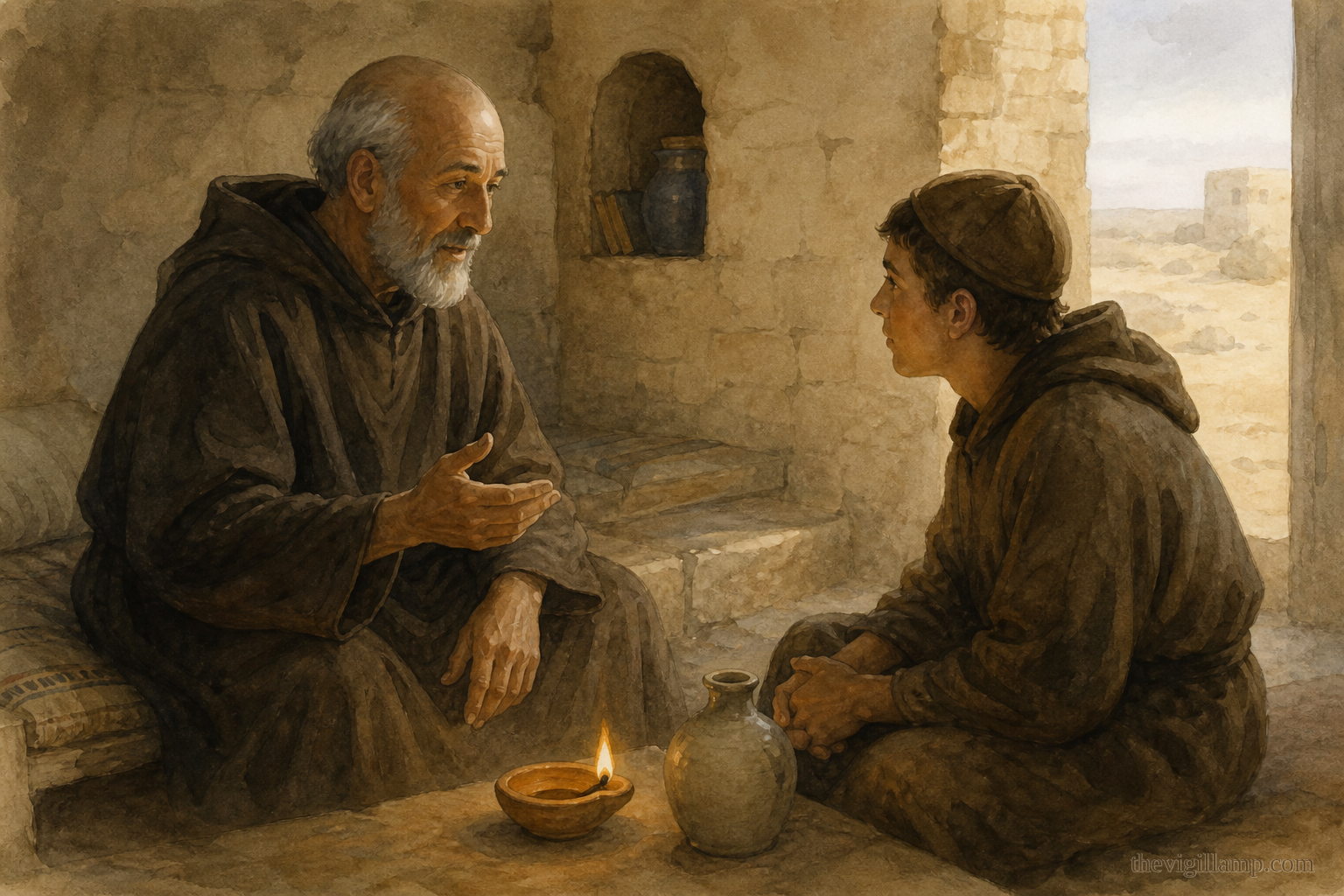
Another brother was burning with evil thoughts and could not make them leave. Pimen gave him something he could see in his mind: a man with fire on his left and a jar of water on his right. When the fire catches, the man reaches for the water and puts it out. The fire is the evil thought. The water is prayer, drawing the heart toward God.
What should the brother do?
Reach for the water.
Pray before the spark becomes a hut in flames.
Pimen himself fasted strictly. Sometimes he went a week or more without food. Yet he usually advised others to eat every day without eating their fill. He heard about a monk who had fasted for a week and then lost his temper. Pimen grieved that the man could go seven days without food but not one day without anger.
That is the wisdom of a shepherd. He did not hand every soul the heaviest burden he could lift. He watched for the burden that would actually help that person walk toward God.
“Is it better to speak or to be silent?” someone asked.
Pimen answered, “Whoever speaks on account of God, does well, and whoever is silent on account of God, that one also does well.”
Silence alone was not enough. Pimen warned that a person may close his mouth while his heart keeps accusing everyone. Then the heart is speaking without rest. Another person may talk all day and yet keep true silence because nothing he says is useless.
What mattered was the heart before God.
He gathered the path into three things:
“It is useful to observe three things: to fear God, to pray often, and to do good for one's neighbor.”
And when evil came from another person, he taught:
“Wickedness never eradicates wickedness. If someone does evil to you, do good to them, and your goodness will conquer their wickedness.”
Pimen did not only say that. He practiced it.
Once, when he and his disciples came to a monastery at Scetis, an elder there became jealous. Monks were leaving the elder to visit Pimen, and the elder resented him.
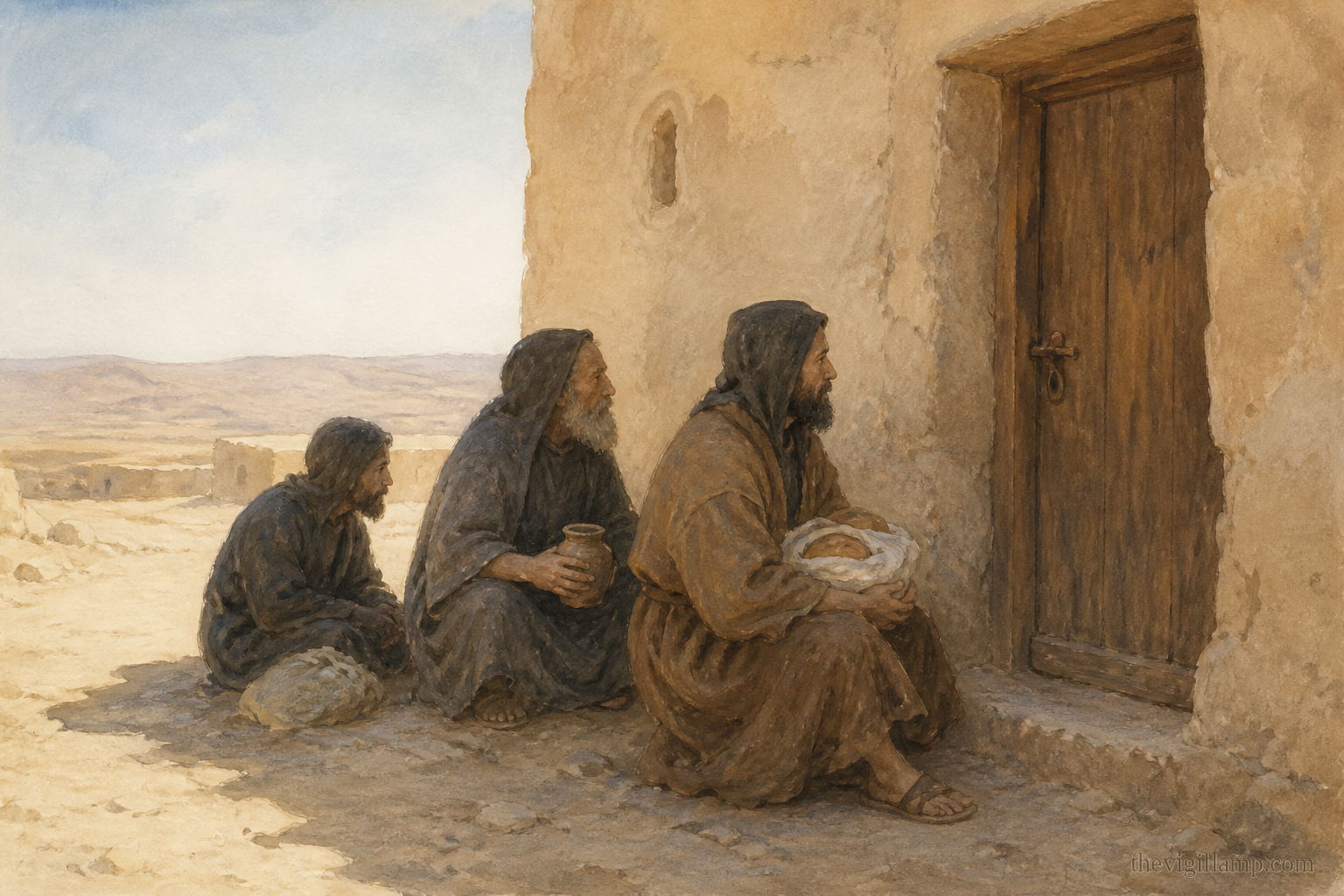
So Pimen gathered his brethren, took food as a gift, and went to the man's cell. The elder would not receive them.
Pimen stayed outside in the heat.
“We shall not depart from here until we are permitted to see the holy Elder,” he said.
He did not demand to be recognized. He did not answer jealousy with wounded pride. He waited at the shut door.
At last the elder saw Pimen's patience and humility. He opened the door, welcomed the brothers, and confessed that Pimen's works were a hundred times greater than the reports he had heard.
Many words were written down because Pimen gave them. Yet he never acted as if wisdom belonged to him.
A visitor once began speaking about lofty matters, difficult and grand. Pimen turned away and remained silent. When the visitor changed and asked about the actual struggle with the passions, Pimen's face became joyful.
“Now you have spoken well, and I will answer,” he said.
And he taught him for a long time.
The famous Abba still wanted the real question: not How high can our words climb? but How can this heart be healed? How can I repent? How can I pray? How can I do good to the person beside me?
Pimen lived to be about 110 years old and departed in peace around the year 450. The Church called him “the Great,” not because he had sought a great name, but because humility, uprightness, ascetic struggle, and self-giving service had made his life a shelter for others.
Scetis had been invaded. The brothers had been driven onto the road. Cells could be emptied, doors shut, and communities scattered.
But a true word, lived humbly and handed on faithfully, could cross the desert. It could cross centuries. It could reach a family gathered beside a little lamp.
And so today our family can make the old request together: “Abba Pimen, give us a word.”
Fear God. Pray often. Do good for your neighbor.
Then reach for the water.
and your longing for God brought forth fruits in abundance.
By the radiance of miracles you illumined the whole universe!
Our Father Pimen, pray to Christ God to save our souls!
delights the souls of the devout today,
Pimen, our venerable father, wise in God.
- Place an empty cup beside the lamp. Do not use an open flame for this activity unless a grown-up is holding and watching it.
- On small scraps of paper, write or draw the “sparks” that can catch in your home: sharp words, impatience, jealousy, complaining, or blaming. Fold the papers and set them near—but never in—the lamp.
- Fill the cup with water. Take turns choosing one folded paper. Read it, then say, “Lord Jesus Christ, have mercy on us and give us peace.”
- Drop that paper into the water. Watch it become soaked. Remember Pimen's teaching: do not feed the spark; reach for prayer.
- When every paper is in the cup, each person names one good thing to do for a neighbor in the house. Do it before bedtime. Pour the water away and recycle or discard the wet paper safely.


pray to God for us.”
on earth as it is in heaven. Give us this day our daily bread,
and forgive us our trespasses, as we forgive those who trespass against us; and lead us not into temptation,
but deliver us from the evil one. Amen.