
August 28 · Job of Pochaev
The Recovery of the Relics of Our Venerable Father Job of Pochaev
O Lord Jesus Christ our God, have mercy on us.”
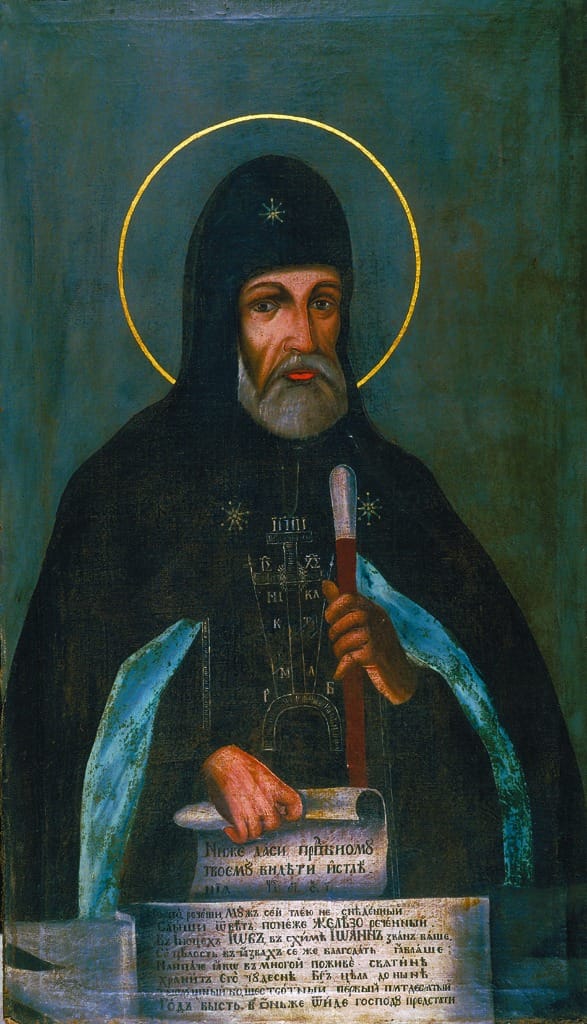
The Church has more than one day for Saint Job of Pochaev.
On October 28 she remembers his falling asleep in the Lord. On October 10 she names him among the saints of Volhynia. On July 23 she keeps the feast of the wonderworking Pochaev Icon of the Mother of God, the holy image of the monastery he shepherded. Today is different. Today she remembers the day his relics were brought up from the earth and carried into the light.
Pochaev is also written Pochayiv. Both names point to the same hill, the same monastery, the same father.
He was born around the year 1551 in Pokutia in Galicia, and his name in the world was Ivan Zhelezo. Zhelezo means iron. The Church does not ask us to pretend that a surname is a miracle. She simply lets us hear it. The boy who would be called Job grew into a man the Church still remembers as steadfast.
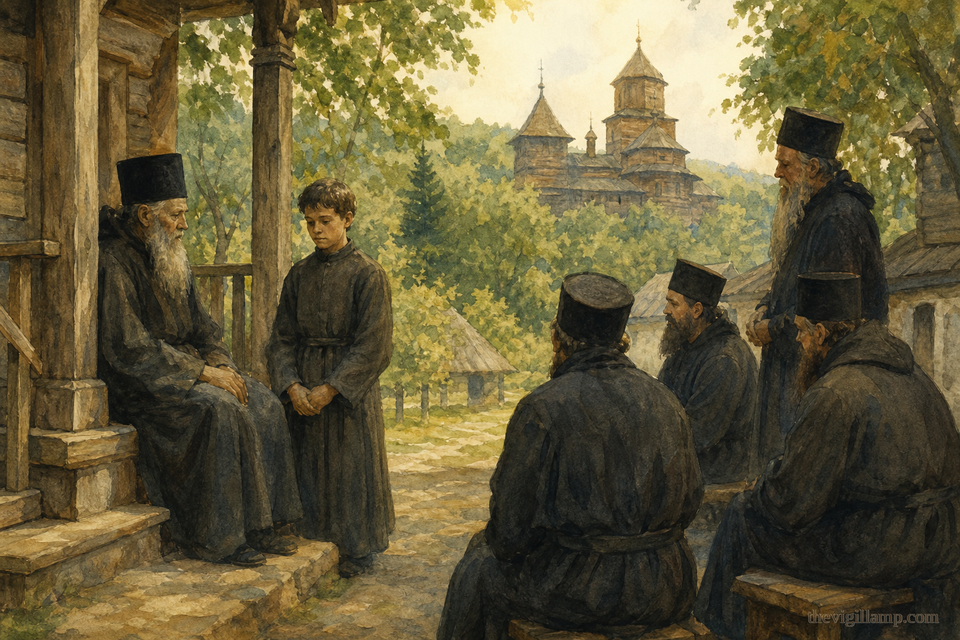
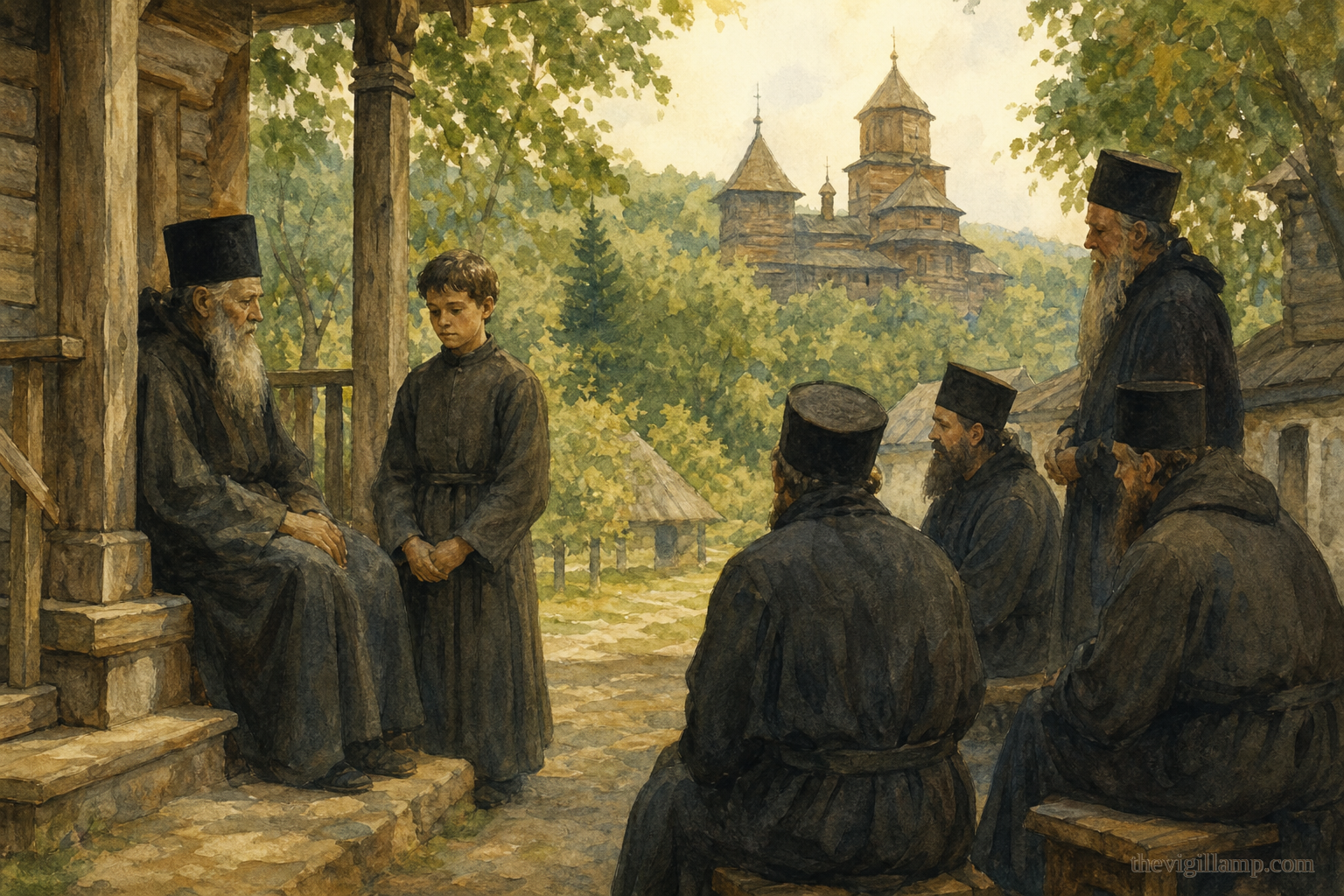
At ten years old he came to the Transfiguration monastery of Ugornitsk. At twelve he received the monastic tonsure — the haircut and the new clothes that say, I belong to God now — and he was given the name Job, after the much-suffering righteous man of Scripture. From his youth the Church remembers his piety and his strict ascetic life. In time he was accounted worthy of the priestly office.
Around the year 1580, at the request of Prince Constantine Ostrozhsky, a defender of Orthodoxy, Job was appointed head of the Exaltation of the Cross monastery near the city of Dubno. He governed that house for more than twenty years.
Those were hard years for the Orthodox people of that land. After the Union of Brest in 1596, many were deprived of their rights, and attempts were made to force them toward another confession. Some hierarchs left Orthodoxy. Job did not. The OCA life says he defended the faith by copying and disseminating Orthodox books. Prince Ostrozhsky was also responsible for the first printed edition of the Orthodox Bible, in 1581. Job was present later at the Kiev Council of 1628, convened against the Unia.
He was not a man of noise. He was a man who would not let the truth be lost.
At the beginning of the seventeenth century he withdrew to Pochaev hill. He settled in a cave not far from the ancient Dormition monastery, already famed for its wonderworking Pochaev Icon of the Mother of God. The brethren loved him. They chose him as their igumen — their abbot, the father of that house.
He was kind and gentle with the monks. He did much of the work himself. He planted trees in the garden. He strengthened the waterworks. The man who prayed in a cave also made sure there was water and shade.
And still he returned to the rock.
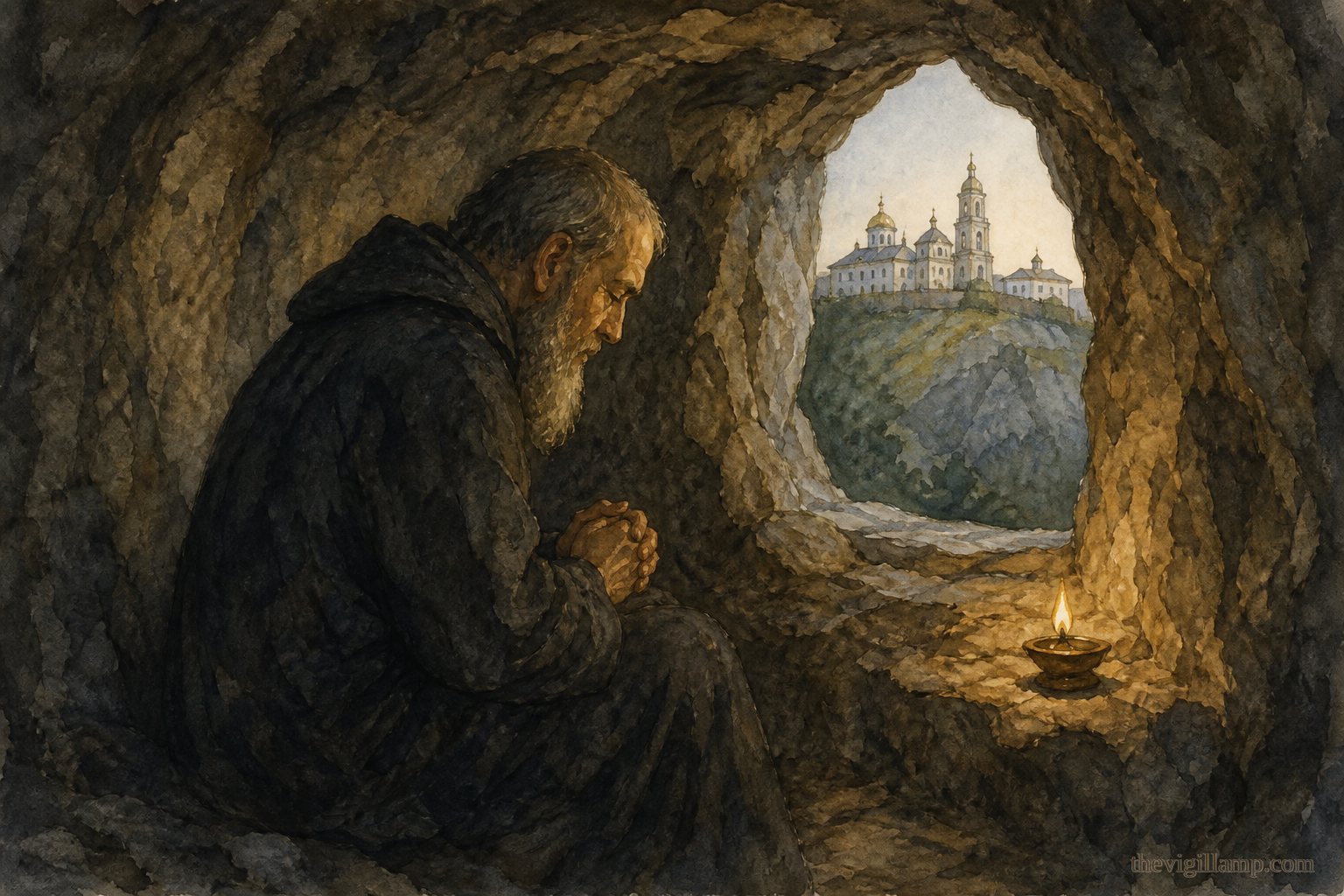
Sometimes he enclosed himself in that narrow cave for three days, or even a whole week. The Jesus Prayer was an unceasing prayer in his heart: Lord Jesus Christ, Son of God, have mercy on me. His disciple Dositheus, who wrote his Life, testified that once, while Job was praying in the cave, the saint was illumined by a heavenly light. The Church tells this quietly. She does not ask us to decorate it.
After 1642 he accepted the great schema, the fullest monastic dedication, and received the name John. The Church still calls him Job, the name of his first tonsure, the name of patience.
He directed the Pochaev monastery for more than fifty years. He lived more than a hundred years. In 1651 he reposed in the Lord. The Church keeps that day on October 28. He was buried near the cave where he had prayed.
Then the years closed over the grave.
Eight years is a long time to wait in the dark. A body is laid in the earth, and the world goes on — new abbots, new troubles, the same hill, the same icon, the same need for faithful people. The traditional Life, written by Dositheus, says that a wondrous radiance was often seen over Job's grave. The Church does not make a show of it. She remembers that God had not forgotten His servant.
Then, the same Life says, Saint Job appeared three times in a dream to Metropolitan Dionysios of Kiev. He made known that God wished, through the metropolitan, to open his relics.
That is the Church's tradition. We will not invent a conversation around it. We will only say what the Life has kept: the saint asked to be brought into the light, and the metropolitan listened.
Metropolitan Dionysios went to Pochaev. The traditional account says he took with him Archimandrite Theophanes, inquired into the local veneration, and heard the testimonies of those who had been healed. Then the coffin was raised from the earth.
On August 28, 1659, the relics of Saint Job were recovered. The Church's tradition says they were found without corruption, as if they had been buried that very hour, and filled with an inexplicable fragrance. They were transferred to the Cathedral of the Life-giving Trinity and placed there for veneration.
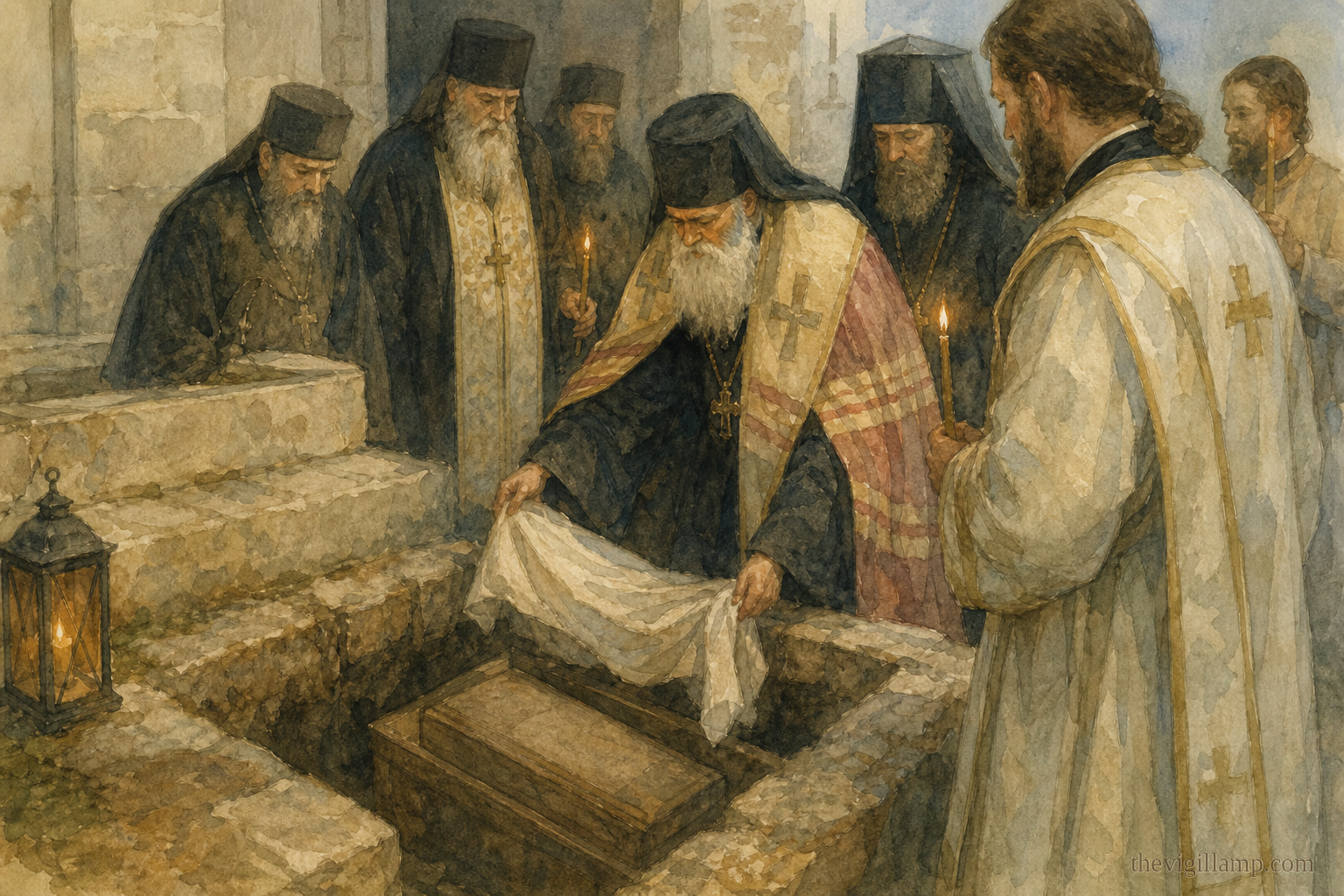
Think of what that day was.
A man who had hidden himself in a cave in order to pray was hidden again, for a time, under the ground. Then the Church did what the Church does with her saints. She did not leave him as a private memory. She opened the grave. She named him. She carried what was mortal into the house of the living God.
The kontakion appointed for this very day says it without any extra words of ours: "The imperishable treasure of your relics hidden under the ground have shone forth."
The psalm we read together says the same mystery in older language: God will not abandon His holy one to corruption. That verse is first and last about Christ, whose Body did not see decay. In the saints, the Church sees the firstfruits of that same victory — not because a body is magic, and not because death is pretend, but because Christ is risen, and He keeps His own.
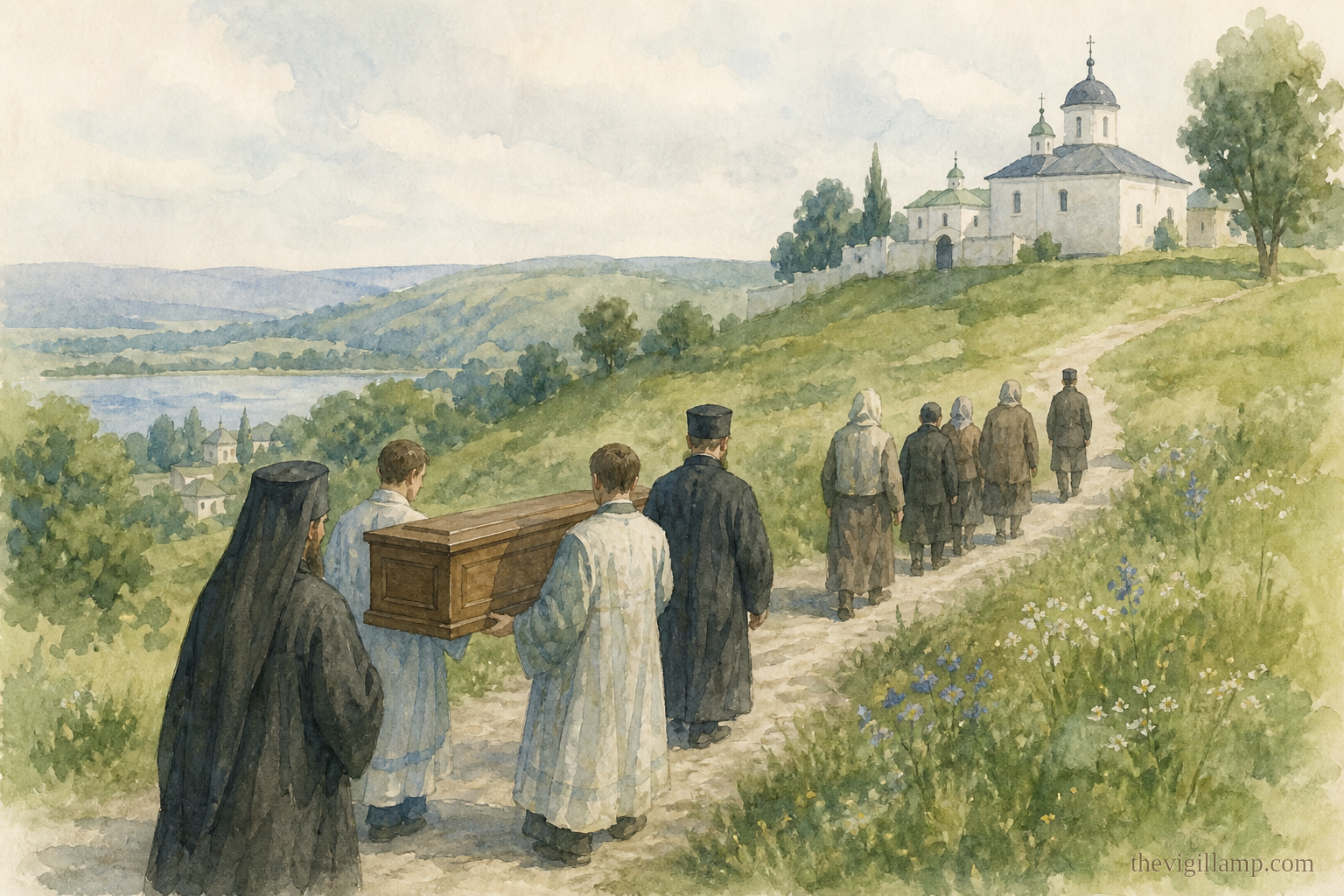
The story of the relics did not end in 1659.
From 1720 to 1831 the monastery was held by the Uniates. In those years the present Cathedral of the Dormition was built at Pochaev Lavra. In 1831 the monastery was returned to the Orthodox Church. The OCA account says that miraculous cures prompted the Holy Synod to uncover the relics a second time. That second uncovering took place on August 28, 1833. Again the Church records that there was no sign of corruption, and an ineffable fragrance came forth.
We will not pile wonder upon wonder. The Church's own words are enough. God had kept what had been entrusted to the earth.
In 1902 the Holy Synod decreed that on this day the holy relics of Saint Job be carried around the Dormition Cathedral of Pochaev Lavra after the Divine Liturgy. So the finding became a procession. What had been hidden was not only seen. It was carried, year after year, around the house of God.
That is why we are here tonight.
Not to make a museum of bones. Not to tell a strange story for its own sake. The relics of a saint are a confession. They say that the body matters. They say that holiness is not an idea that floats away. They say that a man who planted trees, copied books, governed monks, and hid himself in a cave to say the Name of Jesus has not been lost.
The Epistle appointed for him names the fruit of the Spirit: love, joy, peace, longsuffering, gentleness, goodness, faith, meekness, temperance. Those fruits grew in a narrow place. They were not loud. Then, when the time was right, the Church opened the ground and let the hidden treasure shine.
The Gospel appointed for him is the Lord's own blessing on the poor: "Blessed be ye poor: for yours is the kingdom of God." Job left a family name that meant iron. He took a monastic name that meant patience. He became poor enough to belong to God, and rich enough to feed a whole monastery with his quiet strength.
And today, so many years later, on the day the Church remembers the opening of his relics, we say his name once more, out loud, together — Venerable Father Job of Pochaev — and he is praying for us still.
for many years you contested in the field of piety at Ugornitsky Monastery on the island of Dubensk;
and arriving at Pochaev Mountain, marked by the healing footprint of the Most Holy Theotokos,
you often enclosed yourself in a narrow rock cave, for the sake of divine contemplation and prayers.
Strengthened by the grace of God,
you labored courageously for the good of Christ's Church and of your community,
against the enemies of Orthodoxy, and for Christian piety,
as well as instructing a multitude of monks,
whom you brought as victors to our Master and God.
Entreat Him that our souls may be saved.
for you lived piously with faith in Christ our God, you attained the perfection of virtue,
and forsaking the pleasures of this temporal life in the cave of Pochaev Mountain by fasting, prayers and holy contests, and because of these your body withered.
Now, having passed to God in peaceful and eternal rest,
you pray for all who come to you with faith.
Rejoice, all-praised Job, the God-pleaser and adornment of Pochaev Monastery.
- Wrap a small cross, or a stone, in a clean cloth. Hide it under a cushion or a folded blanket near the lamp — "under the ground," the way the relics waited.
- Sit in the quiet for a short time. Say together, slowly, "Lord Jesus Christ, Son of God, have mercy on us." That was Job's prayer in the cave.
- Uncover the cloth together. Do not rush. Hold what was hidden up to the lamp and say, "The imperishable treasure of your relics hidden under the ground have shone forth."
- Carry the wrapped cross once around the room, as the Church later carried Saint Job's relics around the Dormition Cathedral. Then set it beside the lamp.
- Each person names one good thing God has kept for your family that is easy to forget: a person, a mercy, a beginning. Thank Him for it before bedtime.


pray to God for us.”
on earth as it is in heaven. Give us this day our daily bread,
and forgive us our trespasses, as we forgive those who trespass against us; and lead us not into temptation,
but deliver us from the evil one. Amen.