
September 11 · Theodora of Alexandria

Afterfeast of the Nativity of the Most Holy Theotokos
O Lord Jesus Christ our God, have mercy on us.”
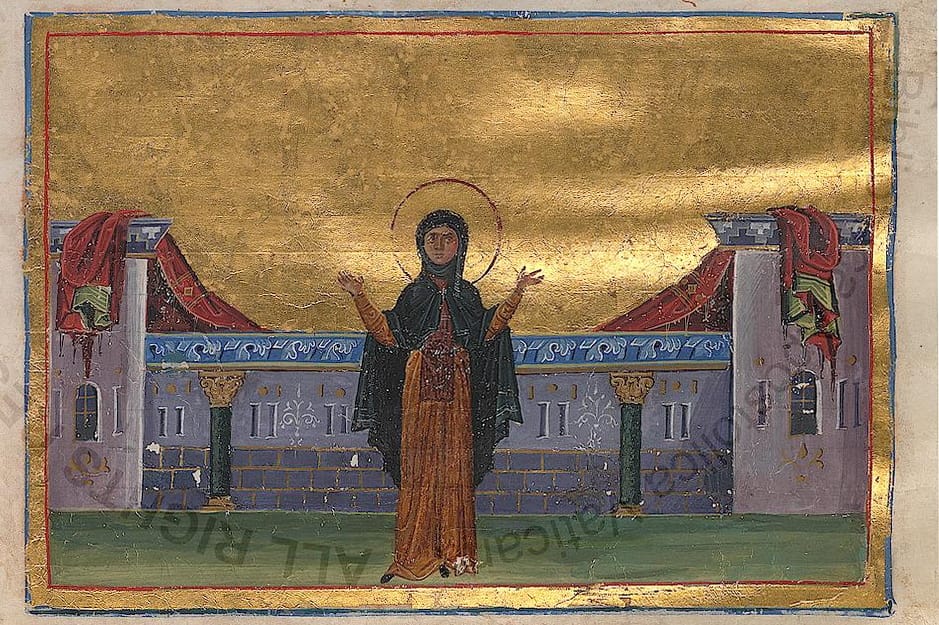
The joy is still in the house.
Three days ago the Church opened the door. She kept a Great Feast. She sang that a girl-child had been born, and her name is Mary. Two days ago she gathered the parents. Yesterday she remembered three sisters who would not come apart.
Today is not that day again.
Today is the Afterfeast. The hymns of the birth are still being sung. And today the Church does another thing she loves to do while a Great Feast is still in the room.
She remembers a woman who sinned, and was sorry, and did not turn back.
The Church remembers more than one name on the eleventh of September. She remembers the translation of the relics of Venerable Sergius and Herman, Wonderworkers of Valaam, and Saint Euphrosynos the Cook of Alexandria, and other holy names. Those are true days. We will not tell those whole lives this morning.
This morning she asks us to look at Theodora.
Her name is Theodora of Alexandria. The Church calls her venerable. The years she gives are 474 to 491.
Do you hear what she is already singing for her? "You offered your life as a holy gift, O righteous Theodora, for resplendent with the light of repentance, you illumined mankind."
That is today's word. Not a hidden thing that stays hidden. A light. Repentance.
Saint Theodora and her husband lived in Alexandria. Love and harmony ruled in their family, and this was hateful to the Enemy of salvation.
A certain rich man wanted to lead her into a wrong thing. For a long time he was unsuccessful. Then someone told the unassuming Theodora a lie.
The Church has kept the lie. We will not invent another.
A secret sin, which the sun does not see, is also unknown to God.
Theodora believed it.
She sinned. She betrayed her husband.
We will not stay in that room. The Church has told us what we need: she fell, and she knew it.
She soon came to her senses. She realized the seriousness of her fall. She became furious with herself. Her conscience gave her no peace.
She went to a renowned abbess and told her what she had done.
The abbess saw the repentance of the young woman. She spoke to her of God's forgiveness. She reminded her of the sinful woman in the Gospel, who washed the feet of Christ with her tears and received from Him forgiveness of her sins.
In hope of the mercy of God, Theodora said:
"I believe my God, and from now on, I shall not commit such a sin, and I will strive to atone for my deed."
Those are the Church's words. We will not invent others.
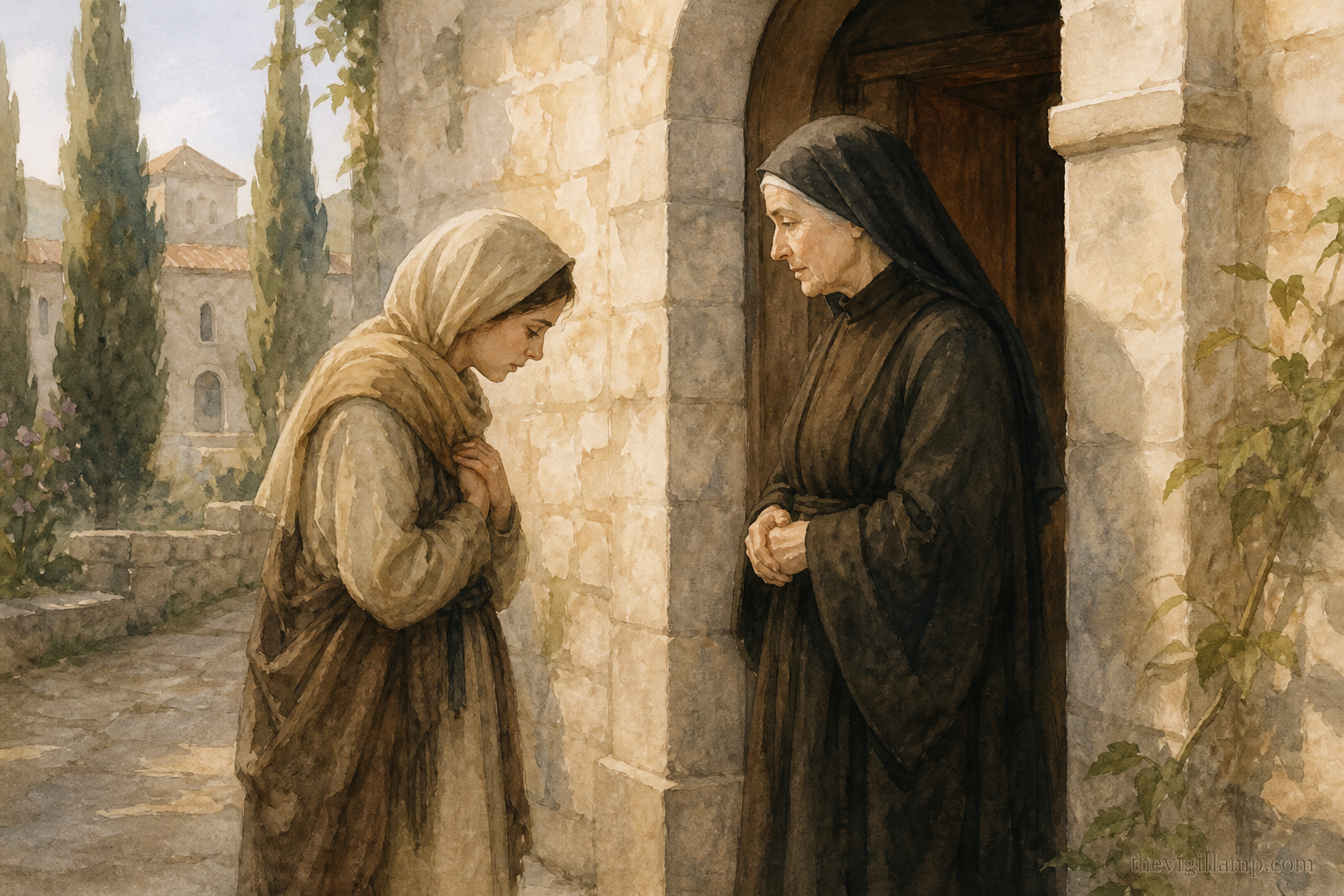
At that moment Saint Theodora resolved to go off to a monastery to purify herself by labor and by prayer. She left her home secretly. She dressed herself in men's clothes. She went to a men's monastery, because she feared that her husband would find her in a women's monastery.
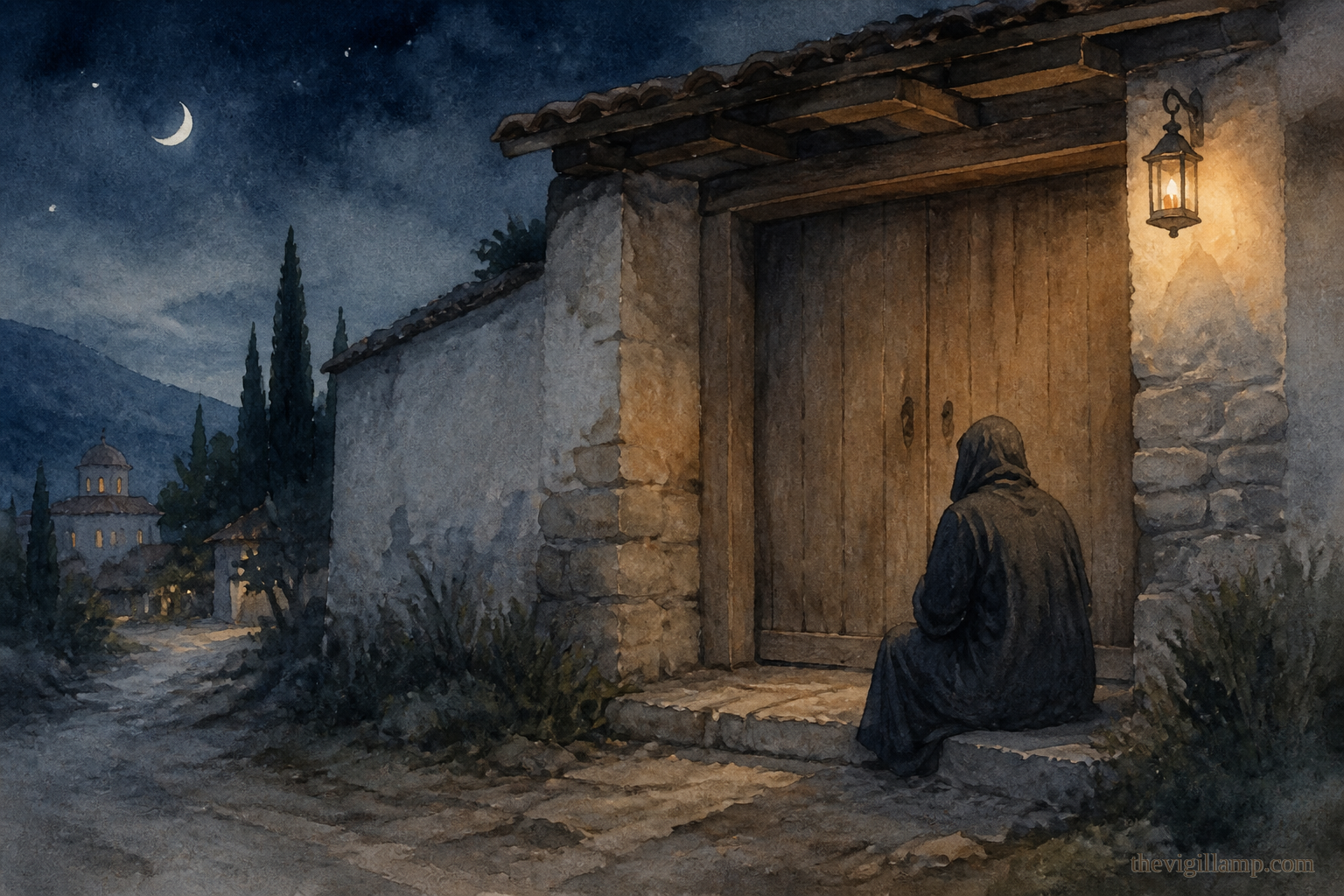
The igumen of the monastery, in order to test the resolve of the newcomer, would not even bless her to enter the courtyard. Saint Theodora spent the night at the gates.
In the morning she fell down at the knees of the igumen. She said her name was Theodore from Alexandria. She entreated him to let her remain at the monastery for repentance and monastic labors.
Seeing the sincere intent of the newcomer, the igumen consented.
Even the experienced monks were amazed at Theodora's all-night prayers on bended knee, her humility, endurance and self-denial. The saint labored at the monastery for eight years.
The Church says it this way: her body now became a vessel of the grace of God and a receptacle of the Holy Spirit.
Then a hard thing came.
Once, the saint was sent to Alexandria to buy provisions. The igumen said that if she were delayed, she should stay over at the Enata monastery, which was on the way.
A young woman at that guest house said a wrong thing about the monk Theodore. She said a child was his.
It was not true.
The father reported it to the Superior of the monastery where Saint Theodora labored. The igumen summoned the saint and repeated the accusation.
The saint firmly replied: "As God is my witness, I did not do this."
The igumen, knowing of Theodore's purity and holiness of life, did not believe the accusation.
When the child was born, the Enata monks brought the infant to the monastery where the ascetic lived, and began to reproach its monks. This time even the igumen believed the slanderous accusation. He became angry at the innocent Theodore. They entrusted the infant into the care of the saint and threw her out of the monastery in disgrace.
The saint humbly submitted to this new trial, seeing in it the expiation of her former sin.
She did not tell them she was a woman. She did not tell them the child was not hers. She kept silent, and she took the child.
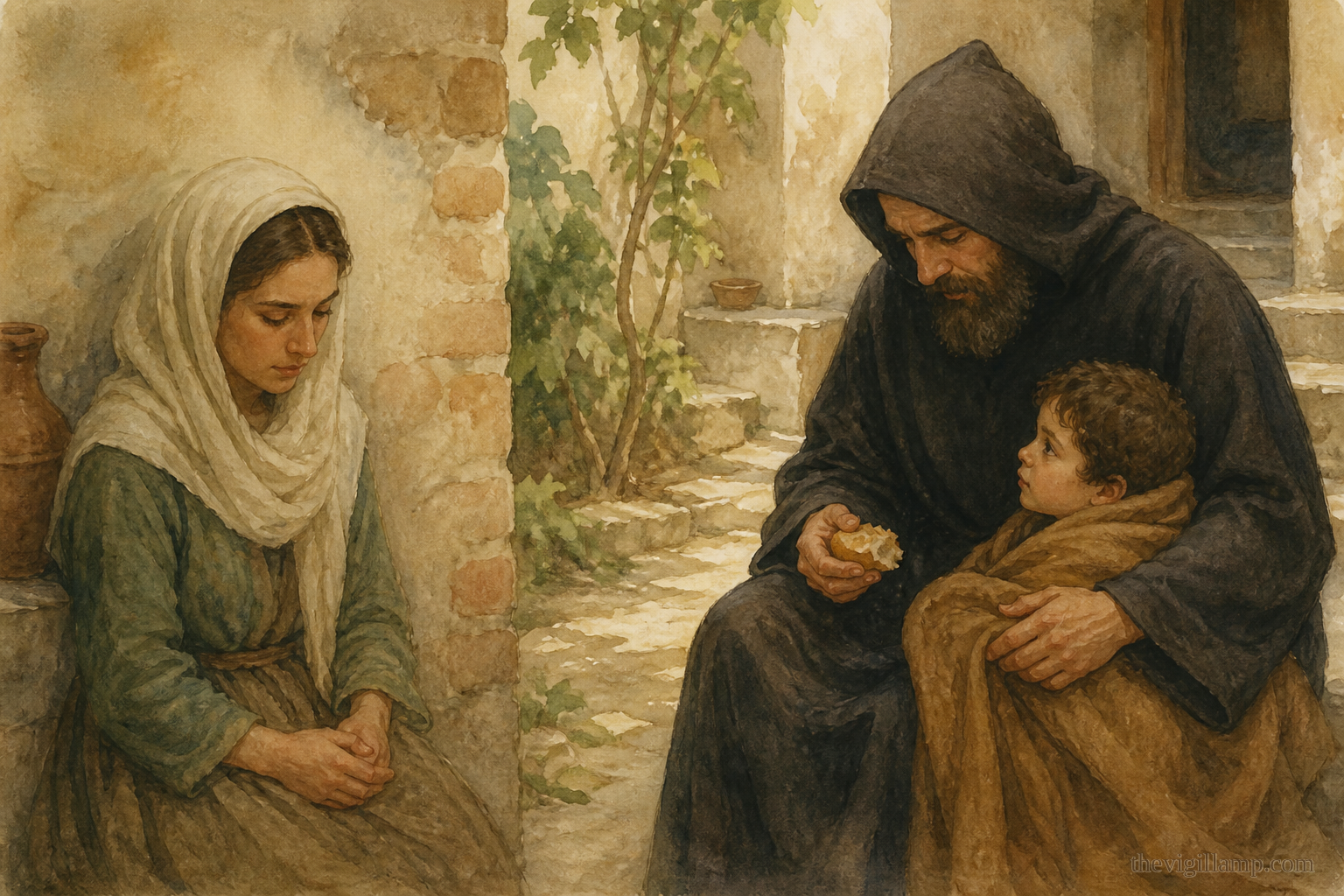
She settled with the child not far from the monastery in a hut. Shepherds, out of pity, gave her milk for the infant, and the saint herself ate only wild vegetables.
Bearing her misfortune, the holy ascetic spent seven years in banishment.
Do you hear that? Seven years. A hut. A child who was not hers. She had sinned once, and she was sorry, and now she was blamed for a thing she had not done, and she would not make a show of the truth to save herself.
Finally, at the request of the monks, the igumen allowed her to return to the monastery with the child, and in seclusion she spent two years instructing the child.
The igumen of the monastery received a revelation from God that the sin of the monk Theodore was forgiven. The grace of God dwelt upon the monk Theodore, and soon all the monks began to witness to the signs worked through the prayers of the saint.
Once, during a drought, all the wells dried up. The igumen said to the brethren that only Theodore would be able to reverse the misfortune. Having summoned the saint, the igumen bade her to bring forth water, and the water in the well did not dry up afterwards. The humble Theodore said that the miracle was worked through the prayer and faith of the igumen.
We will not invent another word about the well. The Church has told us what she said.
Before her death, Saint Theodora shut herself in her cell with the child. She instructed him to love God above all things. She told him to obey the igumen and the brethren, to preserve tranquility, to be meek and without malice, to avoid obscenity and silliness, to love non-covetousness, and not to neglect their communal prayer.
After this, she prayed and, for the last time, she asked the Lord to forgive her sins. The child also prayed together with her. Soon the words of prayer faded from the lips of the ascetic, and she peacefully departed to a better world.
The Lord revealed to the igumen the spiritual accomplishments of the saint, and also her secret.
The truth was known.
She had been a woman. She had been Theodora. She had been thought to be a monk. She had been blamed for a child that was not hers. She had kept silent. And now they knew.
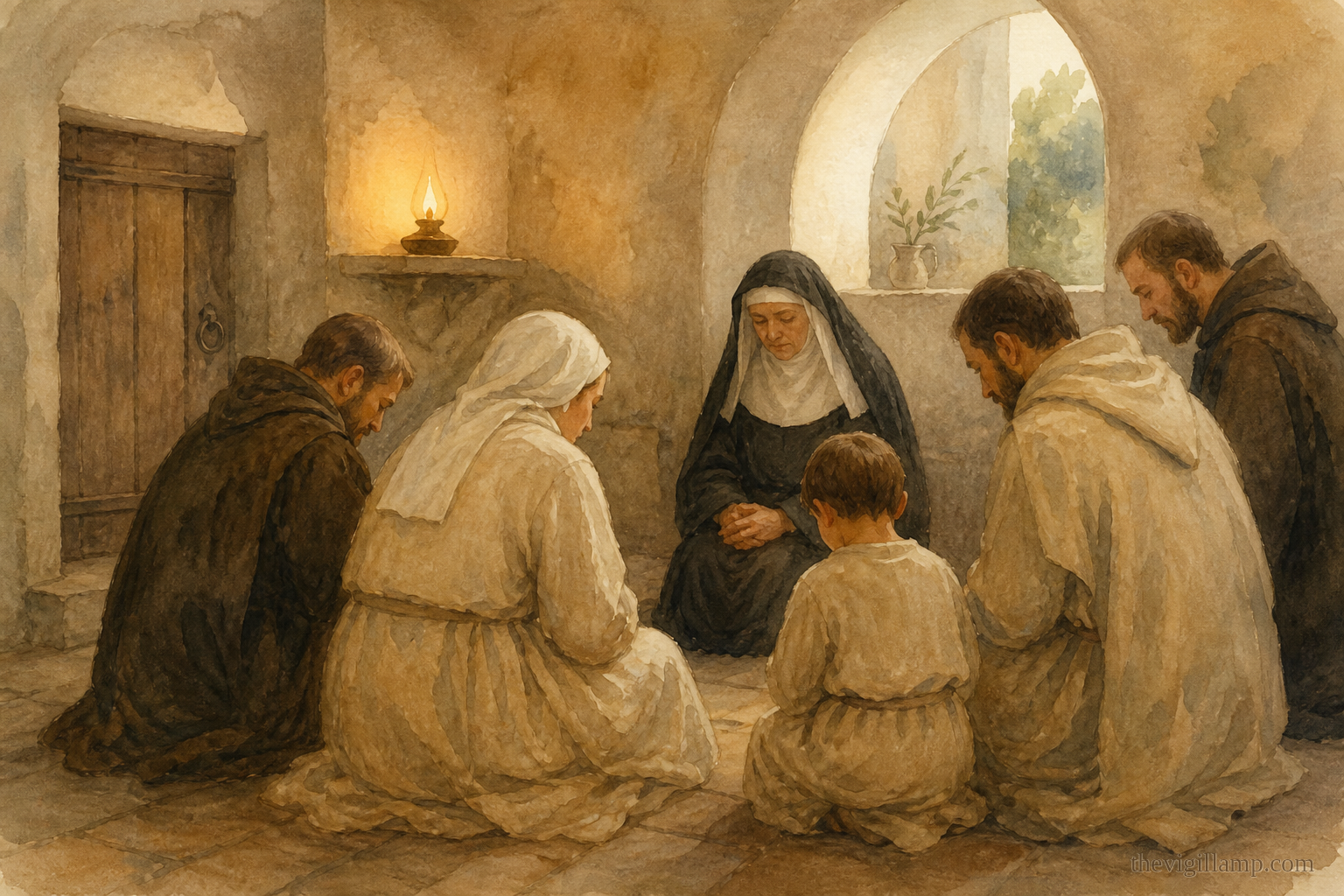
The Enata igumen and brethren shrank back in terror at their great transgression. Falling down before the body of the saint, with tears they asked forgiveness of Saint Theodora.
News of Saint Theodora reached her former husband. He received monastic tonsure at this same monastery where his wife had been. And the child, raised by the nun, also followed in the footsteps of his foster-mother. Afterwards, he became igumen of this very monastery.
Do you hear what the Church is singing now? Not only that she fell. She is singing that she became a light.
"Resplendent with the light of repentance, you illumined mankind."
And again: "having received it, you showed us the way of repentance, venerable Mother Theodora."
And again: "The image of God was truly preserved in you, O Mother, for you took up the Cross and followed Christ."
The word we heard this morning is a weekday word, not a saint pair and not an afterfeast pair. "Be of good cheer: it is I; be not afraid." The Lord came to His own in the night, when they were troubled and the wind was against them. Theodora spent a night at the gates. She spent seven years in a hut. She was not alone in the dark. He knew her name.
And the Epistle says, "My little children, of whom I travail in birth again until Christ be formed in you." She raised a child who was not hers. She instructed him to love God above all things. The Church will not let us tell her as if the child were an accident at the end.
The same reading has another word, because this is still a story about turning: "after that ye have known God, or rather are known of God, how turn ye again to the weak and beggarly elements?" She turned once, the wrong way. Then she turned toward God, and she did not turn back.
The psalm we held in the hand is not a lectionary appointment. It is a word that already knows her name: "Blessed are they whose transgressions are forgiven, and whose sins are covered."
Covered — not because God cannot see. Because He forgives. The lie said a hidden thing is unknown to God. The psalm says the opposite, and then it sings a blessing.
That is why the Church will not let the Afterfeast stand without this woman. While she is still singing the birth of the Mother of God, she names a sinner who became a light.
Three days ago the Church named a girl-child in whom God was preparing a dwelling. Today she names a woman whose repentance became a dwelling again. The joy is still in the house. Theodora belongs to the same Lord who took flesh from Mary.
And today, so many hundreds of years later, on the Afterfeast, we say her name once more, out loud, together — Venerable Theodora of Alexandria — and she is praying for us still.
for resplendent with the light of repentance, you illumined mankind.
Now pray to Christ who has magnified you to grant us his great mercy!
for you took up the Cross and followed Christ.
By so doing you taught us to disregard the flesh for it passes away
but to care instead for the soul, since it is immortal.
Therefore your spirit, venerable Theodora, rejoices with the angels.
entreating the Creator to grant forgiveness of your sin;
having received it, you showed us the way of repentance,
venerable Mother Theodora.
has proclaimed joy to the whole universe!
The Sun of Righteousness, Christ our God,
has shone from You, O Theotokos!
By annulling the curse,
He bestowed a blessing.
By destroying death, He has granted us eternal Life.
Joachim and Anna are freed from barrenness;
Adam and Eve, from the corruption of death.
And we, your people, freed from the guilt of sin, celebrate and sing to you:
The barren woman gives birth to the Theotokos, the nourisher of our life!
The two troparia and the kontakion of Saint Theodora, and the troparion and kontakion of the Afterfeast, appointed by the Orthodox Church in America on the September 11 hymn pages. Wording is exact; slash marks were converted to line breaks only. These are today's appointed hymns. They are not the Forefeast hymns of September 7. The Afterfeast pair is the feast's own hymn, still appointed on this afterfeast; it is not printed as if September 8 had come again as a second full feast. Hymns for Sergius and Herman of Valaam, Euphrosynos the Cook, and the other same-day names are not printed here.
- Sit by a doorway — a little "gate," only as ordinary as your own house. Today the Church remembers a woman who spent the night at the monastery gates, asking to stay and begin again. This is not yesterday's three sisters remaining together, and it is not the Great Feast's little house of joy. It is a turning.
- Sit still at the gate for a slow count of ten. No talking. Theodora waited. The hard part is not the words. The hard part is staying, and being sorry, and not running back.
- Then one child says, slowly, her own day's shout: "You offered your life as a holy gift, O righteous Theodora, for resplendent with the light of repentance, you illumined mankind."
- That child does one small, real good work right away: clear a plate, help a little brother, say something kind. She went so she could belong to God again. We can be a little light in this room.
- Take turns. When everyone has had a turn, sit together and each name one beginning-again you want to make this week — a sorry, a kindness you have been putting off, a turning you do not need anyone else to see. Write those words on scraps of paper and keep them under the lamp until next Sunday.


pray to God for us.
Most Holy Theotokos, save us.”
on earth as it is in heaven. Give us this day our daily bread,
and forgive us our trespasses, as we forgive those who trespass against us; and lead us not into temptation,
but deliver us from the evil one. Amen.